

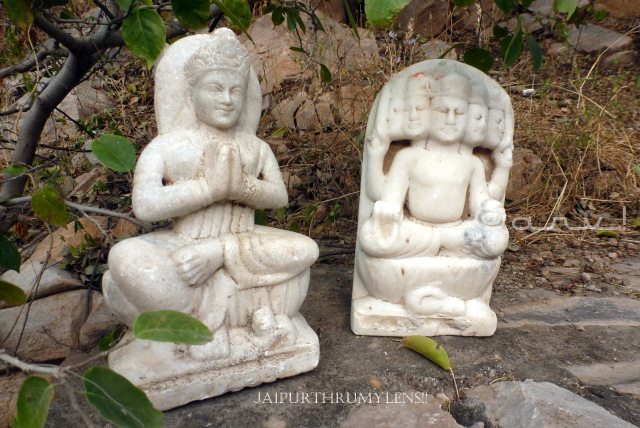
After completing Laxmi Puja on Diwali, someone suggested discarding used flowers at the base of the trunk of a Peepal tree. I recollected having seen flowers, garlands, idols & images of Hindu gods and goddesses many times over the last few years under the Peepal tree or Ficus Religiosa; I never questioned this practice.
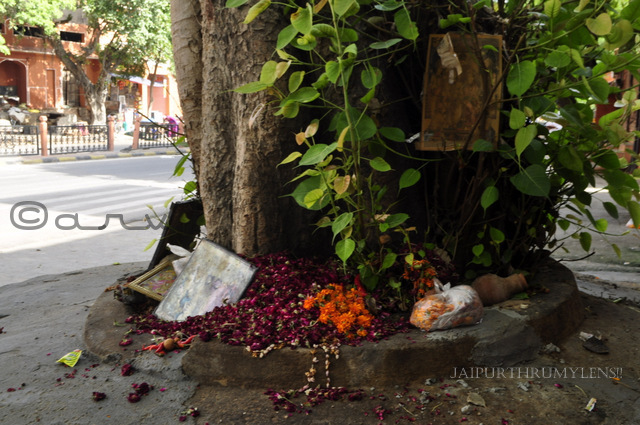
I found this Peepal tree many days ago in the walled city area of Jaipur; I was curating a customized heritage walk in Jaipur for an upcoming student trip to the city.
Peepal Tree – Information & Importance
The Peepal tree is sacred in Hinduism. The scientific name of the Peepal tree is Ficus Religiosa and is popular as a Sacred Fig since it belongs to the Fig or Ficus genus. Seen here, lit up Diyas and incense under one such tree in Jaipur. The importance of this tree is summarized below.

Hindu Mythology
The peepal tree is revered in Hinduism and tied with many mythological references and Hindu customs. Buddhism and in many regions, it is popular as a Bodhi tree whereas, in Indian mythology and Sanskrit (language), it is called Ashvattha. Many medicinal uses of its bark and leaves have been listed in the ancient Indian medicine system.
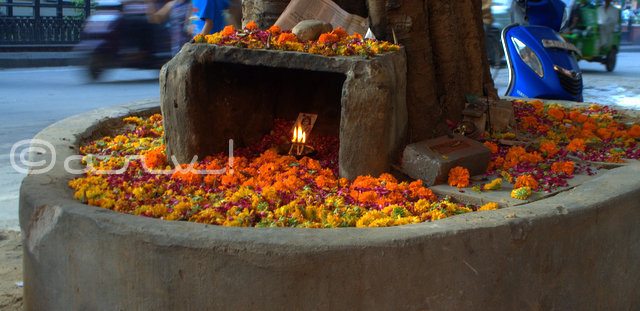
It is believed that the Peepal tree represents the trinity of Hinduism – the roots of this tree represent Lord Brahma, the trunk Lord Vishnu, and the leaves Lord Shiva. Many believe that Hindu gods hold their council under this tree. The Puranas associate this tree with Lord Vishnu and therefore Peepal is substituted for an idol of Lord Vishnu. According to legends, demons defeated gods and goddesses during which Lord Vishnu took refuge in this tree.
Goddess Laxmi
Goddess Laxmi is said to inhabit the Peepal tree every Saturday. I’m not sure if this is a reason for people using Peepal leaf during Laxmi Puja on Diwali. There are so many Hindu mythological stories surrounding this tree that it is difficult to mention it all here. It is common to come across a Peepal tree in temples. Likewise, people built small temples under this tree. Here are a few pictures from Jaipur.
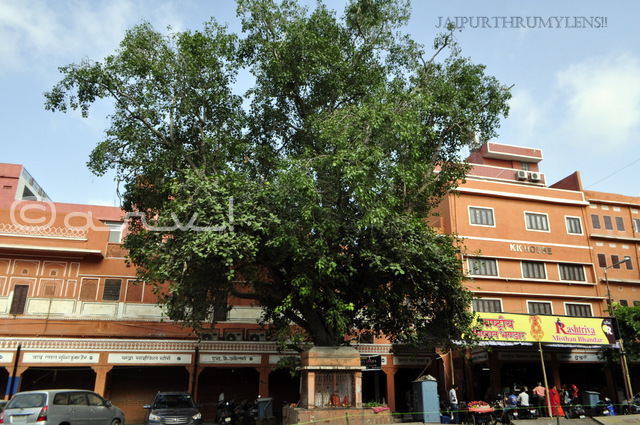
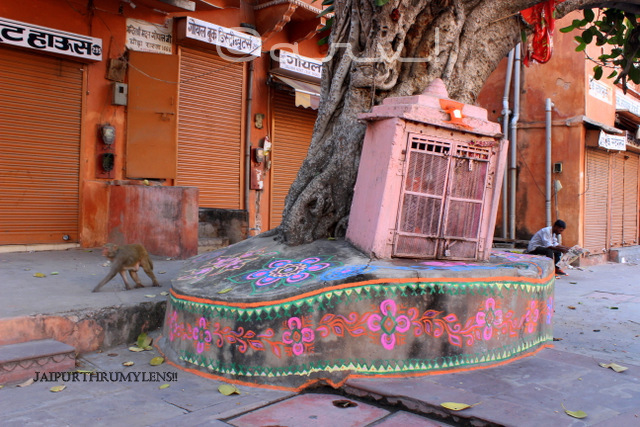
The below picture is from Galta Ji which is popular as Monkey temple among the tourists.
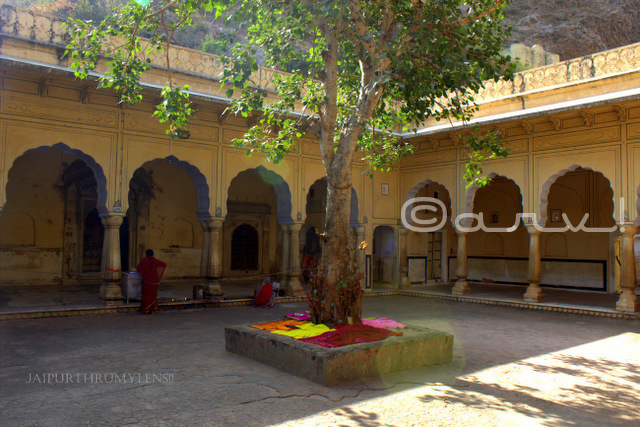
Indian Women
Indian married women perform circumambulation around Peepal called Vat Savitri or Vat Poornima. It is a tradition followed by married Hindu women praying for the long life of their husbands. Many women perform this ritual on a Banyan tree instead of the Peepal. I saw this ritual many years ago and can’t recall having seen it lately. You can find Moli Dhaga (holy thread) tied on a Peepal tree in temples. The leaf of this tree is an important part of the sacred thread ceremony in Hinduism.
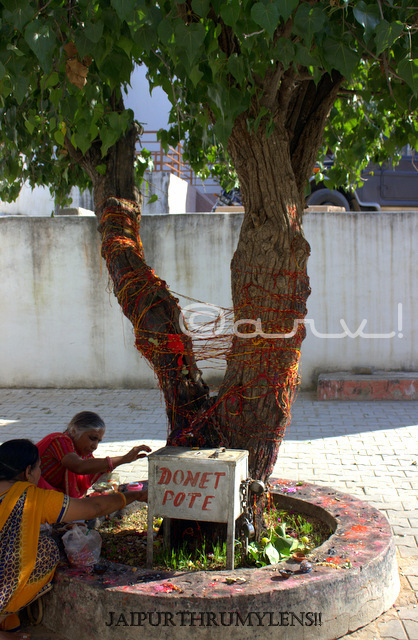
Features
Peepal is a robust tree that can survive in difficult conditions and can be found in dry tropical climatic conditions. Its leaves fall in January growing back by March-end; it is a semi-evergreen tree. The new leaves have an ochre-reddish tint which after a few days fades away leaving a dark green color. The peepal tree grows tall often up to 100 feet.

Leaves
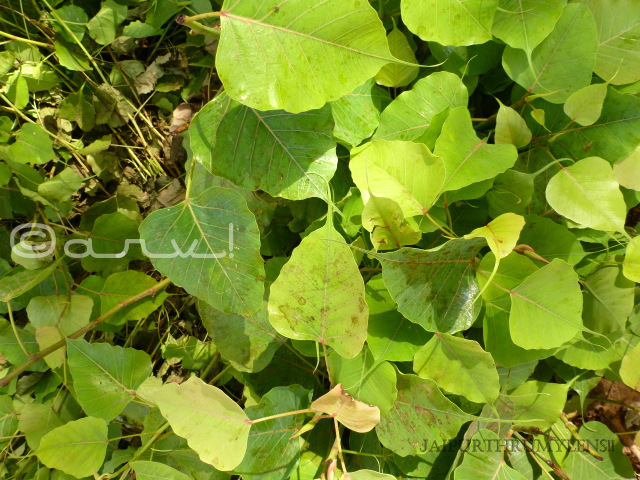
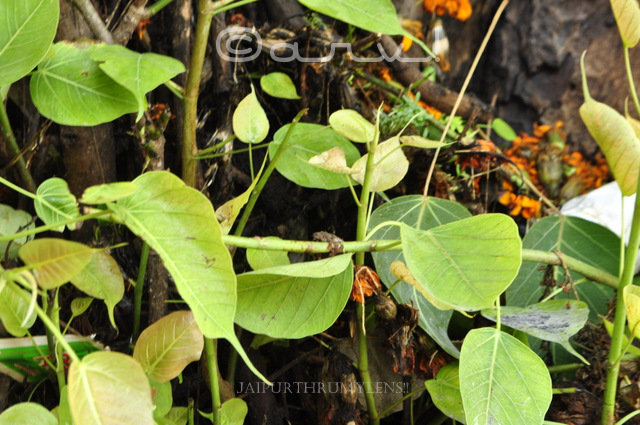
Leaves of the Peepal tree are heart-shaped having an extended tip and a shiny texture. It is accepted that its origin is in the Indian subcontinent even though it is found in many South-East Asian countries.
Auspicious Day to Worship Peepal Tree
Vaishakhi Purnima is considered auspicious to worship the Peepal tree because as per popular belief Goddess Laxmi resides on the tree on this day. Vaishakhi Purnima is also known as Peepal Purnima. Morning is a good time for such ceremonies. Planting the Peepal tree on this day helps to alleviate Vastu Dosh according to Vastu experts.
Is the Peepal Tree And Banyan Tree the Same?
The peepal tree and the Banyan tree are not the same although they share many similarities. They both belong to the same tree family – Ficus or Fig which is why one may get confused owing to similarities. One of the easiest ways to identify a Peepal tree is with the heart shape of the leaf. Banyan trees can be easily recognized with aerial roots. Like the Banyan tree, it lives up to a few hundred years. The Bodhi tree at Maha Bodhi temple in Gaya is very old. The one in Anuradhapura in Sri Lanka is supposedly more than 2000 years old. Since Gautam Buddha attained enlightenment under a Bodhi tree, it is sacred among the Buddhists as well.
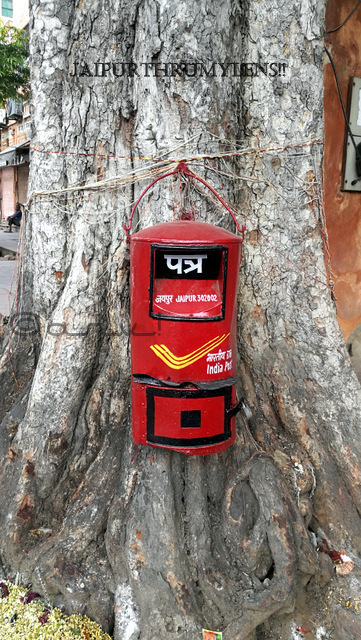
Peepal tree can be easily found in Jaipur. I’m not sure if the Indian Forest Department is actively planting Peepal trees. There is a need for planting more Indian trees rather than imported fancy trees which the department has been planting over the last few years. I have already covered this aspect in World Forestry Arboretum.
Peepal Tree In House Good Or Bad?
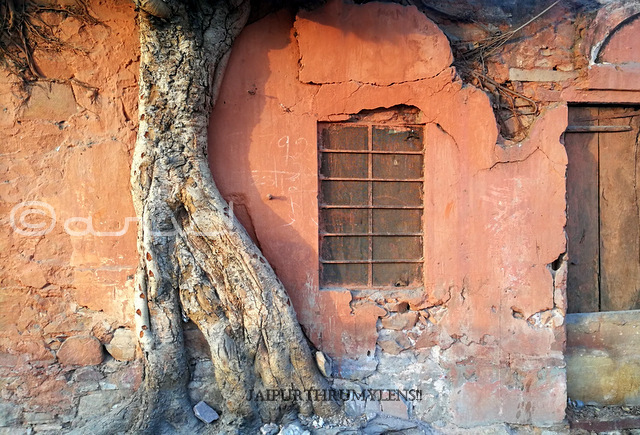
Peepals can survive in difficult conditions & often grow on a wall. The tree is considered as a nuisance, its roots can travel far & deep cutting through the walls and masonry structures. For this reason, many people do not plant Peepal trees in the house. It is not uncommon to see Peepal trees growing on the walls. This tree is customarily planted in and around temples. It is a native tree and doesn’t need too much care.
I grew up hearing stories of ghosts residing in the Peepal tree. Many people still associate it with ghosts, I’m not sure why? Can this be a reason that its leaves create clattering noise with the slightest wind and add to the scare factor?
Only a few plants and trees can release oxygen during the night. The Peepal tree is one such tree.
Coming back to where we started, it has become a custom to dispose of flowers, garlands, broken idols & pictures of Hindu gods and goddesses under a Peepal tree. People feel that this is the right way to discard them. But is this recommendation right? What is the best way to discard old flowers after using them in Puja?
Follow Jaipurthrumylens!! on Facebook Twitter Instagram
This is a part of the Trees of Jaipur series.
I feel it has become a custom because people don’t want to be caught on the wrong side. On the other hand, many of these items are not biodegradable, and leaving them under a tree is not the right thing because they only pile up. I have heard of a clean-up drive in Kerala where the volunteers collected all such items lying under the Peepal trees.

If the Peepal tree is sacred why do we leave the litter around? What do you think about this issue? Do you feel it is right? How do you dispose of old Hindu idols and pictures?
Discover more from JaipurThruMyLens
Subscribe to get the latest posts sent to your email.
 JaipurThruMyLens
Wonderful well researched post! We have many Peepal trees in Pune. A majestic tree that looks great when in leaf, when leafless and with its reddish tender leaves. Unlike other fig species, it doesnt have aerial roots. Great photos too!
In Pune, many people compost flowers from a pooja (we call it Nirmalya) or simply add them to the soil in the potted plants but many can be seen who simply throw it in the river or just any where which is really sad.
LikeLiked by 1 person
Thanks, Archana. I pulled up all these pictures from my hard disk! I realized that we act on advice without thinking about the result. I found so much garbage around his tree.
Composting is a great idea but I guess not everyone likes to do so much work. But if we can take the pain, it works well for everyone. I must appreciate all the efforts you guys have been taking.
It is high time that we stop acting on advices without giving it a thought. Thanks for stopping by and sharing your views, Archana.
LikeLike
The custom may have had originally religious roots. Putting wilted flowers is one thing we might accept, as they are biodegradable. But unlike in the olden days modern man has more and more junk to get rid off, which should be disposed off properly. To accomplish this you need strictly enforced laws, which help protect not only the ficus religiosa, but also the environment.
LikeLiked by 3 people
Absolutely. We need to understand the effects of our action on our enviornment. These practices which started hundreds of years ago don’t have same implications today.
LikeLiked by 3 people
Because of its religious significance, people are atleast not cutting them and it’s good enough. 😀
LikeLiked by 1 person
Thanks for sharing your thought, Pooja. True but the issue here is garbage. If the tree is sacred why should we make it a dumping ground? The surroundings look so shabby and once the flowers dry out they fly around creating a mess.
LikeLike
Very interesting topic Arv once again! Yes, they are majestic trees and they live forever! But dumping the religious stuff at the tree is shameful for the gods themselves. If anyone does not have the place to keep their idols or religious items they have no rights to buy them in the first place. I have even seen people dumping stuff in rivers and what not! The problem here is, there are no guidelines from the religious heads himself about such practices.
LikeLiked by 1 person
The reason for not getting the guidelines from religious heads is because they themselves are not educated and clear. We are simply acting on what we have heard over the years without using our head. Polluting rivers and surrounding will never help us, only complicate our lives. If we respect trees and rivers, we should show the respect.
LikeLiked by 1 person
True Arv, but they are in theory at this moment. People do what they want to do anyway.
LikeLiked by 1 person
true
LikeLiked by 1 person
Interesting post, and I enjoyed reading about the history and significance of the Peepal tree!
LikeLiked by 1 person
I’m happy you did, Peter 🙂
Thanks for reading and sharing your views.
LikeLike
Great shots
LikeLiked by 1 person
Thanks, Jim. 🙂
LikeLike
I too grew up hearing stories of ghosts living on Peepal trees. Superstitions apart (which are embedded in Indian psyche) this tree has medicinal values and anything that important needed conservation. When you link anything with religion in India, the enthusiasm of people doubles…so that could be its religious significance. Ghost stories too indicate that people should keep away and let these trees thrive.
Garbage disposal has been the biggest challenge in India and needs to be addressed seriously. Keeping it under a tree means it would spread all around with wind or would be carried by children.
Your post carries subtle messages arv. Thanks for highlighting a serious issue.
LikeLiked by 1 person
I couldn’t agree more. It is appalling to see religion playing a role in spreading garbage. It is common for temples to distribute Prasad in disposable plastic containers and we can find them strewn around carelessly. It is attitude of people that needs a change, at the same time temple authorities and leaders also need to do their part. I recently met a Italian traveller visiting India for the first time. He said India is beautiful but garbage and litter is something that they find is biggest problem.
Every time I find a Peepal tree there is so much garbage strewn around as shown in the pictures. Our attitude needs a big change. I also feel that the essence of religion has been tampered with to suit personal interests and it is apparent everywhere. Since you mentioned that enthusiasm doubles wrt religion, I must mention that someone once joked that if there was a religious shrine on Everest, you can be sure that there will be a huge queue to seek blessings. Thanks for reading and sharing. 🙂
LikeLiked by 1 person
I absolutely agree with your each word arv…religion has done more harm than good and there is no joke about the lines as you can see them for the sojourns pilgrims make for the temples on the mountains, trekking for miles to see the same God whom they can meet at the home of a destitute.
LikeLiked by 1 person
Faith makes thing happen. I hope everyone takes the right course.
LikeLiked by 1 person
Everything and anything in the name of religion. It should serve our convenience. That’s the attitude, and it needs a change.
We dispose the flowers in our pots and moving gradually towards idols that do not require to be discarded. Thankfully we don’t need to discard any currently and otherwise ✨
Peepal tree and ghosts bit is known to most. Evening / Night especially to be avoided. Also had heard about strict no no for women sitting under it with open hair. 🙂🙂
LikeLiked by 1 person
Haha! I agree with the last part of your comment, it has provided a setting for so many ghost stories and movies.
Monika, I don’t think any of the religious scripture mentions this method of disposing flowers or idols. So I guess people have started following easy way out.
Do you witness any change in our attitudes towards religion, Monika?
LikeLike
Thank you Arv, for a most interesting and informative post about this tree, which has so much culture and tradition involved. India is just so rich in it’s beautiful culture and I hope it will be preserved for a long time to go.
LikeLiked by 1 person
Certainly, India is rich in culture, heritage and religion. This is fascinating for people from Europe and American continent. I’m sure it will be around for a long time to come. Is there anything specific which you liked about Indian culture, Cornelia?
LikeLike
Well, Arv, there are several things I really loved about the Indian culture, first of all it’s the absolute devotion to their religious tradition, what I had observed in Haridwar. I love the Art of India and of course the colorful food with just simple ingredients, since I am vegetarian, it was in heaven in India, so much farm grown. What I really love about Indian people is their dignity in life, there is much to learn from. Have a great week, Arv.
LikeLiked by 1 person
Thanks, Cornelia for sharing. While I think that there are other religions and countries too who are devoted to their traditions, what is unique is the willingness to accept others and assimilate. On food, there are many people who feel that their attitude towards vegetarian food changed when they tasted it in India. Previously, they thought vegetarian food was the most boring food around but after sampling so much variety they started loving it. It has a huge variety to choose from. I have heard a similar opinion from others on your observation about people. I hope you do get to travel again to India, sometime soon. 🙂
LikeLike
Thank you Arv. I have seen so much beauty in Indian faces, which I haven’t seen before in all my extended travels around the globe. Well I hope to go to India sometime again, as I had been deeply affected by the country. Next time Dharamsala and Srinagar will be my destinations, I know they are at the opposite of the country.
LikeLiked by 1 person
Cornelia, I will suggest you to visit North-East especially, Arunachal and Meghalaya apart from Dharamshala. Probably, you are in better position to decipher the reasons for happiness! 🙂
LikeLiked by 1 person
Thank you Arv for your suggestions, I’ll let you know once I start to plan a trip. Happiness, yes that’s the key to life.
LikeLiked by 1 person
Great! Will look forward to hearing from you. 🙂
LikeLike
The look at the positive side, I’ve not seen people littering other wastes than flowers and pictures of God near peepal tree. No. 2- in many cases, even the govt. authorities are hesitant to cut this tree. There’s an old peepal tree beside my building which is the only one that has survived so long. All the other trees have been cut down to widen the roads and replaced with the few, attractive-looking trees.
But, I agree with your point that it still makes the place dirty and I dont know if there is any solution to this unless we ourselves learn to apply more radical approach towards the maintenance and cleanliness of the surrounding.
LikeLiked by 1 person
I agree Hariom that people usually don’t dump anything else other than flowers and idols but once flowers dry up they fly around. People are afraid of cutting these trees because they feel it will invite trouble and bad luck. Cutting a healthy tree is never a good idea, in the first place. I’m sure there are better options to dispose of flowers. Digging up a pit in the soil near the tree to dispose them can be a good option. Thanks for sharing your thoughts.
LikeLike
Ture that! If its sacred why litter it. Actually many people in India have no clue about biodegradable and not. If they understand the implications, perhaps they would do better. Even the haunted tag of the tree has not spared it! In Bangalore, I see the same situation with lakes and water bodies. However being associated with religion has spared the axe for this tree! Also agree about planting more of these than other random non-indigenous trees.
LikeLiked by 1 person
I agree the awareness for waste/litter classification is low in India. It is a simple theory that local trees and plants are best suited for any geographic area and therefore they need less care. The chances for their survival are greater, they support local fauna too. I have heard about one particular lake in Bangalore which has become “infamous”. BTW, I love tall Gulmohar trees in Bangalore which looks absolutely beautiful.
LikeLiked by 1 person
Yes, we all know about that infamous Bangalore lake :(…..the Gulmohars are awesome!
LikeLiked by 1 person
🙂
LikeLike
I always thought vat Poornima meant going round the banyan tree another Ficus … in our building all Pooja waste is kept near the banyan tree. I feel sorry for this poor tree who has to suffer milk baths, crushed flowers , bits of ghee and what not …. we Indians have some weird customs . The Pooja waste is disposed off in Nirmalyas provided by the municipality but I still feel sad . I have stopped offering flowers to my Gods . I have also stopped ritual baths – cleaning them only once in a while . I don’t light diyas or agarbattis except on special days .
LikeLiked by 1 person
Sunita, customs are based on some logic but over the years situations changed but we kept doing the same things again and again. I’m glad you are sensitive to all these and have taken a step in the right direction.
LikeLiked by 1 person
very interesting post, it was nice to read a well thought out an researched post. I liked the pictures too – I always felt strange and wondered why people are using the tree as a dumping ground…last few days I saw in few diyas lit near these trees in my locality and also found the place cleaned up… felt good things are changing… thanks for sharing so much information.. . I had a trip to Jaipur:)
LikeLiked by 2 people
I’m glad you liked the post, Angela. In which city do you reside?
Did you visit Jaipur, recently?
LikeLiked by 1 person
Hi I live in Hyderabad, I have not visited Jaipur – called the pink city right? just saw your post while checking whether I have visited all the tree posts:)
LikeLiked by 1 person
Happy to know that you are from Hyderabad! Yes, it is popular as the Pink City! 🙂
LikeLike
love your post..very nice..
LikeLiked by 1 person
I’m glad you liked it 🙂
LikeLike
Another wonderful post with great photos!
Enjoyed this read.
LikeLiked by 1 person
Thanks, Nilla! I’m glad you enjoyed reading this. 🙂
LikeLiked by 1 person
This is the first time I’m hearing of the Peepal tree and its significance in Indian culture. Sounds like a tree that is rooted in history and culture, and a kind of tree you just don’t go cutting down. In Chinese culture we are fond of the bamboo tree. Though it does not have massive roots like the Peepal tree, it can be very tall and mighty. It was interesting to read you are planning a walk for students. I hope that goes well 🙂
LikeLiked by 1 person
The heritage walk went very well and it was a specific one wrt to the built heritage and how the use of buildings change over the years.
Mabel, there are some trees that are well entrenched with culture and religion. Peepal is one such tree. I have already explained the rituals associated with this tree in the write-up. I hope we can relook at age-old customs from a fresh perspective. Peepal tree can be massive and it can live up to hundreds of years outliving people and cities. Do you also have rituals and customs associated with the bamboo tree?
LikeLike
So glad you found the comment, Arv 😀 Lovely to hear the heritage walk went very well, and I hope the students learned heaps from you 😀
I’m not too familiar with the rituals surrounding the bamboo tree, but they represent wealth and prosperity in Chinese culture. It is also symbolic of virtue and emotions.
LikeLiked by 1 person
I’m hoping they did, Mabel! I just showed them around with what they wanted. 🙂
I’m sure Chinese culture is rich with traditions and culture, Mabel, after all, it was one of the important civilizations!
LikeLike
Maybe you can do another heritage walk at some point. Maybe you have a talent to be a tour guide, Arv 🙂
LikeLiked by 1 person
Thanks, Mabel. I don’t think I will ever take up tour guide as a profession (for many reasons) but I surely love the idea of rummaging through the city to customize a walking tour for someone! I’ll be happy to put my knowledge for a good use! 🙂
LikeLike
I’m sure you will have many walks and drives through your city irregardless you’re a tour guide or not 🙂 From your blog posts, you know Jaipur well 🙂
LikeLiked by 1 person
Thanks, Mabel. I just follow my heart! 🙂
LikeLike
Very wise of you, Arv. Follow your heart and see where it leads you 🙂
LikeLiked by 1 person
Sure 🙂
LikeLike
🙂
LikeLike
Why do you have such a large watermark on your images? It’s distracting.
LikeLiked by 1 person
Hi Kurt! I understand your concern. Watermark is a unnecessary evil because people use pictures without permission and this dissuade some people (technologically challenged ones). Thanks for highlighting, I will look at options to reduce the watermark size. Thanks for the suggestion, Kurt!
LikeLike
I understand the use of the watermark makes you feel like you are protecting your art. Much has been written on this topic and it seems like most professional photographers don’t use watermarks.
In any case, my comment was really about the size of the watermaker. If the point of posting your images is for people to see and appreciate them, then a smaller and less distracting watermark might be more appropriate. When I look at your images all I can notice is that huge “Arv!”.
Some advice on watermarks.
https://www.bhphotovideo.com/explora/photography/tips-and-solutions/pros-and-cons-watermarks-photographs
LikeLiked by 1 person
Thanks, Kurt. I have read quite a bit about watermark before I began doing so. I appreciate your suggestion for a smaller watermark. Henceforth, I will incorporate the same.
I do understand that it is possible to remove watermark and for this reason many photographers have decided to do away with them altogether. My analogy is simple. We all know that a professional burglar will break the lock in most situations but still we keep the doors and bikes locked. Anyways, I will be implementing your suggestion. Thanks for stopping & highlighting this, Kurt and also for the link. 🙂
LikeLike
Yep. Watermarks keep the honest honest. Looking forward to your next batch of photos.
LikeLiked by 1 person
🙂
LikeLike
every mandir around my palace have at least one peepal tree and nobody except govt. cut them bcoz of religious belief and the tree provide us 24 hour oxizen. great shot and some fresh thought.
LikeLiked by 1 person
True, people generally avoid cutting trees which are considered either sacred or feared for a bad omen. Thanks for sharing your thoughts!
LikeLike
Fabulous collection.
LikeLiked by 1 person
Thanks. I’m glad you liked it 🙂
LikeLike
I like the topic you have chosen. In Hinduism everything is sacred, everything is a manifestation of consciousness. Some more some less, but everything is consciousness nevertheless. Tree is no exception. In my childhood, my grandmother would tell stories that a banyan tree would split to hide an prince or princess from bad people. Those may be mythology, but we know trees are living beings and we must respect anything that is living. So many stories around tees, yet we spoil the surrounding of trees with rubbish. May be it is ingrained in our character that we do not really think twice before dirtying our external environment. Well, municipality should provide big garbage dumps and hire a few volunteers to keep the city and heritage sites clean.
LikeLiked by 1 person
I agree with you that everything is a manifestation. I think the whole idea of doing so is also to respect what we have and appreciate for what it provides us. In my opinion, this is how it becomes sacred. I’m sure that the practice of disposing flowers must have started in rural areas where the petals decomose in soil. In urban areas where everything is either covered with tar, stone or concrete, there is no way that flowers will decompose in soil. So, the practice must have been scientific but over the years the situations have changed & we have stopped applying our brains. There are enough garbage bins but we need to change ourselves. I feel sad on seeing so much garbage underneath a tree we consider sacred. Thanks for sharing your thoughts and experiences. I hope we show our respect by keeping the surroundings clean. 🙂
LikeLike
Waste management is a big issue and I am with you that dumping everything under a tree is not the right thing to do. I see this as a dual responsibility. While people need to take care of disposal, there should be education on how to manage all the garbage that families generate. Recyclable or not – all waste needs to be segregated not only as source but at the final destination. You have raised am important issue.
Peepal trees are beautiful. Have you noticed the veins on the leaves? I loved your pictures and when I visited Jaipur, I also saw a lot of these trees 🙂 Thanks for joining!
LikeLiked by 1 person
You are right, Parul. It is high time that we separate the wheat from the chaff. While age-old practices have logic, the context has changed. We generate far too much waste and there’s no soil for flowers to decompose. We definitely need to clean up our surroundings.
You are right Peepul tree is very common in Jaipur. All these pictures were captured over the last few years unintentionally. Happy to join you, Parul
LikeLiked by 1 person