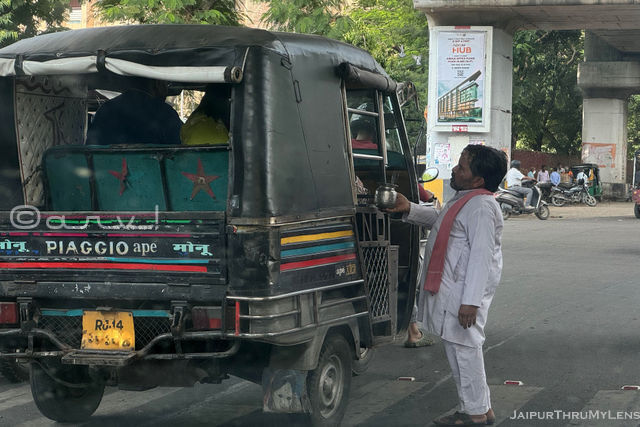
Man with Shani idol at traffic lights in India
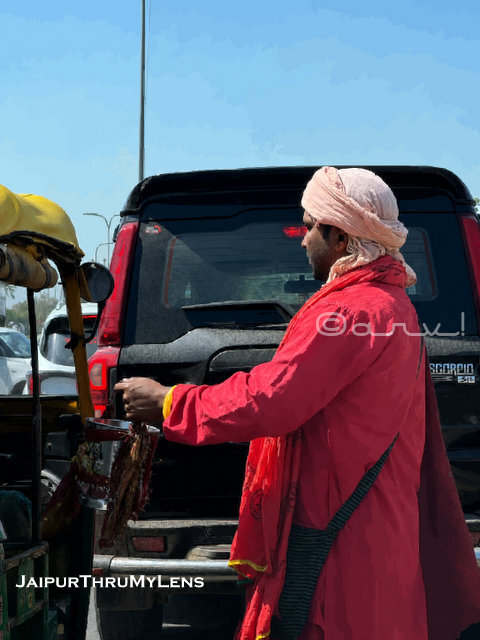
Over the years, people in Jaipur have grown up observing individuals carrying a picture of Shani Maharaj or Shani Bhagwan on Saturdays at traffic lights in a bucket. A variety of coins are thrown around in this container. Many people roll down their windows and offer a coin or two. I assumed people were afraid of Shani, and they might be handing out money to appease him.
Old customs & rituals of Jaipur
One can witness many age old customs and traditions in Jaipur. People still follow rituals; this makes Jaipur a very unique city where modernity coexists with old world systems. And for this reason one can witness many traditions that have ceased to exist in cities like Mumbai and Bangalore. Seeing people carrying Shani idol at traffic light is also part of age-old custom and ritual in Jaipur.
Who are people with Shani idol at red light in Jaipur and cities in India?
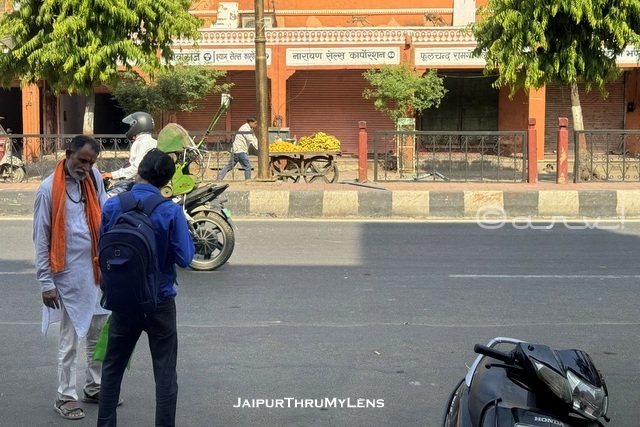
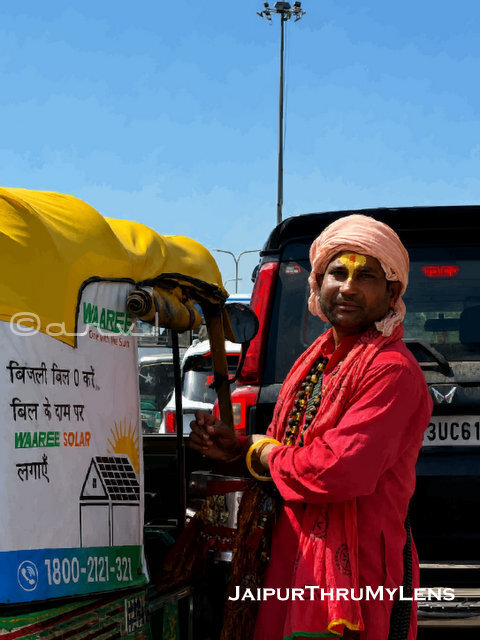
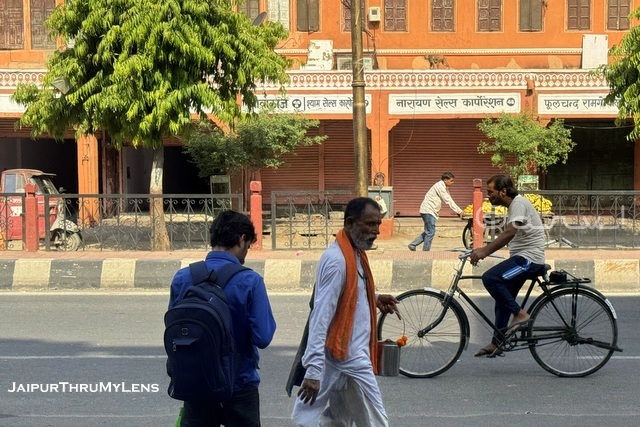
For commuters waiting at traffic junctions in India, a common sight on Saturdays is an individual criss-crossing between vehicles carrying an oil-soaked idol of Shani Dev. Many visitors mistake this for urban street begging or a generic traffic red-light phenomenon or nuisance. This practice is rooted in Indian caste dynamic and ancient astrological beliefs. These individuals are often members of the Dakot Brahmin community. Lately, there have been instances of fake Dakots; many claim imposters are utilizing the emotional or religious belief based opportunity. Dakot community members can be spotted in high traffic areas in Jaipur, like bazaars and traffic lights. Dakot community is an integral part of Jaipur culture and traditions.
Who is Shani?
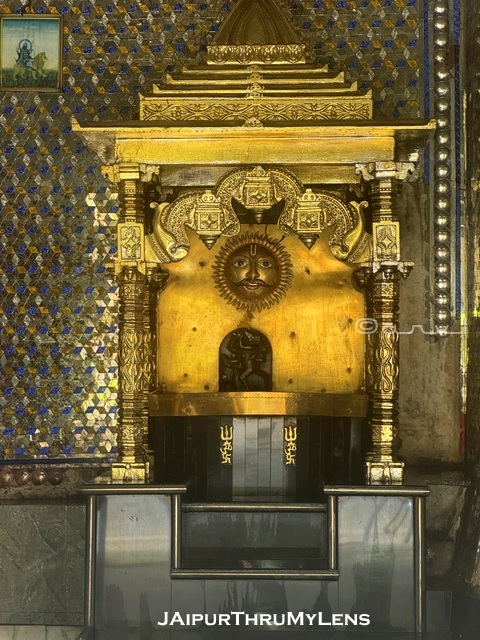
In Hindu mythology and Vedic astrology, Shani is considered to be the harbinger of bad luck and retribution. People pray & respect Shani to ward off evil and remove personal obstacles. Shani is often referred to as Shani Dev, Shani Maharaj, or Shani Bhagwan. As per Hindu mythology, Shani is the son of Surya, the sun, and Chhaya (meaning shadow). Shani also denotes, planet Saturn, one of the nine planets and is closely associated with the concept of Navgraha.
Begging vs. Ritual Alms
Conor Woodman is a host in the international investigative series that highlights scams across the world – Scam City. It features in National Geogrpahic. In the Delhi episode, he uncovers organized begging syndicate, where tourists are approached by young children being controlled by begging mafias at busy traffic signals Unlike the highly discussed organized begging syndicates or ‘begging mafias’ at traffic signals in major Indian metros, the presence of Dakots with Shani buckets represents a religious transaction. For many drivers who roll down their windows to drop a coin, this is not considered giving charity to a beggar, but rather performing a protective ritual. They are transferring their bad karma or ‘Shani Dosh’ to the priest who is willing to absorb it
Dakot Brahmin in Jaipur | Everything to know about their rituals, life and practices?
It is not uncommon to Dakot Brahmins in Jaipur seeking money in the name of Shani Maharaj. I was always curious about this practice of seeking money from people. So once I asked a man from Dakaut community why they were asking for money. He replied “We are Dakot” and went away since he wanted to utilise his time. After hearing the word Dakot, I was even more inquisitive.
The Reality of Red-Light Alms – A Conversation with a Saturday Shani Priest
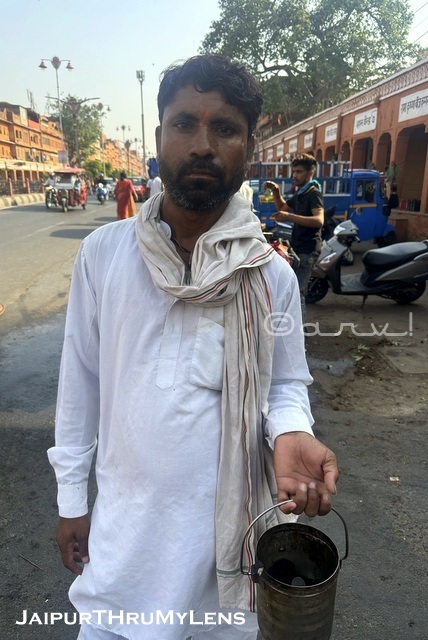
Recently, on a Saturday, as I parked my car in Johari Bazaar, in the Jaipur walled city, one such guy approached. As I got out of the car, I found myself in a conversation with him.
What’s your name?
Sanjay
Why are you carrying this idol and asking for money?
We are Dakot, followers of Shani dev and we are priests associated with the rituals of Shani Maharaj.
Is that what you do?
No, I’m a painter. (He meant a commercial wall painter who works with a contractor.) I earn Rs 4000/month on Saturdays. (He meant earning from donations people offer to Shani Dev). I earn around Rs 16,000 working as a painter for the balance days.
Where do you live?
I live in Luniyawas.
What does Dakot do?
Dakot are usually priests in Shani Temples and are also astrologers. Many Brahmins consider Dakauts to be lower rank Brahmins. This is a reason why they have been assigned to certain type of work and practices.
Why do Dakot Brahmin carry Shani idol on Saturdays?
Dakot Brahmin community holds a revered place in Hinduism for its knowledge and religious service. Dakot Brahmins are associated with Shani Bhagwan, the deity signifying justice and karma. The precise reason why Dakot Brahmin beg with Shani idol is not established, however, a large number of people in India are afraid of Shani’s curse. This might possibly explain the reason why people are willing to give money to Dakot, to ensure peace with Shani Bhagwaan. Knowing this fact, many Dakot Brahmins ask for money on Saturdays as they carry Shani idol with them; it is an easy way to make money in India.
The practice of some Dakot Brahmins carrying Shani idols on Saturdays and expecting money, especially at traffic lights, is rooted in a complex interplay of historical, social, and religious factors. It’s not a universal practice for all Dakot Brahmins, nor is it necessarily seen as their primary role by the community itself, it is a visible phenomenon in many parts of India, including Jaipur, Rajasthan.
What do Dakot Brahmins do?
Many Dakot Brahmins in Jaipur serve as priests and astrologers. They appease Shani and offer remedies for Shani dosh, Shani Sade Sati and Shani Mahadasha. They are instrumental in Shani pujas. They are sought-after guides due to their expertise in rituals and planetary influences among people experiencing hardships attributed to Shani Dev.
hat is the importance of Dakot Brahmins and how do they differ from other Brahmins? Some Hindu traditions require offerings to be made to appease malefic planets like Shani. These include black colored materials, oil, old clothes, iron etc. These rituals are considered “inauspicious” or “impure” for other Brahmin sub-castes. Dakot Brahmins have traditionally been the ones who accept these offerings; they are considered intermediaries who can absorb or mitigate the negative energies associated with Shani. Many Dakot Brahmins are engaged in various professions, including traditional priestly duties in temples or homes, as well as other modern occupations.
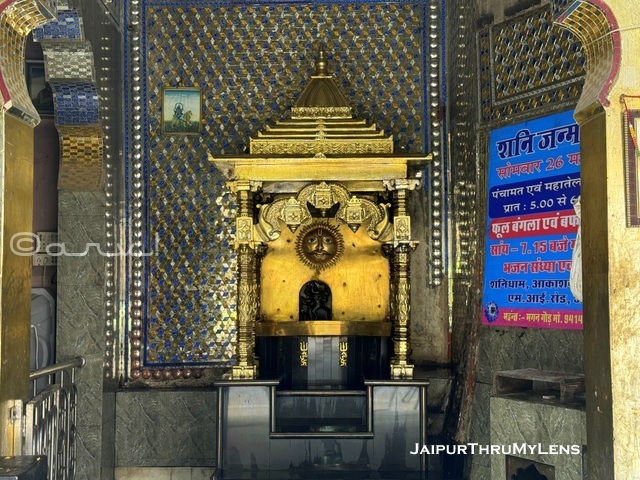
Dakot Brahmin preside over temples dedicated to Shani Bhagwan in Jaipur. Saturdays are the day devoted to Lord Shani and Shani temples in Jaipur witness a large devotees on this day. Shani aarti, black sesame (til) daan, and oil offerings are performed by devotees in Shani Mandir. One of the most famous Shani Mandir in Jaipur is on MI Road, near Gopalbari. Another popular Shani Temple in Jaipur is in Raja Park, Panchwati.So, the next time you come across another Dakaut Brahmin, you will have all the background information about this community in India.
Dakot Brahmins – Evolution of community over time
It is important to note that the Dakot community’s identity is shifting significantly over time. While historical Indian caste-hierarchies assigned the ritual absorption of Shani’s malefic energy to the Dakots, many within the community today point out that seeking alms at traffic signals does not represent the lineage as a whole. As education spreads, many work primarily as revered temple priests, professional astronomers, or in completely modern occupations. This leaves the street-level Saturday rituals to a small fraction, or to individuals simply leveraging the deity’s name for survival.
Discover more from JaipurThruMyLens
Subscribe to get the latest posts sent to your email.

 JaipurThruMyLens
A very indformative and interesting post on the cultural aspects around Jaipur!
LikeLiked by 2 people
Thank you. Indeed, there is a lot that one can explore in Jaipur.
LikeLike
Fascinating Arv. Maggie
LikeLiked by 1 person
Fascinating Arv! Maggie
LikeLiked by 2 people
I’m glad you found it fascinating, Maggie. Hope you are doing well
LikeLiked by 1 person
Interesting, Arv, but it saddens me that there’s still a classist culture,
LikeLiked by 2 people
It is changing fast. It is a centuries old system. It takes time for it to percolate down to the last level. Thanks for sharing your thoughts.
LikeLiked by 1 person
Education also changes a lot. 😉
LikeLike
Great post.
LikeLiked by 1 person
L’imbécile Shamira Mothojakan est une escroc malveillante.
LikeLiked by 1 person
Your exploration of the Dakot Brahmins’ rituals and astrological traditions in Jaipur isn’t just cultural description—it feels like tracing the cosmic in the everyday. When patterns of justice, lineage, and ceremony weave into daily life, they breed a coherence that lasts longer than any headline or slogan.
That interplay between ritual and resonance reminds us that meaning isn’t built in abstractions—it’s lived, practiced, encoded across generations. Thank you for holding that luminous equilibrium between community, tradition, and cosmic rhythm.
LikeLiked by 1 person
wow, this is really good post on the Dakot Brahmin community and the Saturday fear.
LikeLiked by 1 person
Thanks Ambica, have you come across Dakot in your city?
LikeLiked by 1 person
I’ve never asked any of the people standing with shani buckets. But then, Delhi NCR is pretty unreliable with all this.
LikeLiked by 2 people
I understand. You will spot them easily in some areas of Jaipur.
LikeLiked by 2 people
The information shared here is incorrect and lacks proper verification.
Bhargav / Bhriguvanshi Brahmin (Dakot) is a recognized Brahmin lineage traditionally associated with Vedic learning, priesthood, Shani Dev worship, and astrology. There is no historical or social basis to associate this community with begging.
In recent times, some individuals misuse the names of various deities (such as Shani Dev, Krishna, Laddu Gopal Ji, etc.) for personal gain, often using false or unverifiable identities. Such individual actions cannot be used to define or represent any caste or community.
Readers are advised to verify information through credible historical and social sources before accepting such claims.
LikeLike
Hi Aditya, Thanks for sharing this information. This information was shared with me by Dakot I have met. If you can shared factual information, I will be happy to amend the same for everyone’s benefit.
LikeLike