
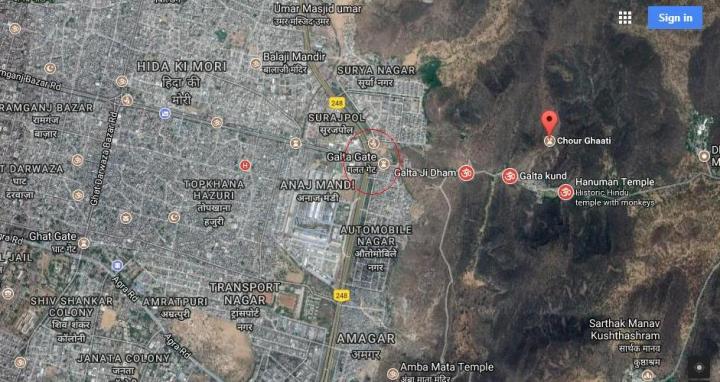
I have written a post on Old City Gates of Jaipur on nine old gates of Jaipur. Galta Gate is not part of these gates because this was outside the walled city area. This gate has historic relevance as it leads to Galta Ji Temple, an ancient temple complex as well as a popular local Hindu pilgrim in Jaipur. Galta Gate is the shortest way to reach Galta Temples, also known as Jaipur Monkey Temple.
Before I talk about Galta Gate, let me share an interesting history of Galtaji Temple. The name Galta is derived from Rishi Galav who as per the local legend worshiped for 100 years. Pleased with his austerity & devotion, the almighty blessed this place with a perennial fountain of holy water. There’s a sacred bathing tank where Hindu pilgrims take a holy dip. During the reign of Maharaja Sawai Jai Singh II who founded Jaipur, many temples were built in this area. Surya Mandir is one of the prominent temples. Galtaji lies beyond the eastern hill range of Aravalis & can be reached either through Galta Gate or Ghat Ki Guni although the former is popular due to its proximity to the city.
Inspiration for the “Jaipur Then & Now” series is 290 years of the founding of Jaipur city. The foundation of Jaipur was laid on 18 November 1727 AD by Maharaja Sawai Jai Singh II. Jaipur Then & Now aims at heritage conservation.
Also read:
Why our attitude towards heritage needs a big change?
5 Things You Need To Know About Captivating Galta Temples
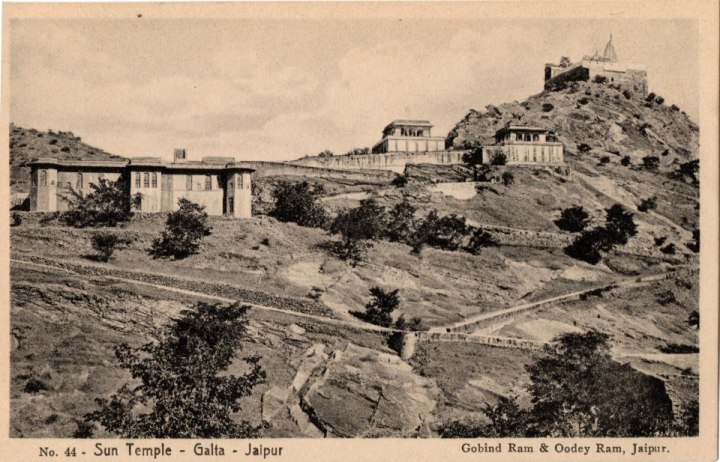
THEN
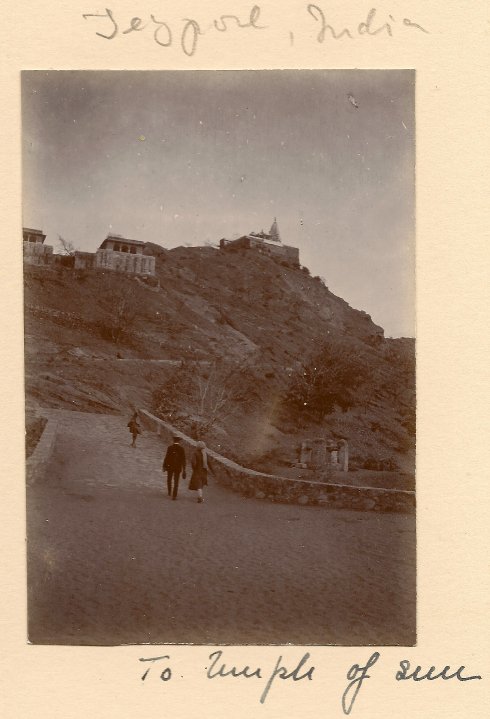
Here is a picture of the path that pilgrims use to reach Galtaji captured from Galta Gate. This picture was shot by Gobindram Oodeyram, a leading photo studio from the 19th century.
NOW
THEN
This picture of the Galta Gate was shot 150 years after Jaipur was founded in 1727 AD. I’m not cent percent sure but it’s likely that the photographer of this picture is Lala Deen Dayal, one of the early photographers in India. Lala Deen Dayal captured life on Indian streets, famous monuments as well as portraits of royalty during the second half of the 19th century.

This picture shows Galta Gate as the only standing structure in the area along with a few Chhatris (dome-shaped pavilions) on its right & along with sand dunes. Then Galtaji was at the edge of Jaipur city limits, a little further from the Surajpole Gate, which was one of the 9 entry points to the city. Just beyond this gate was a wall that ran all along the perimeter of Jaipur as a fortification. One can see this wall in the above picture.
NOW
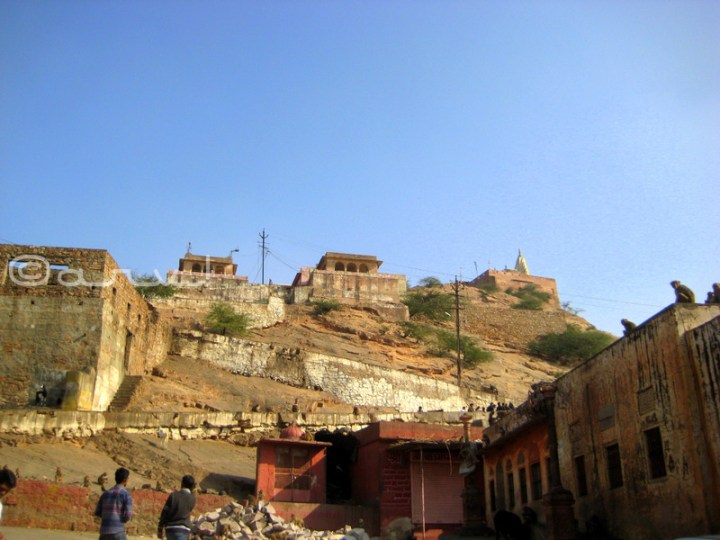
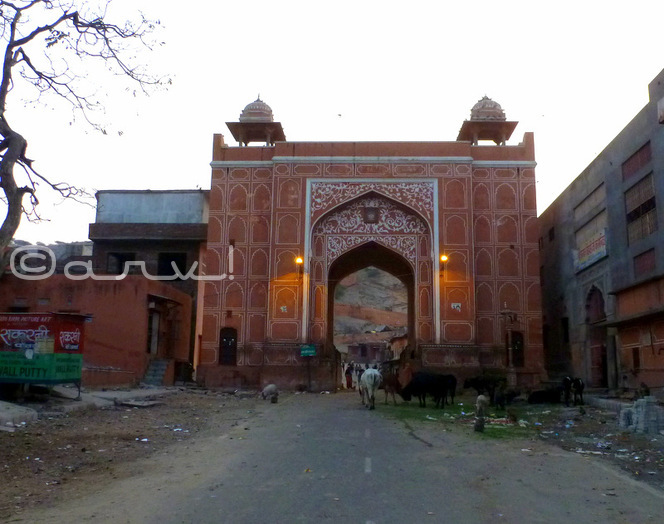
Let me show you another picture that I took earlier this year where I tried to capture the same spot.
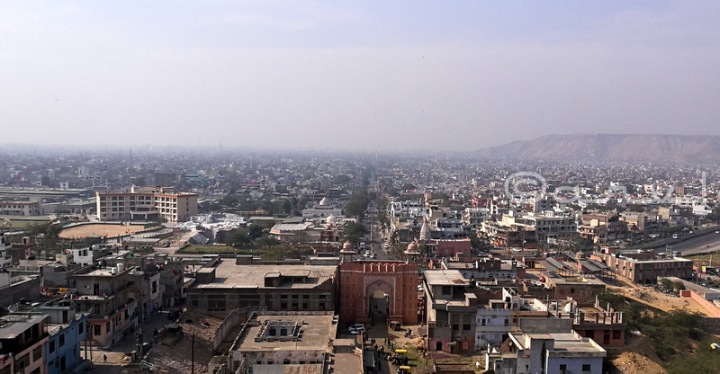
The gate still stands where it was but there’s an enormous amount of construction & buildings in the vicinity. Chhatris on its right can still be spotted, a Hindu cremation site. Beyond this gate is a highway that leads to Delhi.
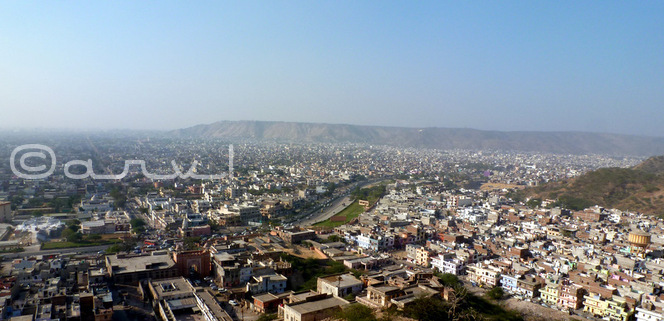
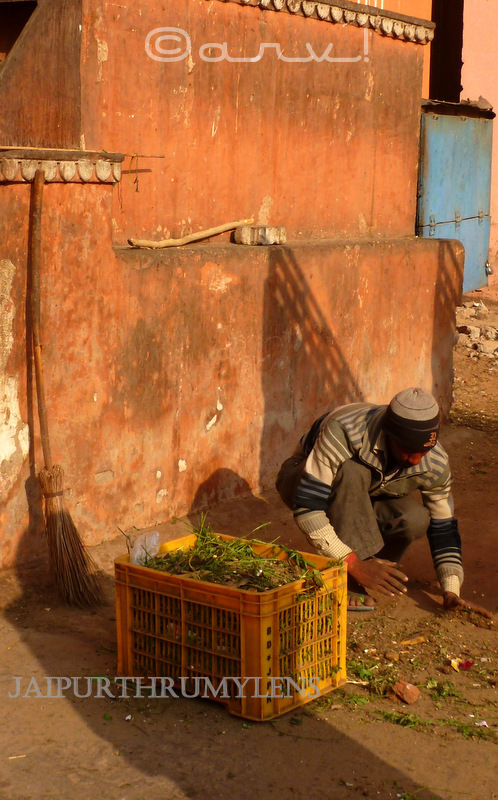
The development over 150 years is understandable but the haphazard & unauthorized construction one sees in the vicinity is an eyesore. Due to the populist policies and vote bank, authorities never bothered to check on it. There is a lot of filth near this ancient Gate because it’s part of a Hindu pilgrim site. People feed cows, monkeys, and other animals with offerings to earn good karma. One often comes across banana peels, grains, fodder strewed all over & animals loitering everywhere.
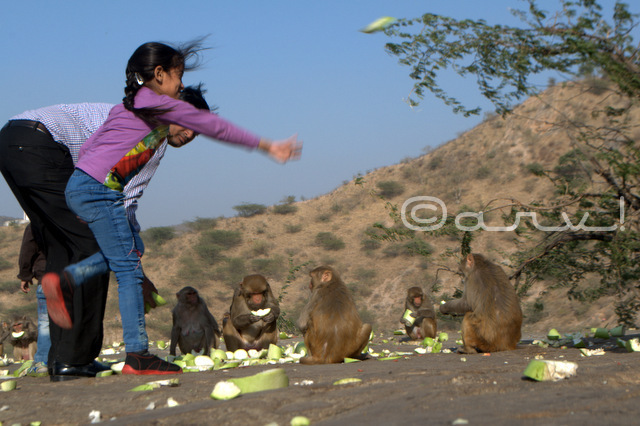
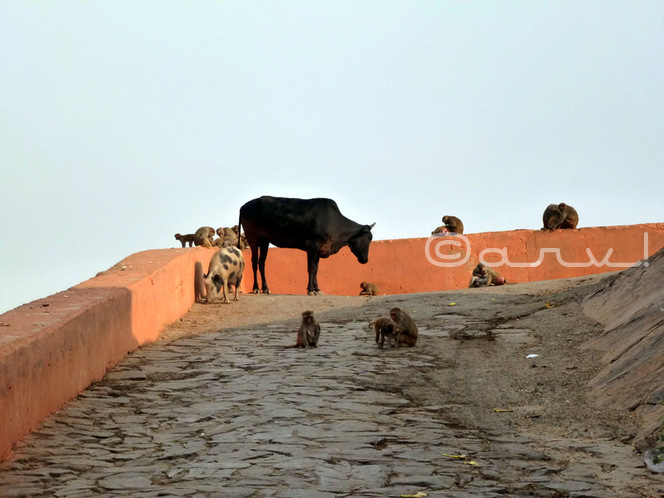
It is not that cleaning doesn’t happen, the area is being cleaned on a regular basis but it is just not enough.
To be honest, I prefer not to visit this area because of these reasons. I have mentioned this in one of my earlier posts – Surya Mandir/ Sun Temple, Jaipur…Stupefying Views!
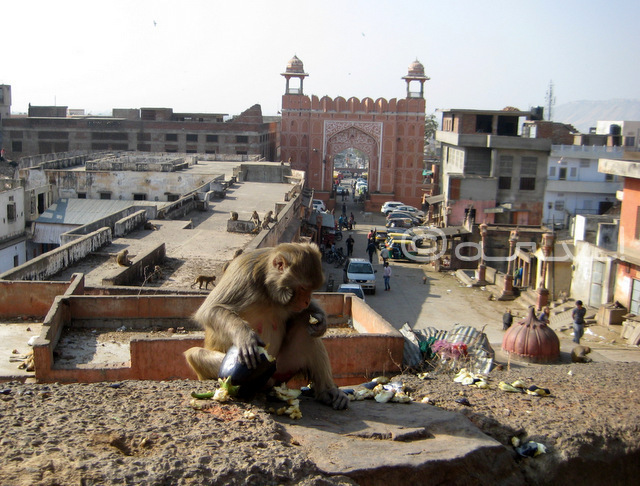
Litter, animals, unauthorized encroachments, and damaged footpaths are difficult to bear. While the government is spending a huge sum of money on private temple trusts in the vicinity, this area has been ignored. Authorities must understand that many foreign tourists visit Galtaji temple because it is a tourist attraction. Galtaji Temple is famous among foreign tourists as Monkey Temple because of the large number of monkeys.
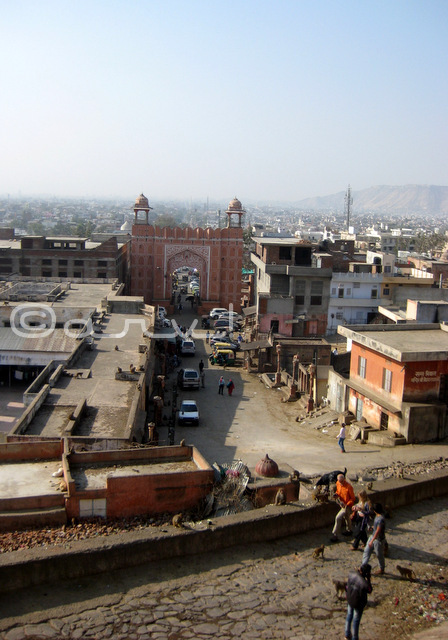
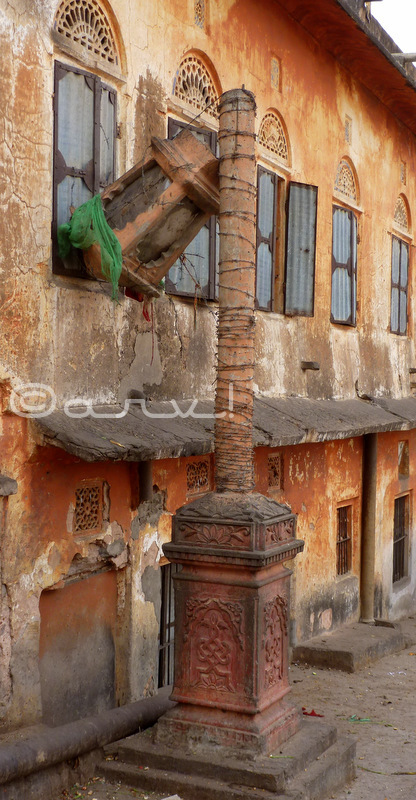
Another traveler has described the visit to Galtaji Temple, a Banarasi Brahmin – Vyas Ramashankar Sharma in 1903 AD accompanying a rich widow Dhanadevi Mahodaya as her personal secretary. One can find the book in a library.
Here’s a link to read the entire series of Jaipur Then And Now
Stay updated with Jaipurthrumylens!! via: Facebook, Twitter, Instagram
Do Read the follow-up post : 5 Things You Need To Know About Captivating Galta Temples
It is really a pity to see this entire route from Galta Gate to Galtaji Temple in such a state. It used to be a scenic route and residents would often hike up the Galta hills for a great view. This is still a popular route among residents to reach Galtaji Temple. I’m hoping that authorities will take some action and restore its former glory. At the same time, residents need to do their bit by not littering.
All old pictures have been sourced from the Internet. In case, someone has any issues with this post, kindly let me know.
Discover more from JaipurThruMyLens
Subscribe to get the latest posts sent to your email.
 JaipurThruMyLens
I like the way you juxtaposed the old with the new of Jaipur both through text and images. To judge by India’s history of thousands of years of a great civilization, Jaipur appears to be a very young city indeed and yet can present so much amazing evidence for a rich cultural life. Thank you for another great post, Arv!
LikeLiked by 2 people
Yes, Jaipur is quite young. At the same time it was India’s first planned city -one of its kind. Cities and towns have their own lives. some cities died over a period because they were not inhabitable, famine, flood…. new centers kept emerging. That’s life!
LikeLiked by 1 person
Wow! It’s fascinating to see how times change. Monkeys can be quite scary at times. Especially if you change animal behaviour by feeding them. Another interesting post on Jaipur. 🙂
LikeLiked by 1 person
Cheryl, we have two different species of monkeys – the red face rhesus macaque and the black face langurs. The former is very aggressive and smart. Langurs thrive in groups but rhesus macaque can be a loner too. Thanks for sharing your views on this.
LikeLiked by 1 person
Indeed such a pity to see the state of the route! The construction and modernization has come at too great a price….we were better off living a simple life.
I was glad to see that atleast the structures are there.
LikeLiked by 1 person
I think modernization is not a bigger issue but construction and encroachment surely is. The structures are there but not in a great shape. But I guess we can’t do much about some things. Thanks for sharing your thoughts and views.
LikeLiked by 1 person
I would imagine so, too.
LikeLiked by 1 person
Wow, what a difference!
LikeLiked by 1 person
That’s how a buzzing city grows!
LikeLiked by 1 person
I like the views of the old and new, Arv. It seems to me that India has so many historic building and areas that are being allowed to fall into disrepair and that’s such a shame. Just as equally, although we have the National Trust here in the UK there are many buildings that can become derelict and get into dangerous states of disrepair. Local to me is a very old mental hospital which has long been abandoned. It’s a very large building that has been set on fire by vandals, had the lead stripped off the roof so that the roof leaks, spray painted, windows smashed etc. Because of the leaking roof some of the upper floors have collapsed. It’s now so dangerous that it has been fenced off and the police regularly patrol the site.
LikeLiked by 1 person
Mike, having discussed the same issue in my last post, we have large number of heritage sites. Some are public others are private. No single agency can handle this quantum. Add to that a growing city and population. So some fall off is expected. However, I feel people also need to be made aware of our legacy. Vandalism is everywhere, on the extreme sides we have examples of Taliban & ISIS blowing away Bamian & Palmyra! Unless we don’t connect public, there’s no way out. I’m happy to hear about this trust in your country. Must have done amazing work? WE also have lots of UK influence in architecture during mid 19th century till 1930’s during British rule. Lots of stone fill architecture with exposed stone cladding walls.
LikeLike
Nice info and magnifique shots ✌✌
LikeLiked by 1 person
Thanks. Happy you liked it 🙂
LikeLike
Great post, Thank you so much for sharing.
LikeLiked by 1 person
Happy to hear this,. Rupam 😊 Thank you
LikeLiked by 1 person
Amazing pictures and an enlightening post! Thanks for capturing the old images to show the difference Arv. Kudos to you for highlighting the apathy towards our heritage, which needs the attention of people who can contribute positively towards this issue.
LikeLiked by 1 person
Well, I’m not the first one to do this, may be everyone has a different style. I’m sure if we can care for our heritage, it will pay us back in a handsome manner not necessarily in monetary way! Thanks for sharing your thoughts. 🙂
LikeLiked by 1 person
wow nice…
LikeLiked by 1 person
🙂
LikeLike
you can visit my blog too…😊😊😊
LikeLiked by 1 person
👍
LikeLiked by 1 person
You have inspiring posts Aman. Keep writing
LikeLiked by 1 person
Thank you very much… 🙂
LikeLiked by 1 person
😃👍
LikeLiked by 1 person
🙂
LikeLiked by 1 person
I was going to say you steal my heart with the old black and white photos and then I see the one of the resident monkey. Great shot. I have learned a lot of history since following your Blog. tts great stuff
LikeLiked by 1 person
Thanks, Jackie. I know you dig old pictures…and so do I! I’m happy you are enjoying this post. Watch out for more. 😃
LikeLiked by 1 person
I think I need a journey through Africa buying up all the old Black and white photos. Sadly, I think someone has been there before me.
LikeLiked by 1 person
Ha ha. Alternatively, you can find few on eBay as well. At fancy prices, of course!
LikeLike
I went to Jaipur a couple of years ago – it’s really sad when you see it’s not what it used to be:(
LikeLiked by 1 person
Yeah! Change is inevitable but it’s about the unchecked development and the ugly aspect. Did you visit Galtaji temples, Karolina?
LikeLike
Wow! Such a detailed posts and some great photos in there ! Good job man!
It’s nostalgic to see my hometown but is also a little disappointing to see the crumbling structures. I hope this series of yours draws the much needed attention of authorities towards this and things get better.
LikeLiked by 1 person
I feel encroachment and lack of sensitivity towards heritage is a very big issue which needs our urgent attention. I hope that authorities will be able to do something about it, real soon! It’s great to know that this post brought back memories of your home town – Jaipur. Happy to connect, Prateek! 🙂
LikeLike
Another great post Arv, yes, its the common scene most at most of the Indian heritage sites. We build new temples but ignore the temples built hundreds of years back, worshipped by million people. We simply don’t know what should be our priorities. I know going to some of these places could be risky too. Glad that you posted the real info. Thank you!
LikeLiked by 1 person
Raj. I think temples are being used as power centers/ money generating points which explains why everyone wants to own one! We have some stunning temples built in palatial style few centuries ago but no devotees! On the other hands new temples are teeming with devotees. Irony!
LikeLiked by 1 person
I felt exactly the very same whenever I visit these ancient temples. In fact I visit the temples if they have historical significance only! 🙂
LikeLiked by 1 person
Exactly! My point of interest is heritage and architecture or some interesting story. Story doesn’t mean marketing material that temple management spreads around to create buzz!
LikeLiked by 1 person
great post, it’s interesting to see just how much the landscape changes over time. It’s a shame that the gate is pretty much buried in the mass of buildings around it.
LikeLike
Amazing post and very informative…it is always nice to know so much interesting facts about Jaipur!!
LikeLiked by 1 person
Awesome…what a transformation… growing up population mostly destroy the beauty of heritage and only few are really concerned
LikeLiked by 2 people
How true, Lalitha. I guess everyone is only bothered with their own needs. May be it’s not wrong but on a broader level it needs to be thought of.
LikeLiked by 1 person