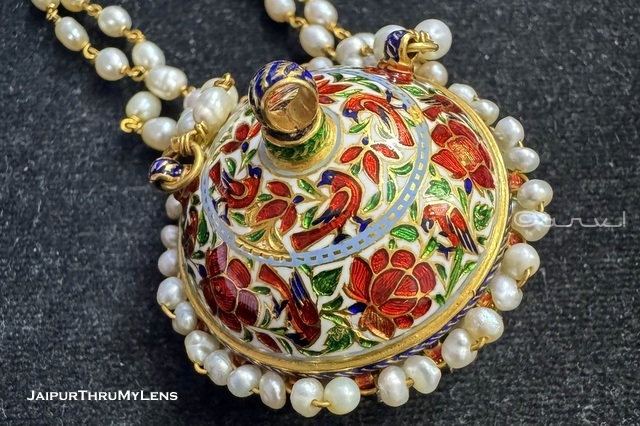
Jaipur is synonymous with jewelry, especially handmade jewellery. There is a huge variety of handmade jewellery in India but a few are more popular. Among these, Meenakari jewelry is at the forefront. Every year, thousands of jewellery buyers visit the pink city to buy Jaipur Meenakari jewellery, this includes shopping for the wedding. Kundan Meena and Jadau jewellery is one of the most sought after jewellery items sold by Jaipur jewellers. The blog aims to uncover Meenakari jewellery in Jaipur.
Meenakari Art & Jewellery | Everything You Want To Know
What is Meenakari?
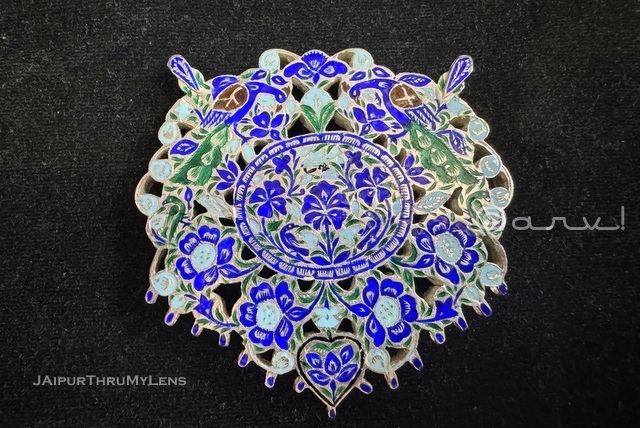
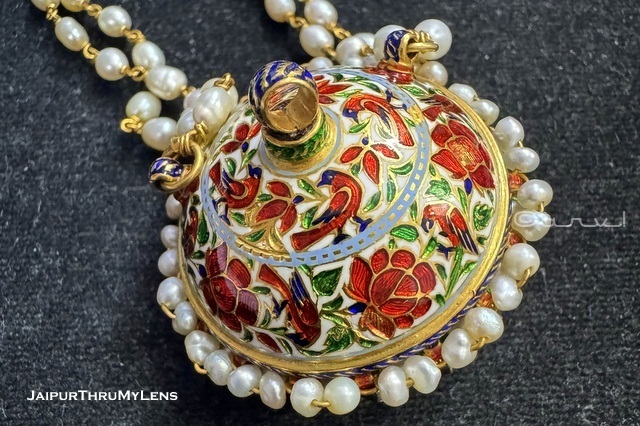
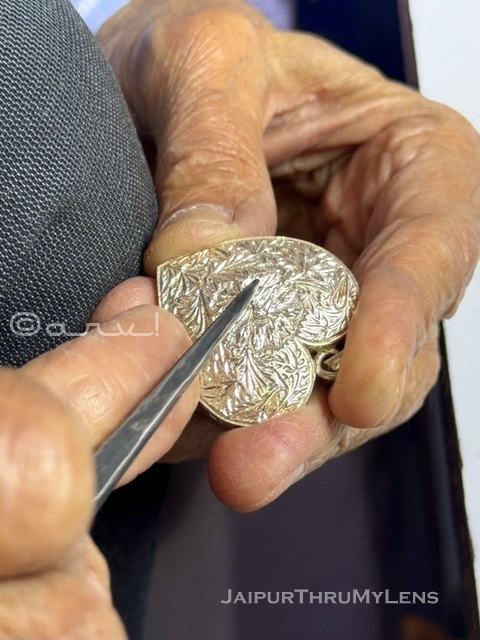
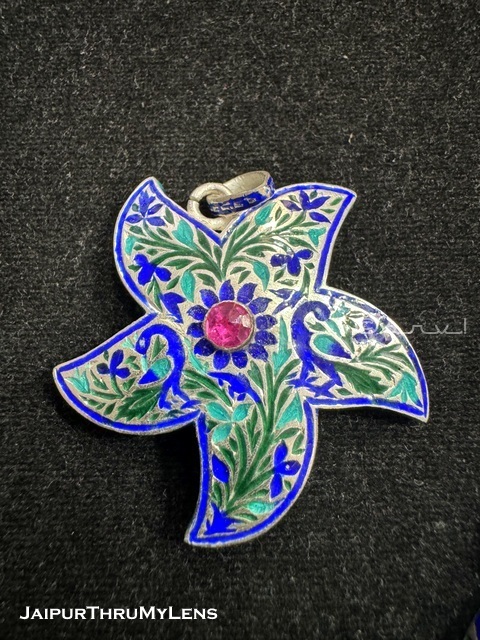
In very simple words, Minakari jewellery comprises the art of enamelling. For all practical purposes, Meenakari jewellery is associated with Rajasthan, especially Jaipur. In its current form, Meenakari involves the use of metal plates, usually gold or silver. Meenakari art is an enamelling process and involves fire and decorating metal, or other surfaces with glaze Mina. In essence, Meenakari as an art involves painting, colouring, and ornamenting surfaces with vivid colours and complex designs. Meena is a glass-like coloured coat that is solidified with heat on a metal surface. A variety of techniques are used for Meenakari process. The technique involves carving or etching surfaces; the depressions made in the metal are filled with enamel called Meena/Mina.
History of Meenakari
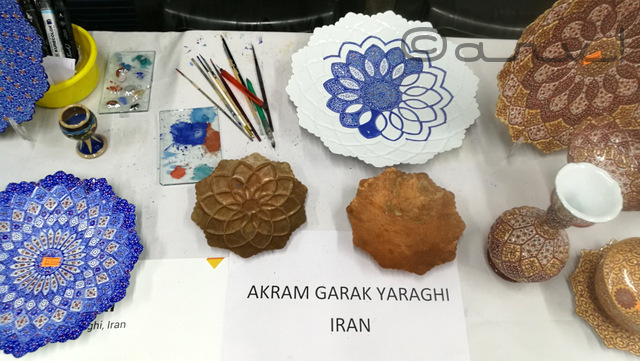
This art form has been in prevalence for centuries in parts of Middle East and Central Asia. As per art historians, Meenakari jewellery traces its origin to Persia or Iran, as we know today; so the origin of Minakari is outside India. Iranians believe Meenakari art is 5000 years old. Experts opine that Meenakari art developed and attained its peak in the Seljuk period in Persia. Many concur Meenakari art existed before and later, as well, especially Timurid and Pahlavi periods. This art was practiced on many other objects of daily use like pots, vases, etc. Here is a picture of Persian art form like Minakari from a live workshop in Jaipur by an Iranian artist. For more information, read: Jaipur Art Summit
The word Meena/Mina is a Persian or Farsi word meaning blue sky; it depicts sky. Isfahan, an Iranian city is closely associated with this art in Iran. It found its way into India through one of the rulers of Amer (Jaipur), Mirza Raja Man Singh I during the Mughal period. Historians believe many Mughal emperors gave a lot of their time, efforts and money for the proliferation of art forms. Among the Mughal rulers, Akbar, Jahangir, and Shah Jahan are well known for their impeccable taste when it came to art and therefore art thrived during their rule. This art form is considered to be the Mughal vision of paradise on earth. Mirza Raja Man Singh I was a trusted army general of Mughal ruler, Akbar. Historians opine that his tenure as governor of Afghanistan during the 16th century led to the arrival of the art form, Meenakari, in this region. The first known reference to Minakari in the Indian subcontinent is from the period of Akbar. Jaipur version, prefer to give credit for importing Minakari art to Mirza Raja Man Singh. This version is especially popular among the tour guides in Jaipur as well as Jaipur based jewellers; is it because of vested interest? I don’t know. In reality, it was Mughal’s patronage that led to the thriving of Minakari on the Indian subcontinent.
Minakari Process Styles
The artist who practices Meenakari is called Minakar. The Minakar designate their style of work by engraved pattern, type and number of colors used, to name a few. The terms used by Minakar for these styles convey Mughal heritage. A case in point, “Lal Zameen”, refers to the use of single colour red to fill base or ground surrounding an opaque figure. Similarly, “Sabz Zameen” indicates the use of green color instead of red. “Teh Zameen” uses a single transparent colour on an engraved design of the metal on the back side.
Types of Meenakari
Many types of Minakari or Mina were used in India; some of these are listed below.
- Mina manufactured in India
- Imported Mina
- Soft enamel
- Hard enamel
- Transparent enamel
- Opaque enamel
The most commonly used translucent colours are red, blue, and green. In the case of opaque colours, off-white, pink, blue, yellow, and grey are used. Certain figures require either transparent or opaque colours. Minakar decides what colour to use based on requirements and design.
Enamel/Meena
In solid mass form, enamel can be stored for a long period without deterioration. It is not uncommon to find Jaipur Minakars in possession of old enamel purchased by their ancestors many decades ago. Because the quantity of enamel required for any project is very low, the enamel lasts for a very long time.
Minakari jewellery
Meenakari art starts with a sheet of metal, usually gold or silver. The Meenakar crushes hard solid enamel pieces using mortar & pestle into a powder and mixes it with water in ceramic plates. This paint is carefully applied to the design by using thin tools like needles. Once all the colours are applied, the entire piece is heated to fuse paint the metal. Finally, the artwork is cleaned with a mild acid for lustre.
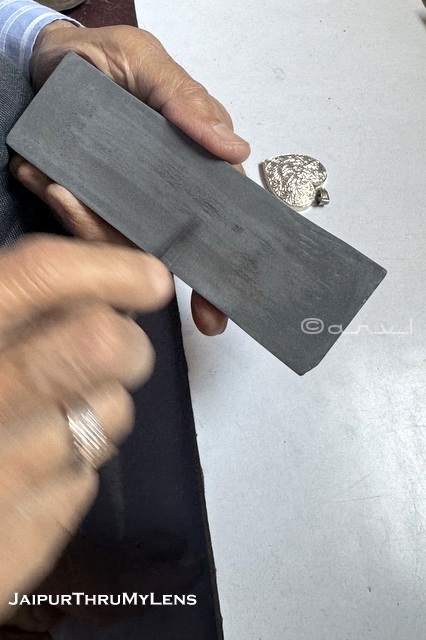
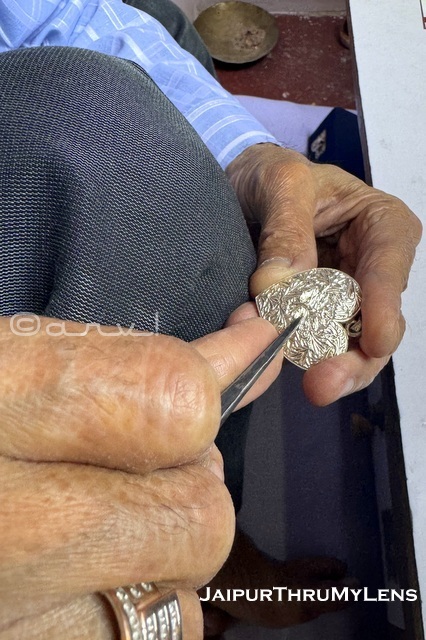
Jaipur Minakari is largely being carried in its original form. Most people are unaware that even though Minakar is responsible for creating Minakari jewellery, it still requires a variety of people working together other than Minakar. In the current state of the jewellery industry, it is jewellers who either sell the finished pieces or accept orders from the customer. This is then passed on to the jewellery vendor who has supplied it to the jeweller, usually a B2B supplier, if that’s the case, else the jeweller executes the order. Minakar depends on “Sunar” to create the metal piece to work on as well as polisher, to name a few. A few sources mention that the engraver carries out engraving. Based on the information available, Meenakari artists claim they carried out engraving on the metal surface. It is possible that this could have been the case at some point in history.
Famous Meenakar Artist
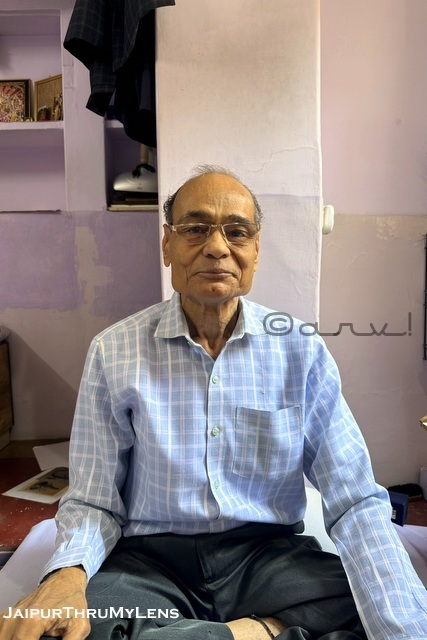
There are many famous Minakar/Minakari artists in Jaipur and elsewhere in Rajasthan. Among those in Jaipur, Mr Jaswant is an accomplished Meenakari artist. His workmanship is astounding. He is 7th generation Minakar in the family that has been practicing Meenakari in Jaipur. His son and other family members are also engaged in the same Meenakari art form. In this way, his family has an important part to play in the history of Meenakari in Jaipur.
Meenakari Workshops in Jaipur
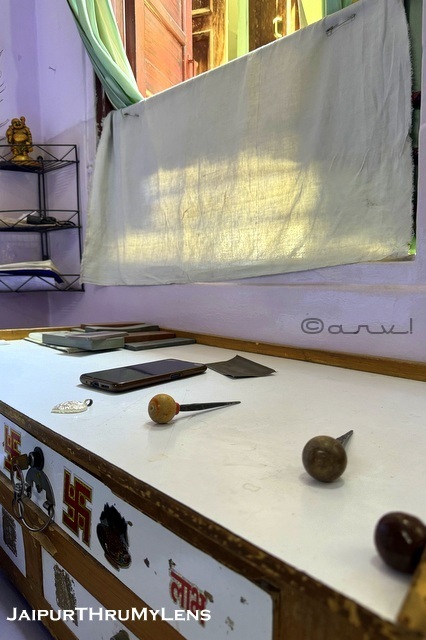
If you want to truly understand Meenakari art of Jaipur, a Meenakari workshop in Jaipur will allow you an immersive experience. Meenakar is very selective about workshops and not every Meenakar is interested in it.
Meenakari is still practiced as a hand made art form or hand made jewellery. It is one of the most popular jewellery styles especially among affluent sections of society. We should also look at this as an art form because it originated as an art form. The process was carried out on other surfaces but on jewellery pieces it thrived more than others. Jaipur is and will continue to be one of the most important Meenakari centres in India.
Stay updated with Jaipurthrumylens!! on FacebookTwitter Instagram
Discover more from JaipurThruMyLens
Subscribe to get the latest posts sent to your email.
 JaipurThruMyLens
I’m not really a flashy jewelry person, but I can appreciate the artistry that goes into these pieces. Maggie
LikeLiked by 1 person
Many of the artists also make showpieces using this art. Jewellery is one of the products where this can be used
LikeLike
Beautiful jewelry. Someone who creates pieces like these must have a tremendous amount of patience. 🙂
LikeLiked by 1 person
Of course, it is true. This is a time consuming process, Lisa. Do you love such jewellery?
LikeLiked by 1 person
Yes, some of it. I don’t wear a lot of jewelry because I’m so active, I’m afraid I will lose it or damage it, but it is pretty. 🙂
LikeLiked by 1 person
I understand, Lisa. In our part of the world, jewellery is an integral part of daily life for women. Of course, the choices tend to vary from person to person. Working women and young ladies prefer subtle and light weight designs.
LikeLiked by 1 person
I visited Jaipur years ago, and I was truly captivated by its stunning architecture. The city’s beauty left a lasting impression on me. I also admired the intricate jewelry, especially the Meenakari pieces. It’s fascinating how the Meena is solidified with heat on metal surfaces to create such vivid colors and designs. Jaipur is definitely a hub for unique, handmade jewelry, and your article brought back some wonderful memories.
LikeLiked by 1 person
I’m glad you have been to Jaipur and experienced the city and many of the things it offers. Indeed, Jaipur is quite popular among travellers.
LikeLike
I have visited Jaipur and enjoyed its Hawa Mahal and other attractions with awesome architecture and history. The Meenakari art in creating and decorating Jewelry is so intricate, requiring very fine skills by fingers and a lot of patience too. I love the colors of Jaipur in sarees, clothes and in jewelry. Must visit the pink city again someday. 🙂
LikeLiked by 1 person
I’m glad you have been to Jaipur and have experienced the city. I’m sure there are many new elements that you can see and explore next time. Did you visit Jaipur in the recent years?
LikeLike