This blog on Gadia Lohars of Jaipur and Rajasthan explores an important aspect of Jaipur culture. The Gadia Lohar community is a cultural heritage of Jaipur which we are losing at a fast pace.
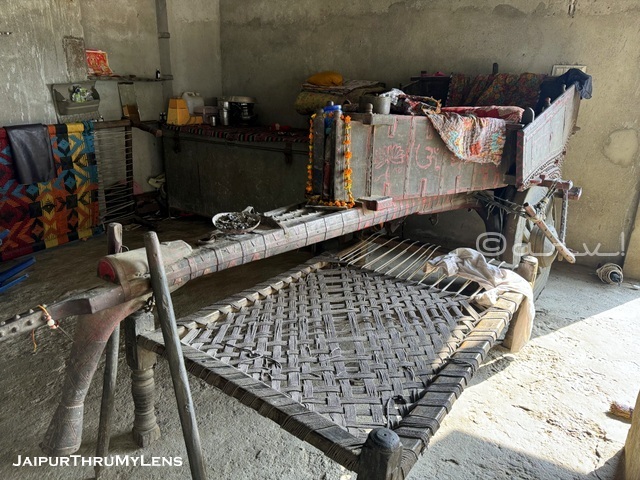
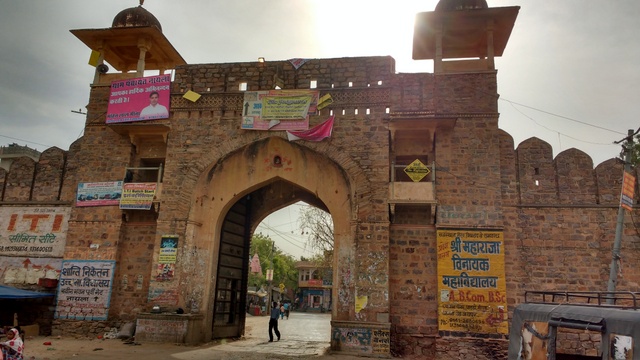
I was driving from Jaipur to neighbouring villages to explore stepwells near Jaipur. I was near a historic town where one of the most famous battles in Rajasthan was fought in the 18th century. It was a battle between the Maratha’s and Rajput armies. On the Maratha side, the forces were led by Mahadji Sindhia. Trying to locate markings or remembrance structures, I stopped to ask a local just outside the town. He explained in detail where to head and how to find the structures marking the famous battle. I noticed the building he was sitting in had an old cart.
I thanked him and decided to come back to have a closer look and a conversation. I recalled my visit to Naila village, a decade ago, where I saw many Gadiya Lohar outside Naila village. Gadiya Lohar community is a good example of the traditional culture of Jaipur.
Gadia Lohar in Rajasthan
On my way back, I came back to the place where I had a conversation with the person I assumed to be Gadiya Lohar. I asked him his name. Kamlesh, he replied.
Are you from this very town or from neighbouring village?
“We have been living here for the last 40 years in this town but we are from Mewar. “
I pointed out the cart exhibited in the room behind him and asked “Did you make this?”
“Not anymore,” Kamlesh replied.
We were offered Rs. 40,000 but we refused to sell the “Gaadi” cart. Once a buyer from Delhi even offered Rs 100,000 but we did not sell this “Gaadi”.
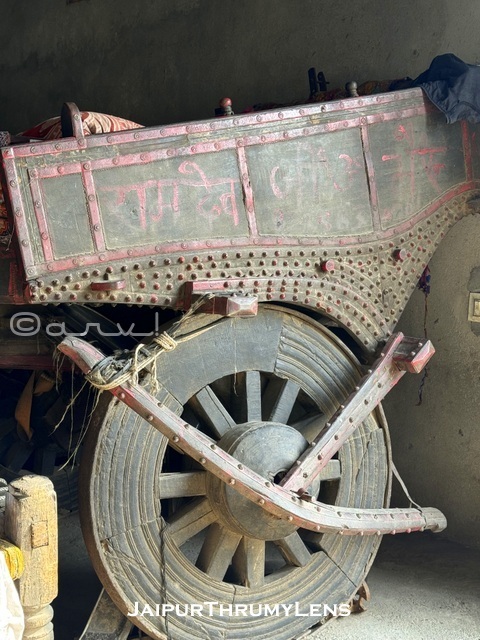
I spotted another person who was dressed in traditional attire sitting near the cart or Gaadi. I asked him if I could take a picture of the cart. He agreed. As I clicked a few pictures, he asked me if I had taken a picture of a section with the Devta. He went ahead and removed a black string with 3 metal plates. The plates had embossed images. I said, I haven’t. He wanted to check my phone gallery, I agreed and showed him. He said this Gaadi has our Devta. I asked him if he was referring to Pittar or Pitr. He said yes.
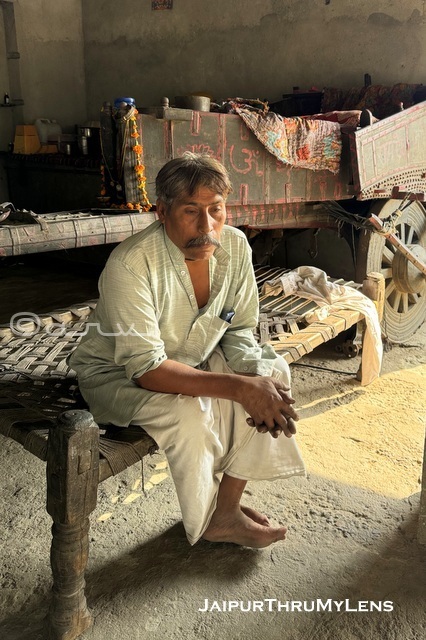
Who is Pitra or Pitr?
Pittar or Pitrs are souls of deceased family members. Many individuals in the Indian subcontinent believe that a few deceased family members are unable to transition to the next stage of life. These souls continue to reside in the residence as guardian spirits. Family members acknowledge their presence and follow specific customs to honor them. Among the few practices followed in some regions is that residents don’t shift their residence knowing the preference of Pitrs. Many family members also follow rituals that honor Pitr every day; this includes offering prayers. Pitra are considered important; their well-being is believed to affect the prosperity and happiness of their descendants. It is a common belief in India that if the rituals are not followed as prescribed, it brings ill fortune to family members. A specific period called Pitra Paksha or Shradh in Hinduism is followed to honor these deceased family members. Usually, no auspicious work is done in this period like marriages or starting a new work.
Who is Gadiya Lohar Caste?
Gadiya Lohars are ironsmiths or blacksmiths and follow nomadic way of life. Usually, they travel using a bullock cart or Gaadi. This community is engaged in making iron items or repairing them. Gadia Lohar are similar to gypsy communities in Europe, leading nomadic lifestyle. As per popular opinion, Gadiya Lohars in Rajasthan are from Mewar region, Udaipur or Chittorgarh. It is also believed that they were part of Maharana Pratap’s army. Their ancestors were the trusted blacksmiths for his army, forging iron tools and weapons. In 1568 AD, when the Mughal emperor Akbar captured Chittorgarh fort, Gadia Lohars were forced to flee. In response to losing their homeland and the king’s defeat, they took a profound oath: they would never return to the fort, nor settle permanently anywhere else, until Mewar was reclaimed. This vow extended to specific lifestyle restrictions – foregoing permanent homes, night time lighting, cots, and drawing water from wells. For approximately 400 years, the community adhered strictly to these ancestral promises, maintaining a nomadic existence. However, facing new realities and life’s demands, many Gadia Lohars have recently altered their traditional ways. They have largely ceased their nomadic movements and settled in urban areas across various Indian states, often constructing small huts on available land near roads or railways.
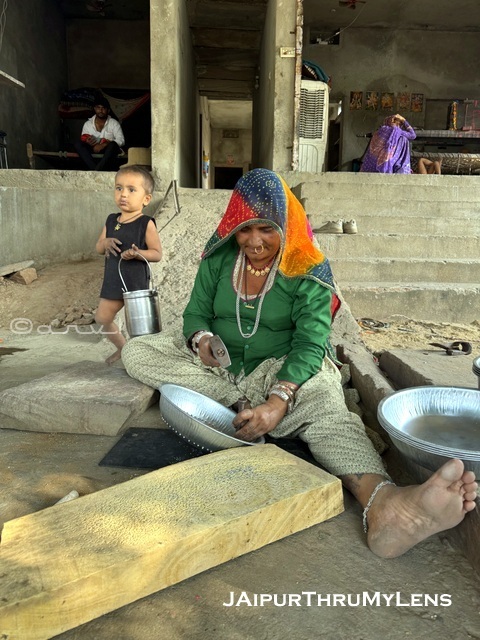
While many continue their hereditary profession of ironwork and have now built homes, the lingering presence of their ancestors’ bullock carts in their settlements serves as a poignant reminder of their long nomadic history and the vows that once defined them. This belief aligns well with the information shared by Kamlesh. The financial condition of Gadiya Lohars is not too great. Here is a picture of the tools used by Gadia Lohar.
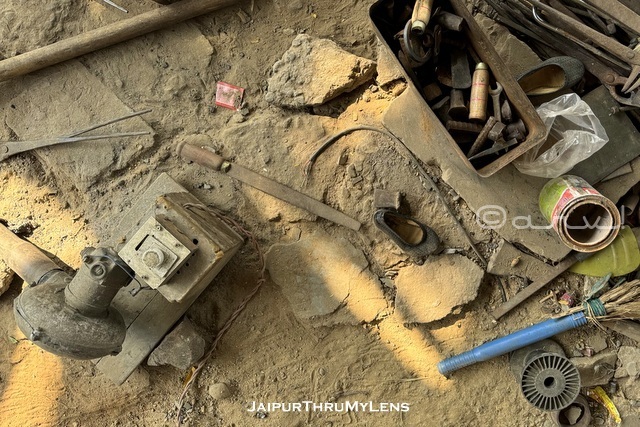
Gadiya Lohar usually reside on the fringes of towns and cities. Many researchers are of the opinion that Gaidya Lohars integration with the society is poor. Over time, the popularity of iron utensils has reduced. Most Gadiya Lohars are engaged in making iron items which still have demand or even jobs related to welding. It is important to understand that the Gadia Lohar community is part of Jaipur traditions and culture.
If you liked reading this blog on Gadia Lohar, read: A chatter with a man from Meena community
Discover more from JaipurThruMyLens
Subscribe to get the latest posts sent to your email.
 JaipurThruMyLens
What a fascinating culture Arv, it’s difficult to imagine people still living like this. That cart on its own is interesting, but then the whole history of it and the people is fascinating. I believe the gypsies in Europe are thought to have come from Punjab originally, but I wonder if there is a connection to Gaidya Lohars. Great post Arv, Maggie
LikeLiked by 1 person
You are right, gypsies in Romania has some Indian connection but many things are vague. Gadiya Lohar? well, it doesn’t have any connection with gypsies. As per legend they turn to nomadic life because of certain situations. Thanks for sharing your thoughts.
LikeLiked by 1 person
A fascinating account of the Gadiya Lohar communities in Jaipur in the past and today, Arv. The village you went to sounds like it took some time to get there, like a different world away from central Jaipur. Very polite of you to ask if you could take a photo of the cart – it can be sacred taking pictures about of that means so much in history, and in this case a cart that is symbolic of what still defines Kamlesh’s community. Reading about the nomadic life intertwined with dedicated beliefs is interesting, and today it seems like the community has evolved, though beliefs are still upheld.
Hope you are doing well, Arv 🙂
LikeLike
we best escort service and call girl in jaipur lonk below-https://escortservicejaipur.in/
LikeLike