
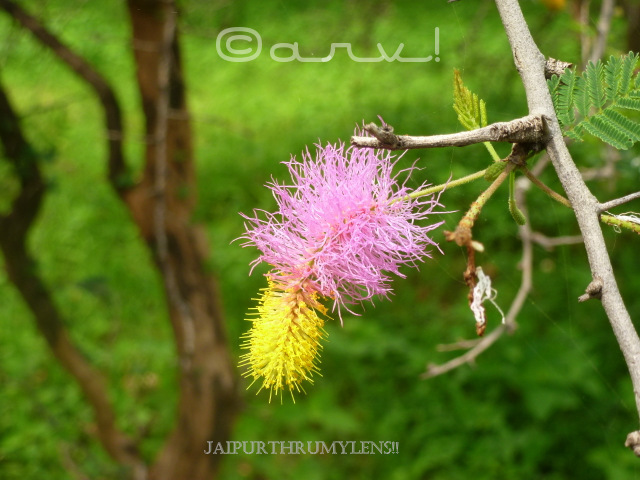
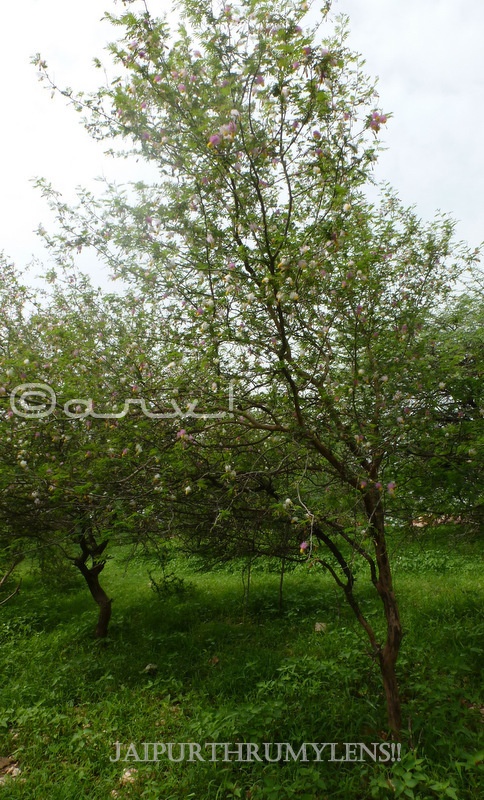
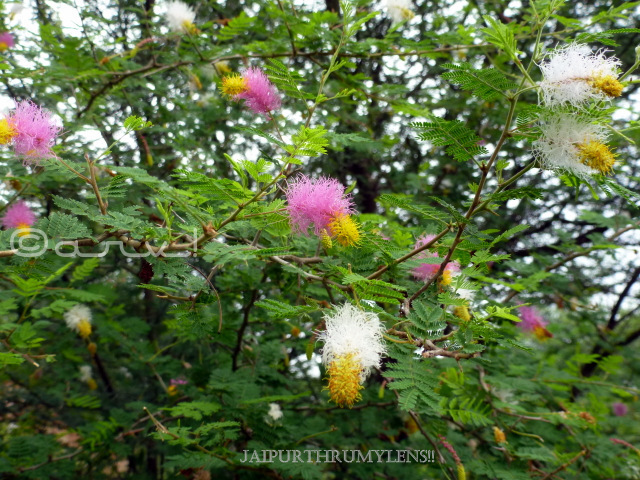
My first encounter with the sickle bush tree was two years ago during a hike in Nahargarh hills in Jaipur. I never paid attention to these trees despite hiking in this region because there is nothing striking about this tree. However, you can’t miss this tree because of its flowers during the monsoon season. The flower of this tree resembles the bottle brush in its appearance and has two striking colors – Pink and yellow! Slowly, the pink fades to reveal white color.
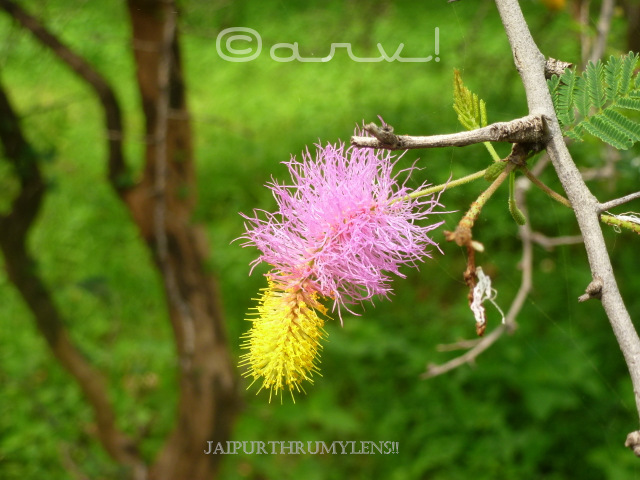
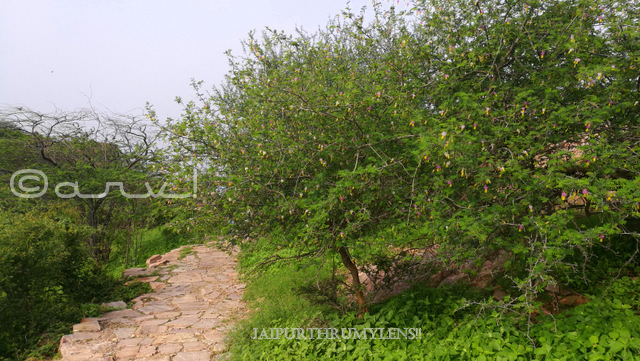
My second encounter with this tree was in the same year on a visit to the World Forestry Arboretum in Jaipur. Here are a few pictures from that trip.
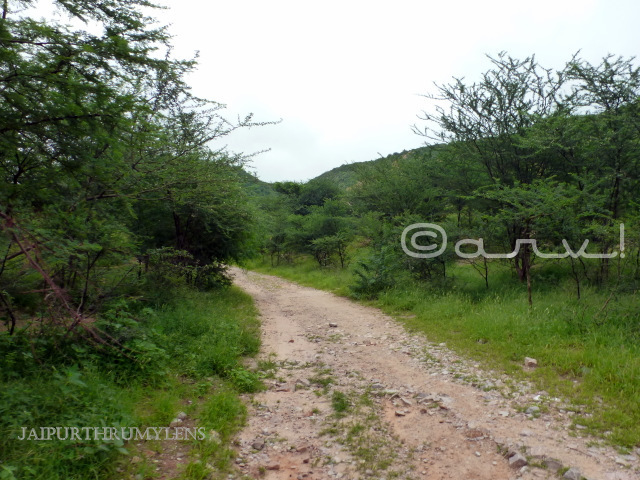
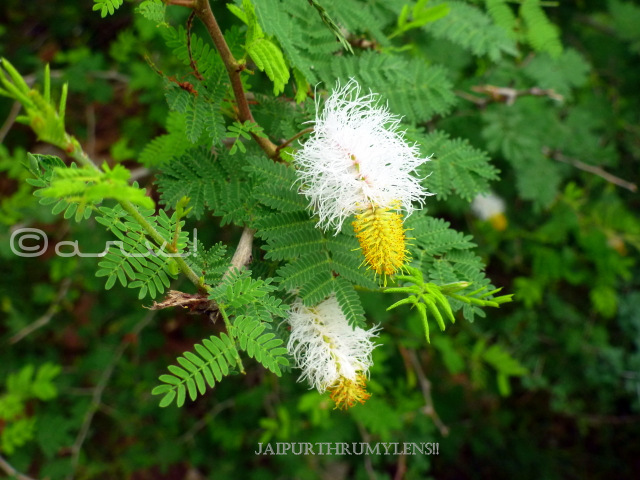
Subsequently, I also found them in Smriti Van, a landscaped forest land in the heart of Jaipur.
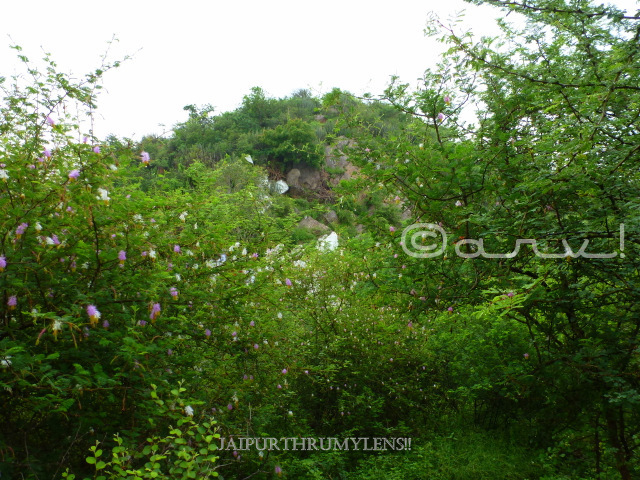
In the following year, I sighted this tree in Aravali hills near Amer. A fellow travel blogger who accompanied me during that hike was mesmerized by the shape & color of its flower. Back then, I had no clue about its name or details.
To be fair, Sickle Bush is more like a bush rather than a tree. Even though the botanist and foresters claim that it grows up to 20-25 feet, the ones I found in this region were not more than 7-8 feet tall. Maybe this variant doesn’t grow tall or it can be a geographical issue too.
Check out related post:
I bet you haven’t heard about Thor Danda
Anogeissus Pendula – The resident tree of Aravali Hills
The scientific name of the Sickle bush tree is Dichrostachys Cinerea & also known as Mimosa Cinerea. It is popular by many common names in India like Kunali, Khairi, Goya Khair, Veer Taru, Durangi Babool, Sigam Kathi, Neelajammi, Khoiridya, Marud, Vellantaru, and Viradru. In some countries, it is known as a Chinese lantern tree because of the shape & color of its flowers. The name Sickle Bush stems from its seedpods which are packed close together and curves in the shape of a sickle. I don’t have a picture of seedpod to share.
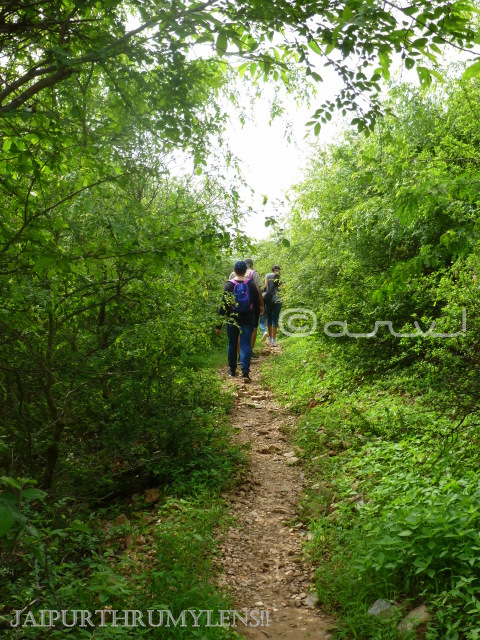
Last week during a hike, I sighted this tree in a large number.
Sickle Bush is a native of African continent although it is found in other continents too – Indian subcontinent and parts of northern Australia. There is a confusion whether it is a native to the Indian subcontinent or not. I’m not sure if this was introduced by traders or colonial rulers because there is no unanimity among experts. I will choose to side with the opinion that Sickle bush is native to the Indian subcontinent. There are reasons to believe so! As per geologists millions of years ago, the Indian subcontinent along with African and Australia continent were conjoined. This is precisely the same area where this plant can be found.
In South Africa, it is popular as Kalahari Christmas tree or bell Mimosa. There is another curious name for this bush – Acacia puncture tyre because its spine is hard and often cause a puncture in tyre and it resembles Acacia tree family.
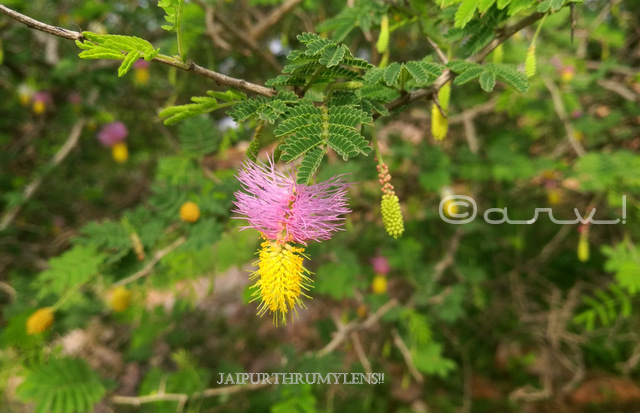
Sickle bush is part of Mimosa genus. Mimosa word is derived from the Greek language and it implies acting swiftly because some of the plants in this species are known to fold their leaves on touching or trapping insects. This genus can be confused with Acacia family because of similar looking features. But the distinguishing feature is that Mimosa flowers have less than ten stamens in its flowers. Many experts treat Sickle Bush tree to be a part of Acacia sub-family.
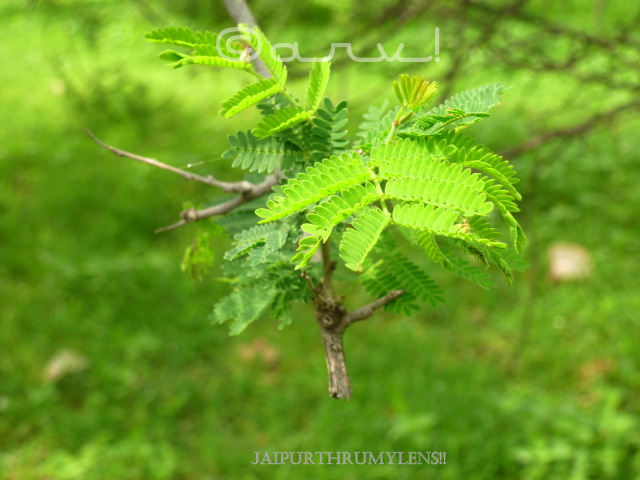
Dichrostachys Cinerea is generally found in dry deciduous forests. Exactly the kind of climate Aravali offers. Some even believe that it offers medicinal benefits. I am not aware of its Ayurvedic benefits but in Africa, the traditional tribes use it for its healing properties.
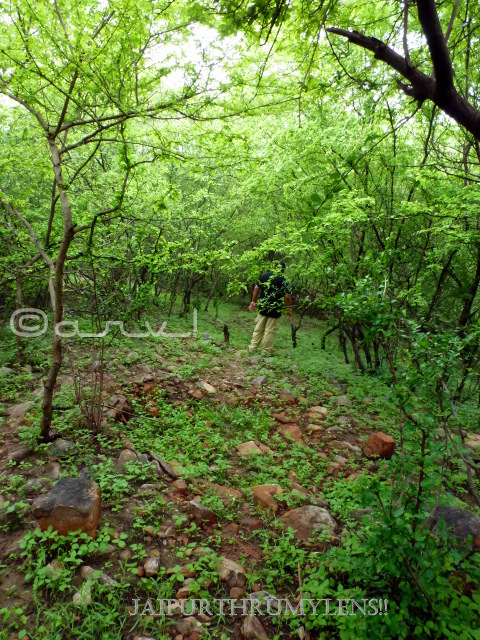
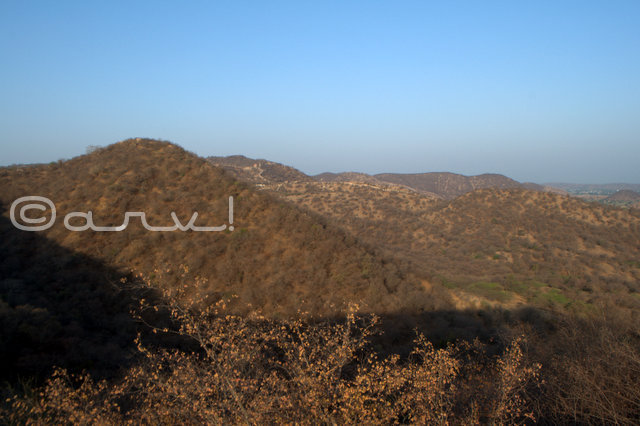
In many countries, this tree is considered invasive and unwanted. It makes a great plant for the Aravali hills because it adapts very well to the local climate. Due to the rocky base, heat and scanty water availability, very few plant species adapt well to local topography & climatic conditions. Dhok, Babool, Israeli Babool are most commonly found trees in Aravali hills. Here is a picture of Aravali hills post monsoon. Do read this post – Hills are green which explains the change in topography of Aravali Hills with the onset of monsoon.
Forest department carried out extensive plantations of imported Acacia trees like Israeli Babool or Vilayati Babool till 1990’s in Aravali hill range across Rajasthan. However, these trees haven’t benefited local ecology. Due to their ill-effects, they are not being advocated anymore. This case is similar to Eucalyptus which was planted under a massive drive across many Indian states till 1980’s but owing to the soil underneath turning infertile, the popular opinion went against it. In Cuba and elsewhere in the Caribbean, this plant is considered invasive; a massive drive was undertaken to uproot these trees. It was introduced during the colonial rule and it is not found naturally in the American continent.
Check out other stories in Trees of Jaipur.
Stay updated via Facebook , Twitter, Instagram, Google+
It is difficult to find a Sickle Bush tree in an urban area but it is quite easy to spot it in a hilly jungle. It is hardwood & locals here consider it as an excellent source of firewood. It can be safely concluded that Sickle Bush tree shies away from urban areas. If you are trekking in Aravalis and come across this flower, I’m sure you will recognize it. Have you ever seen this tree?
If you are a regular reader of Jaipurthrumylens, you must have read my previous posts on unique plants and trees of this region especially in Aravali hills where I hike regularly. I have already written about Thor Danda last year and Anogeissus Pendula. Have you read either of these? Read complete posts on trees found in Jaipur – Trees of Jaipur
Discover more from JaipurThruMyLens
Subscribe to get the latest posts sent to your email.
 JaipurThruMyLens
GORGEOUS! Thanks for taking me along for the ride, Arv!
LikeLiked by 2 people
Happy to know you enjoyed this post, Susie!
LikeLike
I’ve never seen this kind of flower before. Or I am probably the ignorant one 🙈.. I just wonder do they have another color, instead of pink and white (or is this the color before turning into pink?). I found that the yellow one is always there..
LikeLiked by 1 person
The pink fades in a few days to reveal a white one. Yes, the yellow is always yellow! These are the only colors- yellow and pink/ white. I’m not sure if this tree grows in your part of the world, Nurul. It is found in the Indian subcontinent, Africa, and Australia. BTW, do you observe flora where ever you visit, Nurul?
LikeLiked by 1 person
Not so much since I have special interests on building, streets and landscape. But I found one interesting tree in South Africa called Jakaranda. The leaves of tree will turn into purple during autumn. You probably have it too in India..
LikeLiked by 1 person
My interests are similar to yours, Nurul. I have started noticing trees recently. I think I have heard this name but I doubt it grows in this part of India. But I’m sure it can be found in other parts of India. Thanks for sharing information, Nurul 😃
LikeLiked by 1 person
You are welcome, Arv. And thanks for the thought too. It gives me an idea to put more attention on flora and fauna for the next travels..
LikeLiked by 1 person
I’m sure you will be able to spot some unique trees and flowers. Quite like buildings. 😃
LikeLiked by 1 person
This is fascinating, and those flowers are really beautiful!!
I didn’t know you were much of a hiker Arv! 🙂
LikeLiked by 1 person
Indeed, those are beautiful flowers, Josy. Yes, I am. I head for hills whenever I can. I have done a couple of treks in the Himalayas too. 🙂
LikeLiked by 1 person
Nice. Do they smell great like a regular Mimosa?
LikeLiked by 1 person
Not really. Apparently, It doesn’t have a fragrance. Which variant of Mimosa are you talking about? Are referring to the fragrances available in stores?
LikeLiked by 1 person
I’ve seen Mimosa (Albizia julibrissin) in Delhi, we have them here in Virginia, and they both smelled wonderful.
LikeLiked by 1 person
I have seen something which resembles the flowers of the tree you mentioned but that’s in white color. That too smells nice though it is not very strong. I am not aware of its name though. It blooms in March – April.
LikeLiked by 1 person
Absolutely beautiful! They bloom in abundance making the view spectacular… 🙂
LikeLiked by 1 person
Thanks, Maniparna! I’m glad you liked it. 🙂
LikeLiked by 1 person
I had no idea that these flowers announce the arrival of the monsoon. Thanks for enlightening.
LikeLiked by 1 person
They do 🙂
LikeLiked by 1 person
Very informative post with beautiful photos 👍 👍 Arv. Thanks for sharing 🙂
LikeLiked by 1 person
I’m glad you enjoyed this post, Sachin. I guess you love nature!
LikeLike
What an informative post on the sickle bush tree, Arv. Lovely to hear you like hiking and your hikes take you well into places like the bush and away from the hustle and bustle of normal life. You are so right that there are different variations and names for these species, and the ones I recognise are the Chinese lantern and mimosa. Interesting it can be a plant that has healing properties but might also be unwanted. Maybe it grows too fast, or maybe it is a bit hard and prickly? Wonderful adventuring once again 🙂
LikeLiked by 1 person
Mabel, getting away from the mundane and hustle bustle is definitely a welcome break. When you explore nature you realize how insulated our urban life is. If you recognize Chinese lantern tree than you must have seen this very tree. Where did you catch up with this species? It is found in Northern Australia. It does have a healing property, it can numb the pain!
Some plants are considered invasive because they multiply fast and offers no commercial benefits thereby reducing the area of a crop which can bring money! So it is subjective. Thanks for sharing your views, Mabel. 🙂
LikeLike
I am pretty sure I came across the Chinese lantern tree in Malaysia and Singapore. You can find the mimosa plant in these two countries, and it was a plant my science classes always mentioned.
Some plants might multiply fast and if they don’t have commercial benefits, you do wonder what to do with them.
LikeLiked by 1 person
I’m happy you have witnessed this beautiful tree back home, Mabel. I believe every plant and tree has a purpose for its existence and behavior. The problem with us humans is that we try to meddle with its system. 🙂
LikeLike
That is so true, that humans like to meddle with the ecosystem. We can certainly admire plants from a distance, and sometimes that is best rather than getting too near 🙂
LikeLiked by 1 person
Absolutely, Mabel. That’s the reason why some protected ecosystem doesn’t allow humans. They are so fragile and human movement has an adverse impact.
LikeLike
There are also some ecosystems that are too extreme for many humans to handle, think deserts and the two poles of the Earth. It is an interesting world we live in.
LikeLiked by 1 person
I agree. Humans will never be able to tame nature. 🙂
LikeLike
Maybe not. But humans can learn to live with nature 🙂
LikeLiked by 1 person
Absolutely. The whole problem is that humans can’t accept that nature is a dominant force.
LikeLike
Nature is unstoppable, just like we can’t stop a sunrise or a sunset 🙂
LikeLiked by 1 person
That’s the truth. 😊
LikeLiked by 1 person
I’ve never seen or hear of this plant or its flower. Looks really pretty! Have you done the valley of flowers trek?
LikeLiked by 1 person
Yes, I have, Cheryl. Just a few years ago. A year before the Uttrakhand disaster. This is a very hardy tree and finds itself well suited to Aravali hills. Have you been to VOF?
LikeLiked by 1 person
Nope, never made it Uttarakhand. But couple of my friends have done the trek. I don’t know why I remembered that with this post. 🙂 So, many places to explore in India. Sigh!
LikeLiked by 1 person
Probably, flowers will always remind you of this trek! One life is not enough to explore entire Himalayas!
LikeLiked by 1 person
Very interesting …… Such a unique looking flower
LikeLiked by 1 person
I am glad you liked it 😃
LikeLike
Arv, mimosa flowers id symbolic of secretive love Security, sensitivity. It represents Women’s Day too.
LikeLiked by 1 person
Oh! Is that so? I absolutely had no idea. Thanks for sharing this information. You are a great source for authentic info from Africa. Thanks Kavita. Have you ever seen it in your city?
LikeLiked by 1 person
Yes. I did. I was drawn by the colour and fell in love with the poetry of it.
LikeLiked by 1 person
Great 😊
LikeLiked by 1 person
Those are lovely ones Arvind. The flowers are amazing! Thank you for joining!
LikeLiked by 1 person
I’m glad you enjoyed this post, Parul 😃
LikeLiked by 1 person
Look great 🇬🇧
LikeLiked by 1 person
Thanks 😊
LikeLike
We have mimosas where I live in the Northeastern United States. These leaves look somewhat similar. But the flowers are pink only; I’ve never seen a yellow or white extension. Some of our nurseries carry baby trees of the “touch and curl up” type. You can kill the tree if you keep touching the leaves, I am told.
LikeLiked by 1 person
Thanks for sharing this information, Alana. Since it’s a Mimosa the leaves will look similar. It’s quite possible that it’s another variant of sickle bush. I haven’t seen touch and curl plant or tree in recent years although I remember it was quite common during my growing up years. Did you try to look up for the name of this Mimosa tree with white flowers?
LikeLike
Have seen this tree around but never seen it in bloom. Thanks for sharing this information . It looks like a bottle brush!
LikeLiked by 1 person
Have you seen this in urban areas, Sunita?
LikeLike
Tree looks like common one, but I don’t remember of seeing this cute flowers of two colours.
LikeLiked by 1 person
Is that so? In which city do you reside, Shilpa?
LikeLike
https://vvblogging94.wordpress.com/2018/08/24/the-journey-begins/
This one inspired me check this out.
LikeLike
Very informative post about the Sickle Bush tree and beautiful pictures of the flowers. I think this is the same as the bottle brush flower. Interesting to note that this is considered an invasive tree in some countries whereas it adapts well to the Aravali region.
LikeLiked by 1 person
Somali, bottle brush flower is from a different genus. It is not invasive in this part of the world but it is considered so in other countries. It is similar to Dhok tree because it can survive to the demanding conditions of this region. Thanks for sharing your thought, Somali. 🙂
LikeLiked by 2 people
Amazing picture, loved the way you have captured… and interesting to read about this tree.
LikeLike
Your photography is excellent. This is a first iv heard of the bottle brush flower. Thanks so much for the wonderful information about the same.
LikeLike