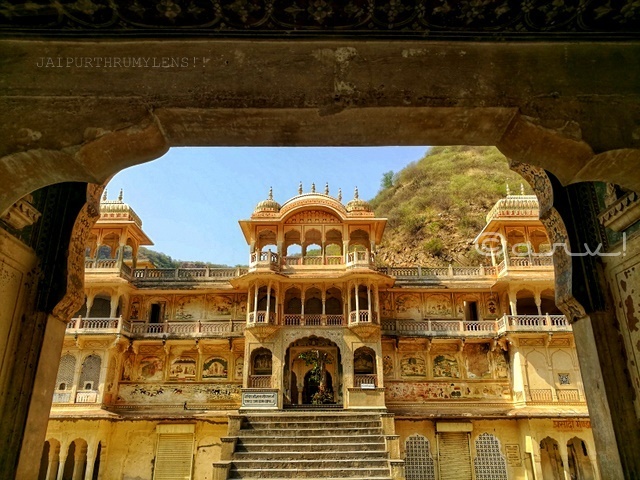
Galta ji is a narrow valley on the eastern hill range in Jaipur, acclaimed for Galta Temple & Galta Ji Kund. Over the last few years, Galtaji has become popular among travelers as Monkey Temple in Jaipur. It is a notable pilgrimage in Jaipur dating to ancient times and is a historic site for Ramanandi Sadhus & followers. Reliable information on the history of Galtaji is unavailable. According to a popular local legend, Galta Ji is named after the famous Rishi Galav who did his penance for 60,000 years at this site. Pleased with his devotion, the almighty blessed this place with a perennial source of holy water which many people believe is the sacred water of the Ganges. It still flows and accumulates in a tank meant for the holy dip called Galta Ji Kund. Well, a legend is a legend and it cannot replace historical facts. Jaipur Monkey Temple, as many call it, is one of the most famous temples in Jaipur among travelers.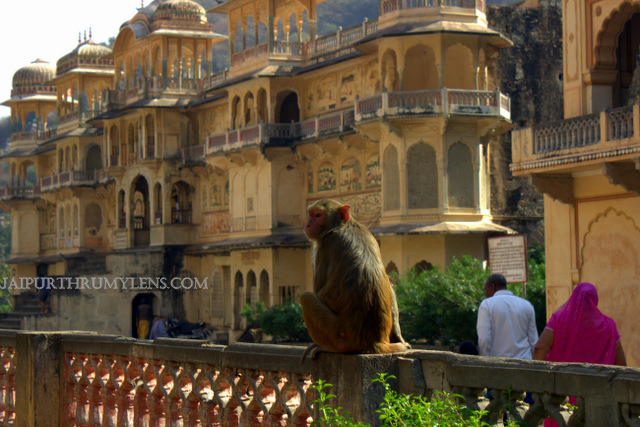
Galta Ji is popular among tourists as the Jaipur Monkey Temple.
2024 Update. Due to disputes among the management, Devasthan Vibhag has taken over the management of this temple.
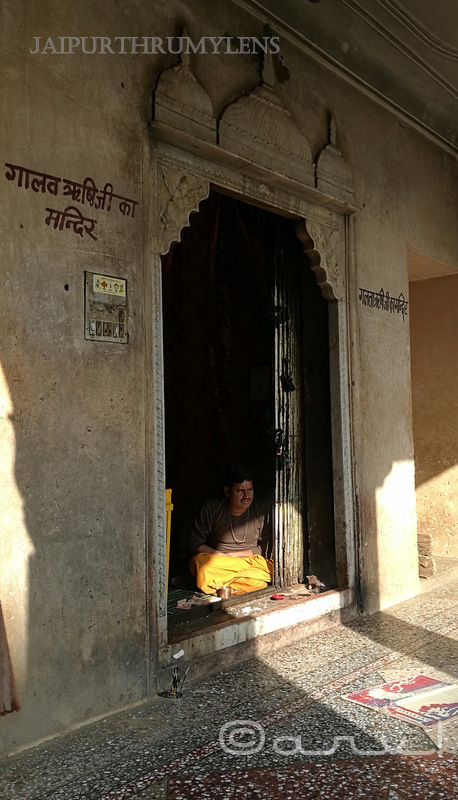
The Monkey Temple At Galta Ji Jaipur Guide
Having visited these temples many times over the years, I realized their real beauty during my recent explorations.
History
According to M.M. Ninan, a prominent author on Hinduism, Galtaji has a temple dedicated to Lord Shiva dating back to 600 AD. Some claim that this temple still exists in the form of a cave temple. Apart from the mythological aspect, historians and researchers have something more to add. As per widespread belief, Jogis or babas used to live here till the 16th century when one Ramanandi Sadhu by the name of Krishnadas Payo Hari came here & drove them away with his mystical & spiritual powers. It is believed that Krishnadas was a Payobhaksha, living on a “milk-only” diet. This led to the word Payo being added to his name. Over the years, it became an important center for Ramanandi Hindus and Naga Sadhus who also took part in many wars.
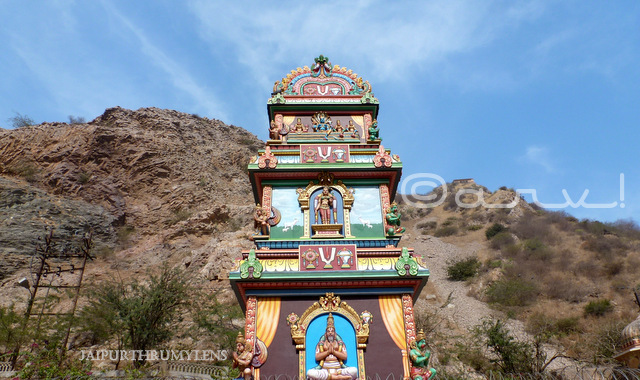
Ramananda was a saint following the Ramanujacharya sect of Vaishnavism (Hinduism) in medieval India. Ramanandis worship Lord Ram as well as Vishnu and consider themselves descendants of Luv & Kush, sons of Lord Rama. Although Ramanandis fall under the Ramanujacharya sect of Vaishnava Hindus, over the passage of time many differences developed between their philosophies. The center of Ramanjuacharya Hinduism is in Tamil Nadu (Totadri Math) and for this very reason, Galtaji is called Uttar Totadri (North Totadri).
Is It Worth A Visit To Galta Ji Temple?
Galtaji is a leading religious center for Vaishnav Hindus. In recent years, there has been a strong tussle for power between Ramanandis and Ramanjuachrya sect, which led to a court case. If you have a lingering question on the importance of Galta Ji for the Hindu religion, consider the following information.
- The acclaimed Indian poet Tulsidas devoted 3 years to Galtaji and composed the “Ayodhya Kand” chapter of the famous Ramcharitramanas.
- Shri Nabha Das composed Bhaktamal/ Sri Bhakta Maal in Galtaji.
- It needs to be mentioned that the International ISKON movement started by Swami Prabhupada used Govind Bhashya as its founding philosophy. This was written in 1718 AD by Swami Baldeo Vidyabhusan in Galta Ji.
- It is claimed that Mughal emperor Akbar also visited Galta Ji & sought blessings. Upon completion of his wish, he donated 2592 Bigha of land to the Acharya or head of Galta Ji. This grant is preserved and Galta Peeth considers it a historical document.
Galta Peeth follows a system of Acharya who presides over this place. The first Archarya was Payo Hari. It is currently headed by the 17th Archarya.
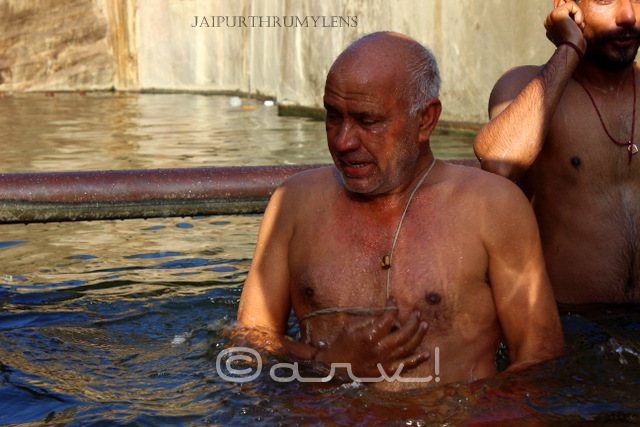
It is mentioned in the script of Galvashram Mahatmaya that on a full moon day in the Hindu month of Kartik which is also known as Kartik Purnima, the trinity of Hindu Gods – Lord Brahma, Lord Vishnu, and Lord Shiva visit this place. Hence, a bath in the holy tank which is known as Galta Kund provides multiple blessings.
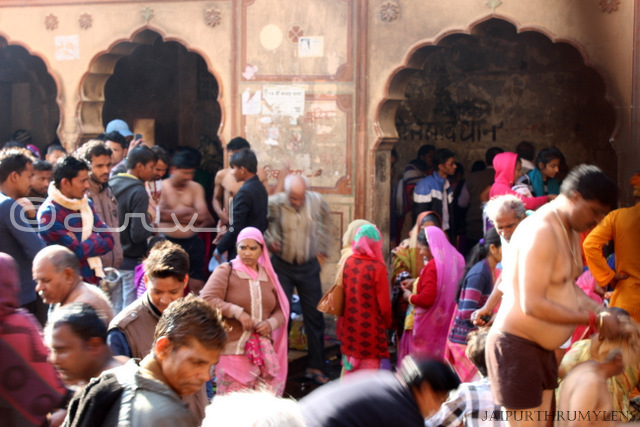
There is yet another belief that the religious pilgrimage of the four Dhams popular among Vaishnav Hindus and Sapta Puri is not complete unless one experiences a holy dip in Galta Kund. Many devotees visit Galta Ji on Makar Sankranti.
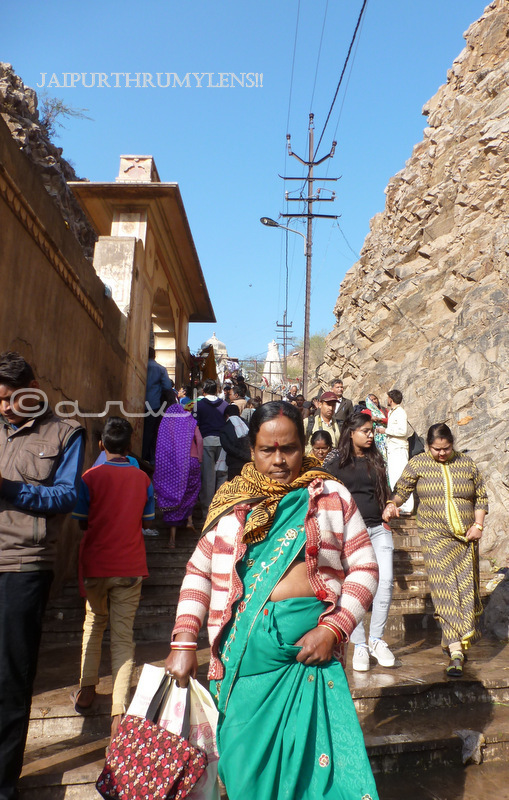
I’m unsure if this is widely believed or followed. However, unlike Char Dham or Sapta Puri, you are unlikely to find hordes of devotees flocking here. It is definitely popular among locals and the neighboring area. Generally, travelers from abroad love to visit this site. It offers a cultural experience. The same might not hold true for everyone, especially Indians. Visitors might not enjoy the filth associated with feeding monkeys and cows.
Things to see?
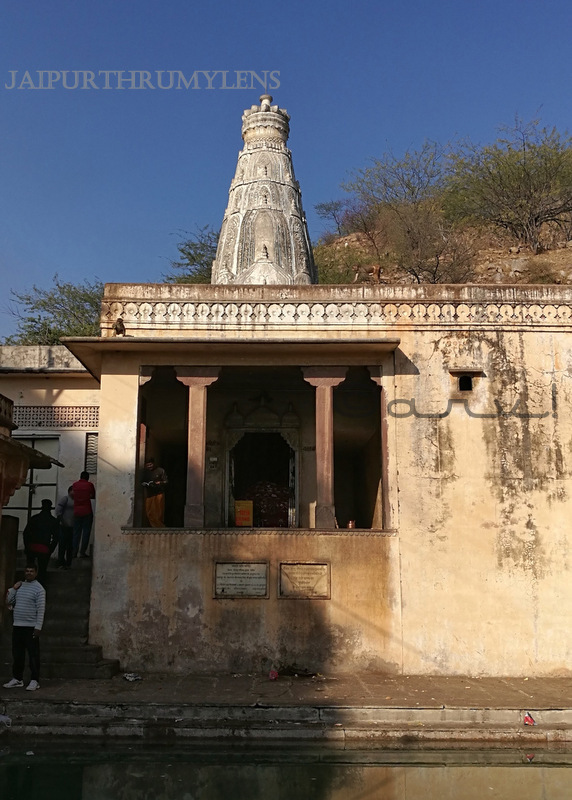
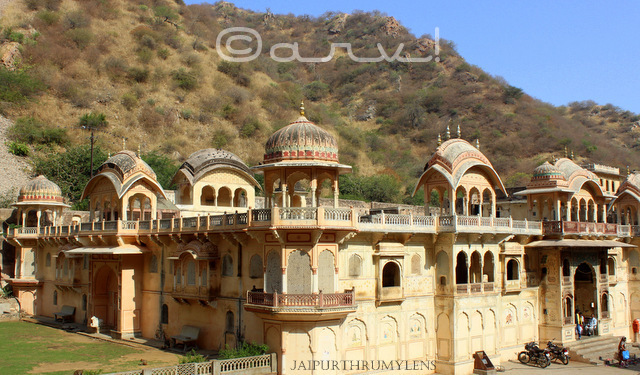
Some of the things to see here are magnificent architecture of Galta Temples, Galta Kund, and the monkeys. The temple is also known as Jaipur Monkey Temple.
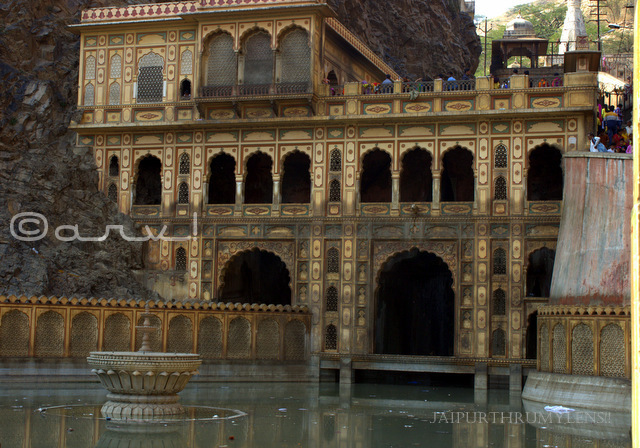
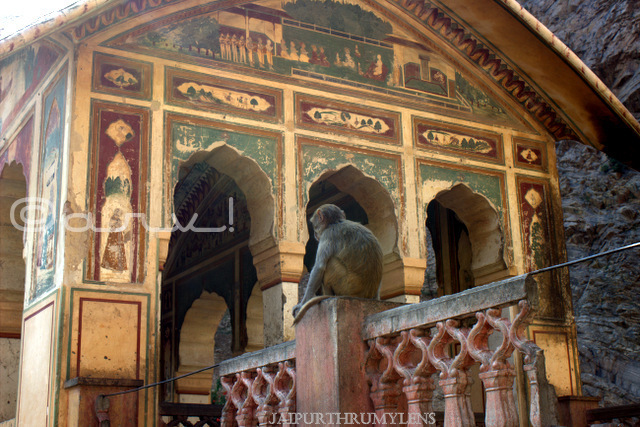
This place draws a considerable number of devotees from the neighboring villages since it’s a leading local pilgrim too. Makar Sankranti & Kartik Purnima are a few occasions when people throng here in large numbers for the holy dip of the Kund.
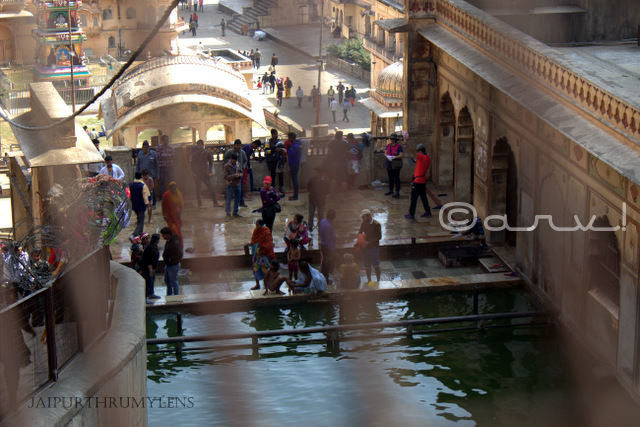
Even though these temples are a big tourist attraction, I have always found locals outnumber tourists.
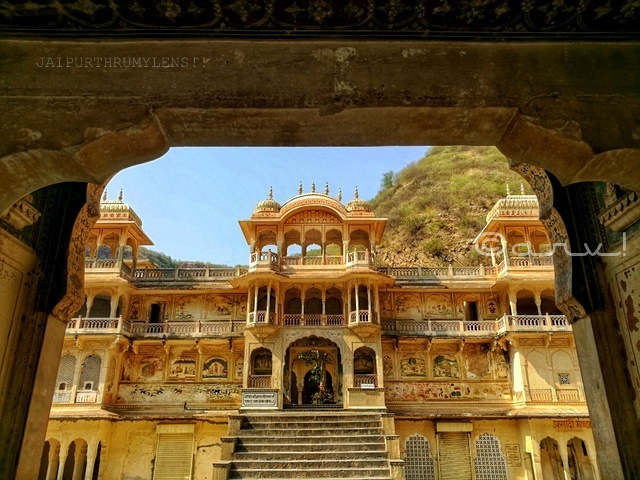
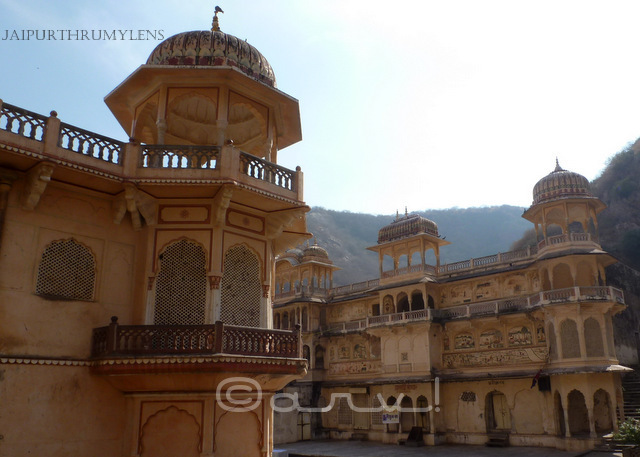
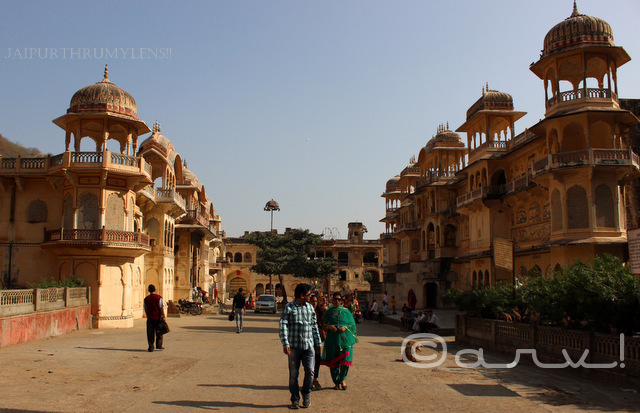
These temples were built during the reign of Maharaja Sawai Jai Singh II, the founder of Jaipur City in the early 18th century. There were small temples in nearby hills before these temples which are now in a ruined state. The fortification in which these temples were built is called Raghunath Garh. So the hill where the ruins exists is called Raghunathgarh.
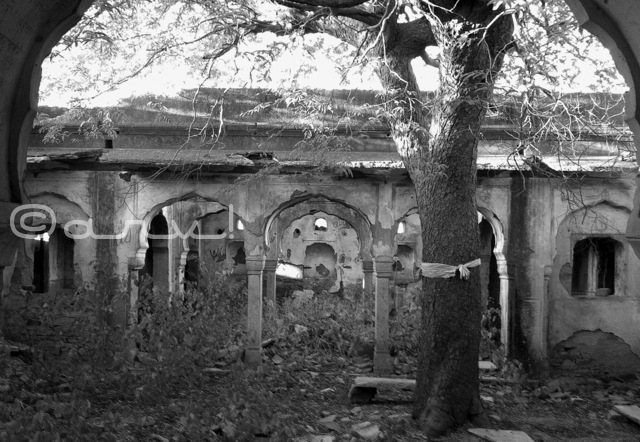
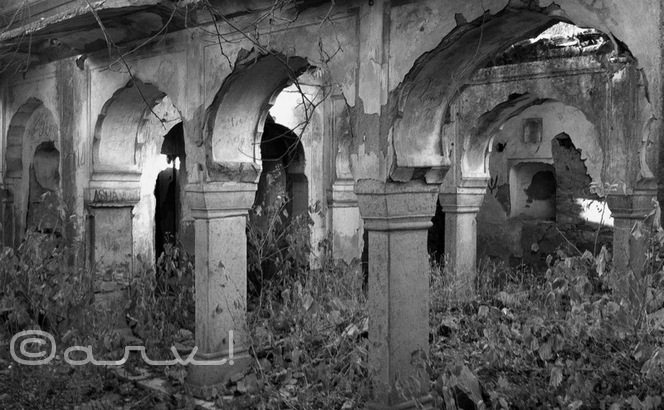
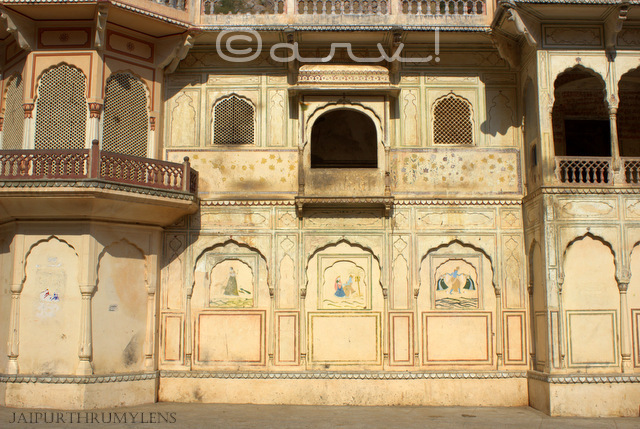
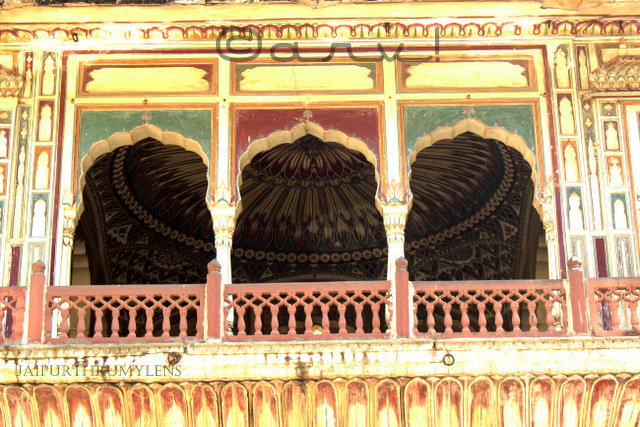
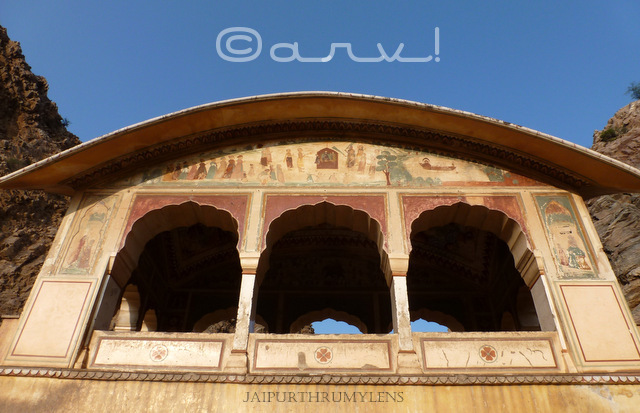
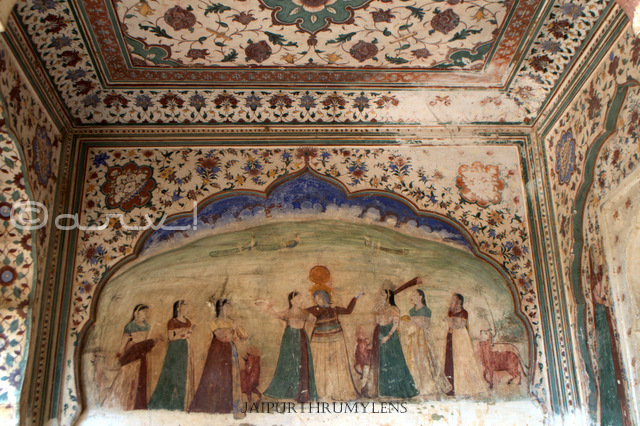
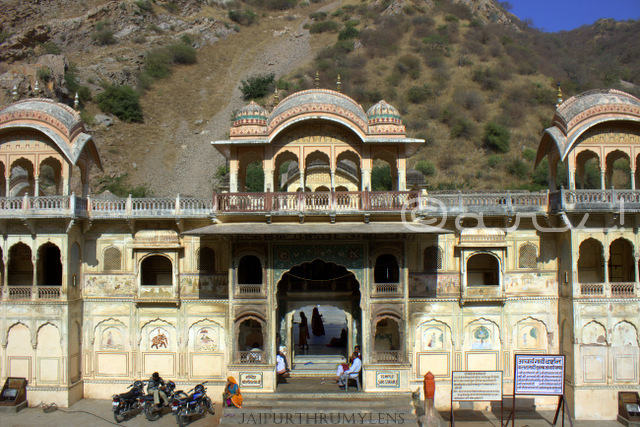
These temples have beautiful frescoes & paintings from Indian mythology and Hindu religion on the walls & ceilings. The architecture is mesmerizing as it uses canopies/ chhatri, lattices, and windows in a unique style which is a hallmark of Jaipur architecture.

Which God Is Galta Temple Dedicated to?
Galta Ji has a few temples and it has idols of Ram, Krishna, and Hanuman in Galta Temple. Out of the three temples in Galta Ji, two have been constructed in Haveli style- Shri Gyan Gopal Ji temple & Shri Sitaram Ji temple. The latter is the biggest among all temples at Galtaji. Shri Sitaramji Temple has five sanctums & idols of Lord Rama depicting various life stages.


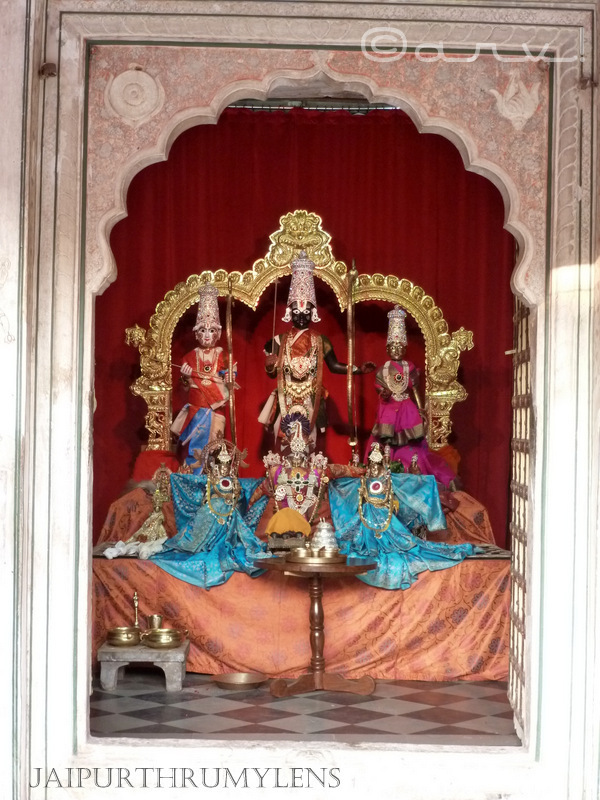
It is a popular belief that the idol of Shri Ram Gopal Ji in Shri Sitaramji Temple resembles both Lord Krishna and Lord Rama. 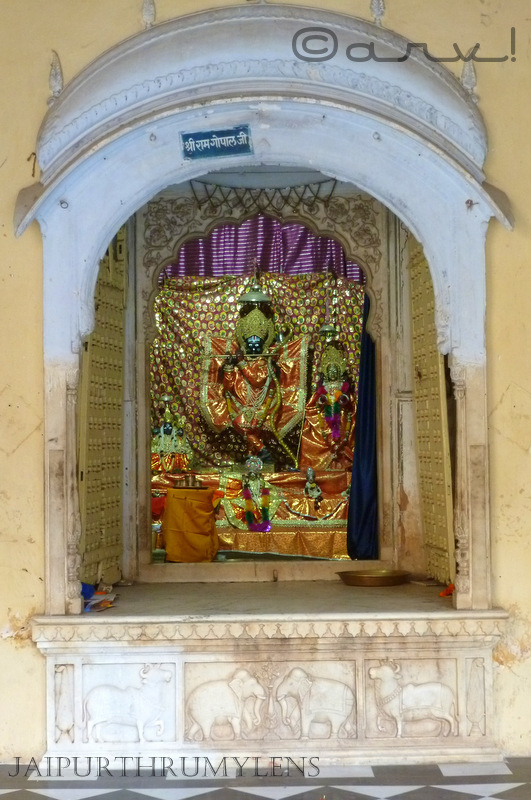
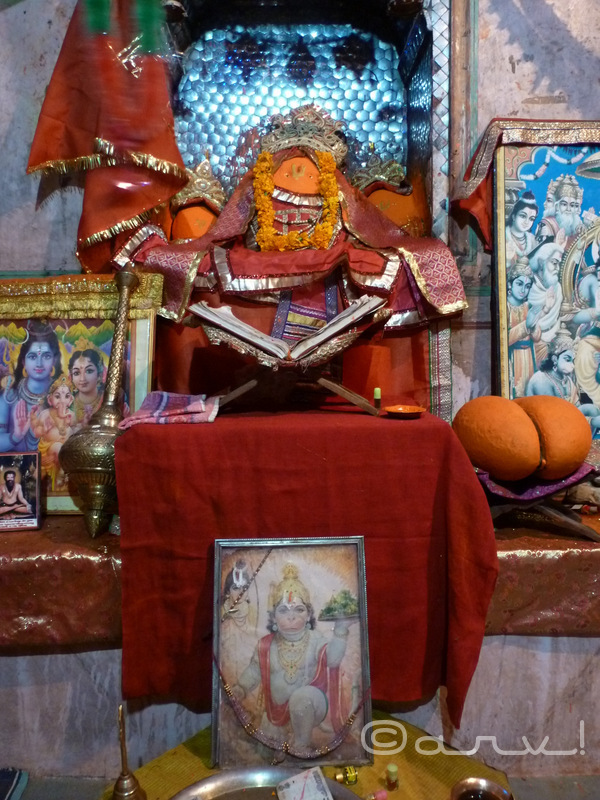
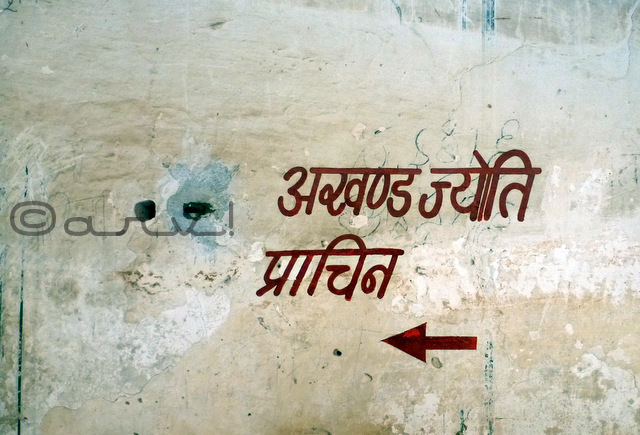
A small temple dedicated to Lord Hanuman can be found in one of the annexes of this temple. The management claims Akhand Jyoti in the temple, a flame that’s never been put out since the idol was consecrated centuries ago. I’m unsure about the authenticity of this claim.
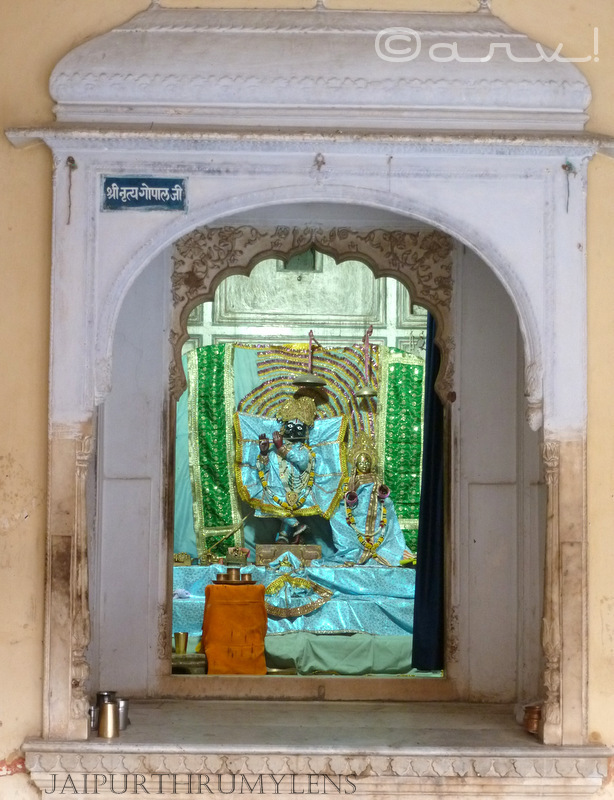
Shri Gyan Gopal Ji temple is smaller than the two and contains the idol of Lord Krishna. This compound also houses a school for students and disciples.
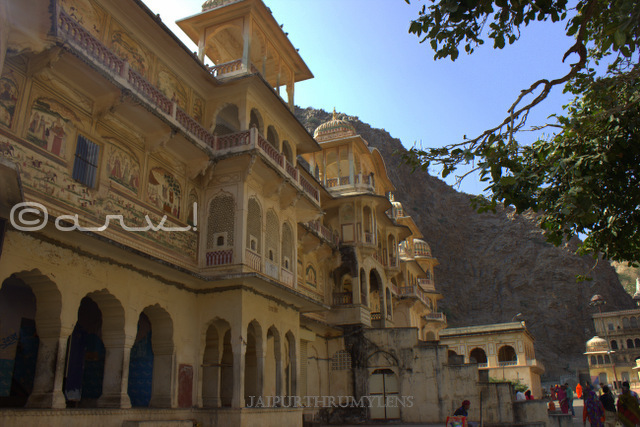
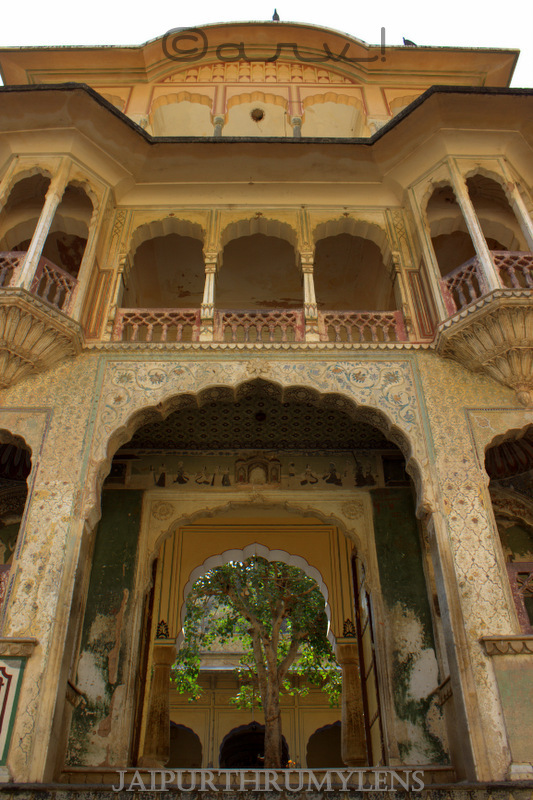
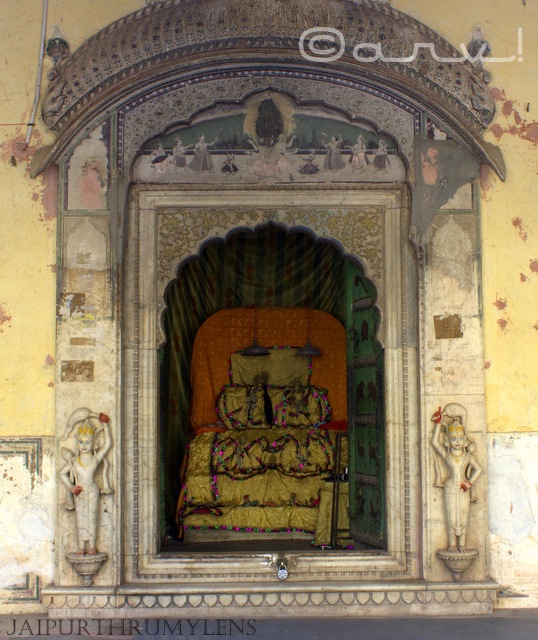
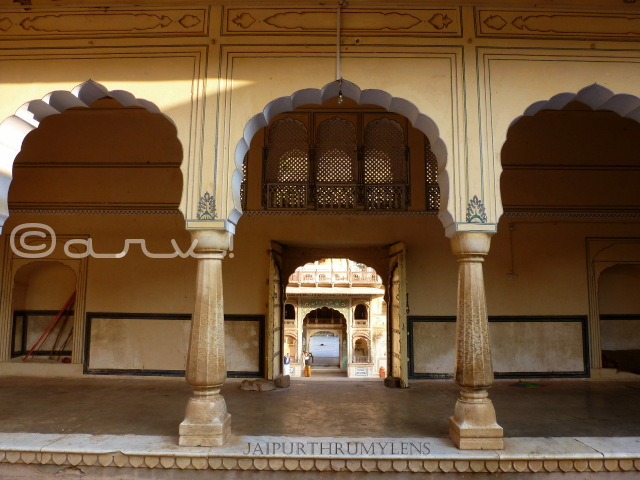
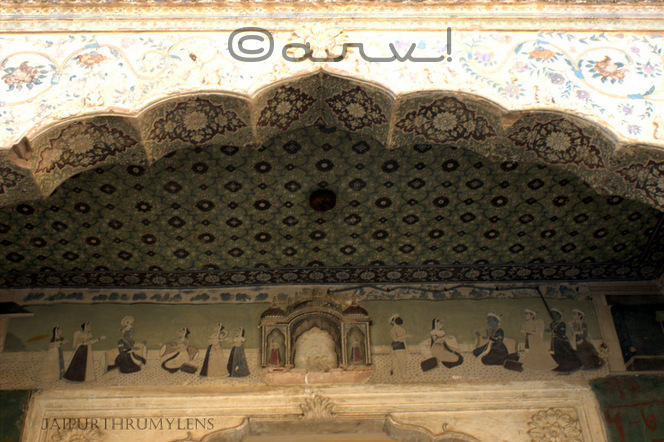
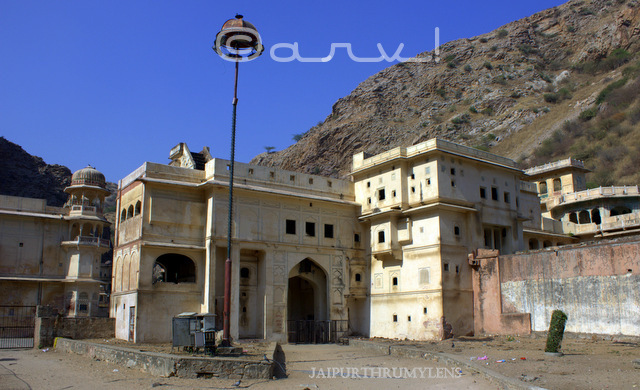
The entire stretch from the Galta Gate to the Shri Sitaramji temple has many small temples. Sun temple or Surya Mandir which overlooks Jaipur city is the prominent one in this area.
Due to the 1981 Jaipur floods, these temples were submerged. Thankfully, restoration brought back its glory.
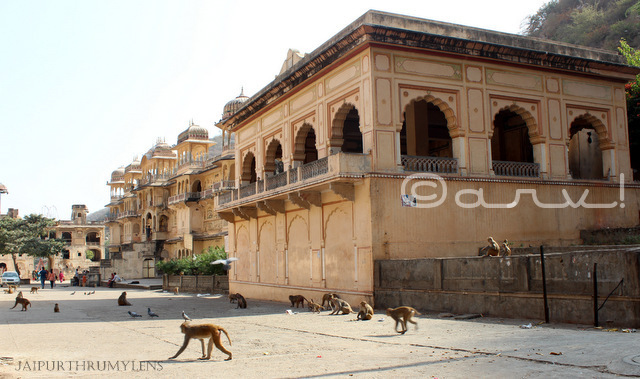
Monkeys at Galta Ji Temple
The most common species of monkey you will encounter is Rhesus Macaque. In the past, other monkey species like Gray Langurs were also spotted but these have been driven away by Rhesus Macaque. The Grey Langur is less aggressive in comparison to the red-faced Rhesus Macaque.
Visitors will notice the presence of monkeys everywhere in Galtaji. While this may startle some, they are harmless unless provoked. Monkeys are used to seeing people around as devotees visit Galtaji to offer them food.
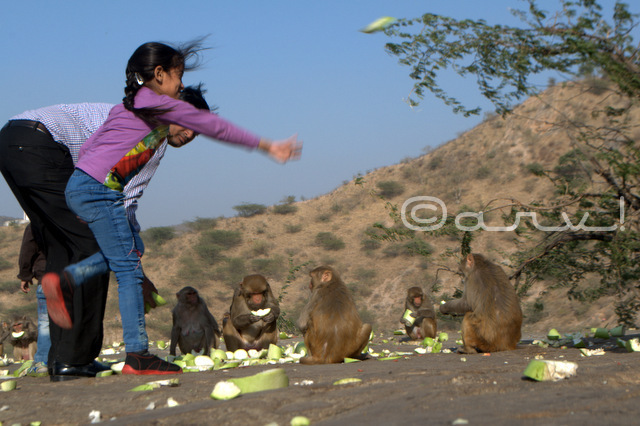
Stay safe by ensuring you are not carrying any food items with you. It is best to stash it in your bag, away from the prying eyes of monkeys. They cannot differentiate between a devotee & a tourist!
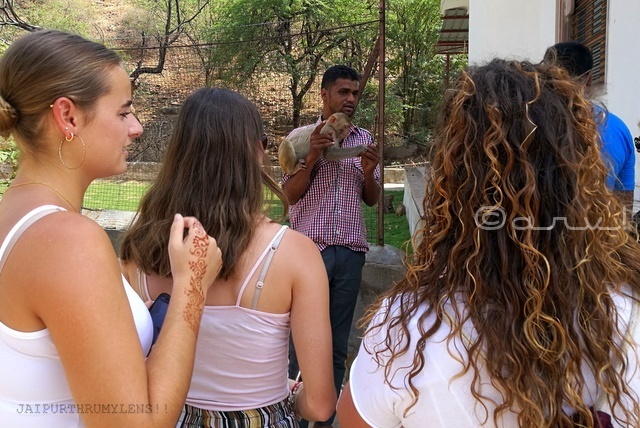
Monkeys and safety
You might come across a guide or a local who will offer you an opportunity to shake hands with a monkey or photograph with a monkey. Please note that this is not a safe practice. Many travelers do, but no one can guarantee safety from a monkey bite! These are wild monkeys and are not trained to perform these acts. Many travelers have raised concerns regarding catching rabies from monkeys. Some question these claims due to a lack of evidence. I always advocate safety first.
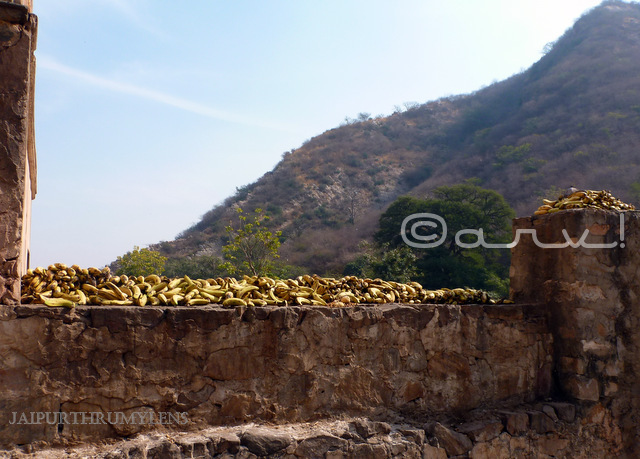
A few guides also suggest tourists offer bananas or peanuts to monkeys to earn good karma. I suggest not doing so. If they see humans carrying edible items they assume it will be offered to them; not offering it makes them aggressive.
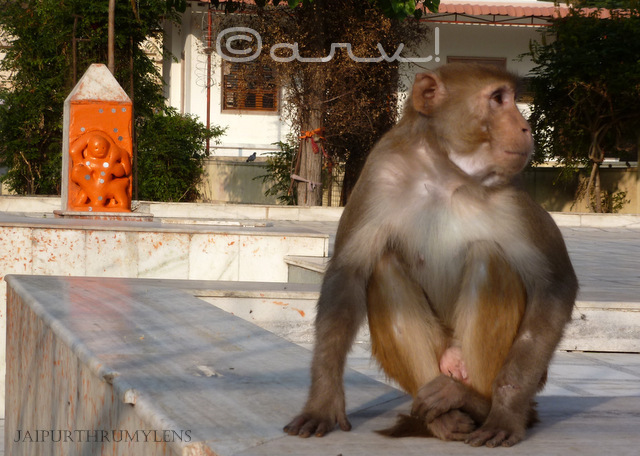
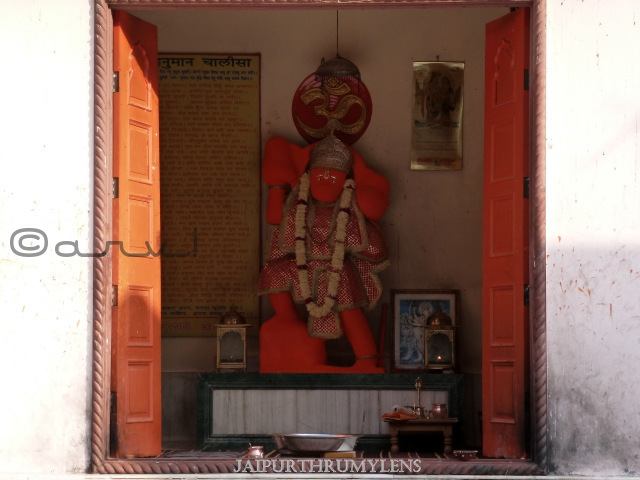
A new temple dedicated to Lord Hanuman has recently been constructed near the entrance. Despite the fact that tourists refer to Galtaji as Jaipur Monkey Temple, there’s no connection between monkeys with the temple. It is being called so because of the presence of a large number of monkeys in the temple complex.
Important Information For Visiting Monkey Temple At Galta Ji Jaipur
Where is this famous Monkey Temple located?
Surrounded by hills on all three sides, one can reach Galtaji temple by a hilly path that starts from Galta Gate or through Ghat ki Guni. The former is essentially a pedestrian route and is close to the city.
How to reach Galta Ji?
It is not difficult to reach this temple from Jaipur city center.
Galta Ji Direction
This ancient pilgrim is in a valley beyond the Sun Temple on the eastern hill range. Some people refer to it as Galta Hills while travelers call it Jaipur Monkey Valley owing to the large number of monkeys here. Read about Monkey Valley in Jaipur
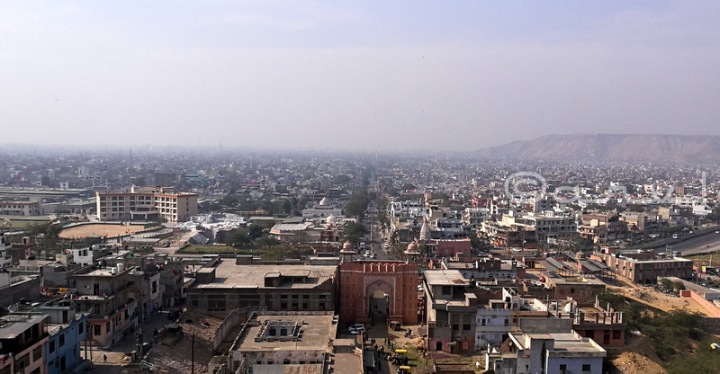
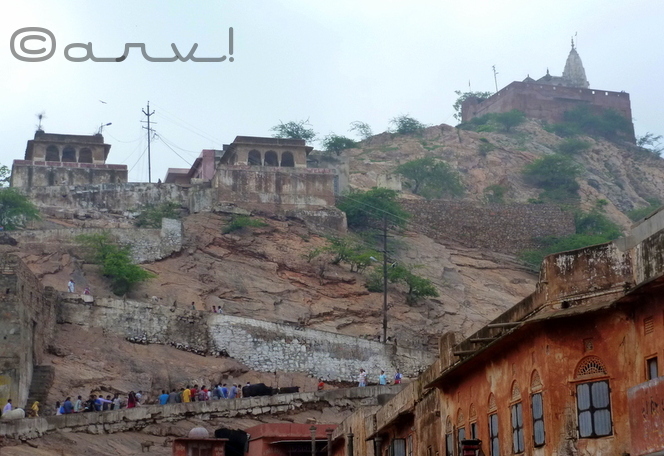
Caveat: Do note that the Galta Gate path is filthy and full of aggressive monkeys.
If you are wondering how to reach Galtaji Temple, here is the information.
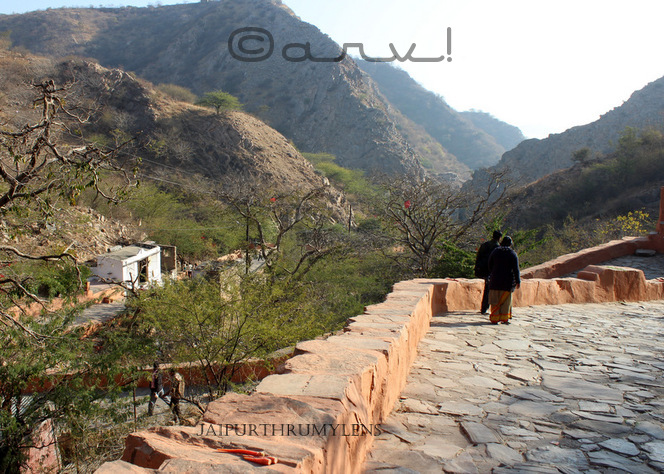
The walking pedestrian ramp from Galta Gate, Jaipur requires some energy as it involves ascending and descending through a hilly path.
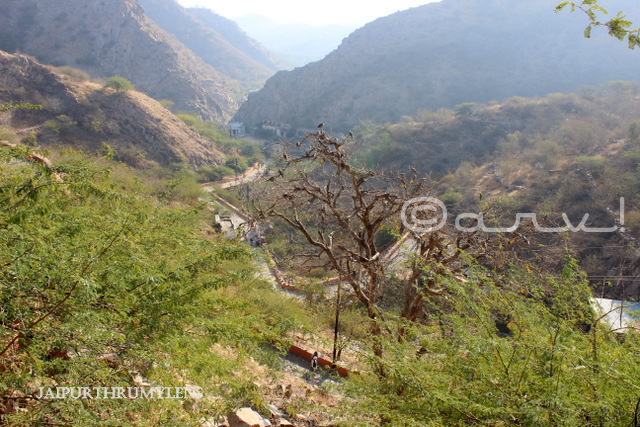

The other option would be using a car, taxi, or tuk-tuk. The latter route is longer, approximately 10-12 km from the city center, and passes through a beautiful alley called Ghat Ki Guni as well as a forest.
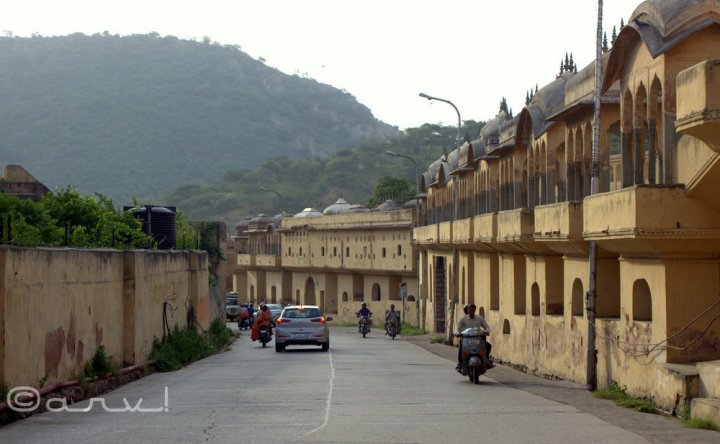
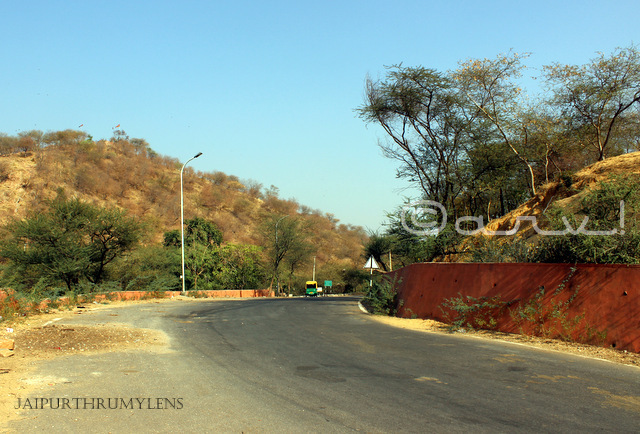
If you don’t prefer the pedestrian path or walking, this is the only choice you have. There is no public transport facility from the Ghat Ki Guni route. You will not find any cab or Tuk-Tuk/ Auto-Rickshaw for your return journey either.
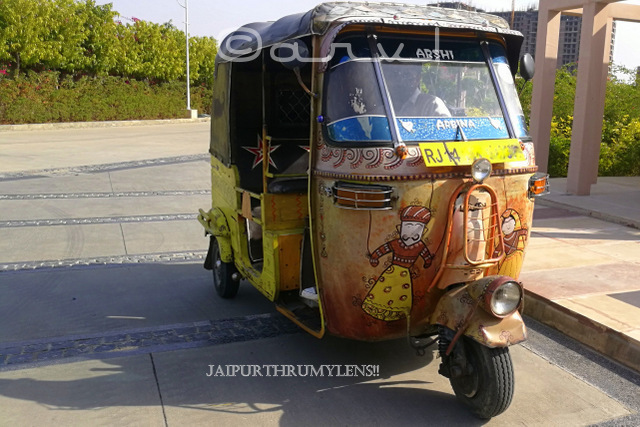
If you prefer to save money and use public transport or Tuk-Tuk, it is best to opt for the Galta Gate route. Both public transport and Tuk-Tuk are available for this option from the walled city area. It takes about 20 minutes of walking for a fit person to reach the temples from the Galta Gate. I would suggest UBER Hire if you opt for the Ghat Ki Guni route otherwise, UBER mini is easily available for Galta Gate from the city. Another alternative to UBER is the OLA cab.
Timings
Monkey Temple is open throughout the day for visitors from sunrise to sunset.
Best Time to Visit
The best time to visit Galta Ji is either morning around Aarti time or in the evening. The Aarti time at Galta Ji Temple is not fixed and varies from season to season.
Dress Code For visiting Galta Ji
Dress conservatively. The dress code for females- do not wear short dresses. Galta Ji is a pilgrim place visited by a large number of devotees; it is best to dress as per local customs and culture.

Best Days to Visit Galta Ji
The best days are Makar Sakranti and Kartik Purnima. The latter varies every year as the date is based on the Hindu calendar. You can check for the same on the Internet. Kartik Purnima is an auspicious day in Hinduism and a reason for devotees to visit Pushkar during Pushkar Fair. Like Pushkar lake, they take a dip in the holy water of Galta Kund.
Entry fee
There is no entry fee for visiting Galtaji Temples. However, the temple management charges Rs 50 for the camera/mobile photography which I feel is not unreasonable. You can also make an offering if you wish, to help the management in maintaining this heritage & pilgrim site. Given the fact that temple management has limited resources to generate money, it counts.
Galta Ji remains an offbeat tourist attraction in Jaipur. Recommended for those looking beyond the usual tourist places to see in Jaipur. A visit to Monkey Temple in Jaipur is an enriching experience as it depicts the local culture and religion. From my own experience, you will enjoy this important religious & heritage site when you have someone who can narrate its history, otherwise, it’s just another place.
Check out Places to visit in Jaipur
Stay updated with Jaipurthrumylens!! via: Facebook Twitter Instagram


Discover more from JaipurThruMyLens
Subscribe to get the latest posts sent to your email.

 JaipurThruMyLens
True. Real beauty is in monuments historic relevance
LikeLiked by 3 people
Happy to know that you understand the point, Sreejith. Buildings need to be seen in context of events. 😃
LikeLike
That was good information about Galta Jee…… I missed this place in my last visit to Jaipur and frankly I wasnt aware of such a rich history of the place…. Its sad to see some parts of the same in ruins…. history needs to be preserved……
LikeLiked by 1 person
Sudhir, given the long list of places and things to do (and see) in Jaipur, it’s not possible for most travelers. In any case, I recommend it only for heritage and history lovers or those who want to have an offbeat experience. Yes, the building needs repair and maintenance. Unless government or some agency steps in, it’s impossible for temple management to undertake it. Let me know whenever you are in town, I’ll take you there. 😃
LikeLiked by 1 person
Sure Arv….. will let you know……
LikeLiked by 1 person
Great! 🙂
LikeLiked by 1 person
This takes me back to the nostalgia when I visited Jaipur for the first time. This is one of the places I still remember because of the monkeys I saw here. There are many temples in India, where one can witness monkeys but this was unusual. I still remember monkeys literally pouring down from the hill right behind the temple. There were hundreds of thousands of them.
Of course, much of the historical significance about Galtaji you have brought out in this post, which slipped my memory. Thank you for bringing back those moments through your story. 🙂
LikeLiked by 1 person
Rajat, Galtaji temples are popular among Indians as pilgrim place whereas it is popular as Monkey Temple among foreign tourists. You are right, large monkey population in this valley is something unique. Happy to know it was a virtual re-visit for you. Did you reach Galtaji through the pedestrian path from Galta Gate?
LikeLiked by 1 person
Well, do not remember. It was a long time ago, I think it was the pedestrian gate. We had taken a private taxi for the full day to move around. I visited Galtaji and Jaigad Fort almost two decades ago.
What I also do remember about Galtaji though, is that the monkeys are quite notorious; especially with the travelers who have sling bags, or carry bags that ‘look like’ carrying eatables, the monkeys might snatch it from the travelers.
LikeLiked by 1 person
Snatching bags is what I haven’t seen till date but if you are carrying eatables, well they assume you are a devotee out to offer them. They take liberty of snatching it away. I always carry a stick. They know what it means, especially if its a metal one.
2 decades? that’s quite some time! 🙂
I think you must walked up the hill to Sun temple and then descended to Galta valley.
LikeLiked by 1 person
Would love to visit these temples one day.I was surprised to see the image of Aandal of Srivilliputtur, on the middle panel of Kirti Stambh of Ramanujacharya at Galtaji. She was the only woman saint among the Alwars, the 12 Vaishnavite saints of Tamilnadu and saint Ramanujar held her in high regard.Its amazing how religious zeal motivated people to take their ideology to places as far as Jaipur in an age when travel was not easy.
LikeLiked by 1 person
I’m not sure if you missed reading about the history of Galtaji temples. This temple follows Ramanujam sect of Vaishnav Hinduism Which has its centre in Tamil Nadu. That’s the reason it’s called Uttar Totadri. Galtaji is an important religious site and it is called as Galta Peeth.
LikeLiked by 1 person
What a comprehensive narrative! What struck me about the temples is the architecture, which seems to be an amalgamation of ancient and modern…interesting! Nice pictures arv, a lot of labor seems to have gone into their clicking. Thanks for sharing another wonderful post.
LikeLiked by 1 person
Well these structures were built in early 1700’s and are essentially built in Rajput architectural style. Of course, Mughal influence is also evident in some ways. These pictures have been curated from my multiple visits to this ancient site. Happy to hear that you liked this post, thanks for sharing your thoughts. 🙂
LikeLiked by 1 person
Beautiful Pictures. I see a lot of thought went into capturing the details.
A true portal into a mystical world.
Thank you for posting this.
LikeLiked by 1 person
Thank You. These pictures have been curated from my multiple visits over a span of around two years so yes, a lot of thought went into each picture. Have you ever visited Jaipur or India?
LikeLike
So it was a journey for you as well.
I have not visited India. When I as a teenager I was giftit with a splendid book about the history of your country . I wish I had memorized the name. Anyway , it fascinated me . I always thought your ancient architecture is filled with refinement, elegance and spirit.
I enjoy your posts for this reason and also because you have a way of bringing the reader in your story.
Thank you again and Happy New Year
LikeLiked by 1 person
‘m sure it is difficult to remember characters and names from a book which you must have read years ago. Given the size of country, I was wondering which area that book covered? Yes, old & heritage Indian architecture has an element of finesse. The colonial rule and then globalization has ruined it. Thank you for writing positive things about the posts. I’m not sure if this is what everyone will dig but I’m hoping those who love architecture, heritage and history will love it.
BTW, which country you are from?
LikeLike
Arv
Your posts are not just for those with a love for architecture , heritage and history.
You preserve the memory and essence of a seed for humanity.
In our industrious and productive oriented lives we topple the ancient truth and treasures that must be preserved so we can find our way into a life sustaining future. You do just that by witnessing these treasures.
I am Romanian and just like you I carry an ancient seed in my soul.
LikeLiked by 1 person
I’m only curating what I know. Of course there’s a lot that I can narrate but it cannot be written down here. Saving a bit for the story because something’s are better as narrative…in interactive form. I feel we have lost a lot because no one documented it.
Romania? That’s interesting! Romania has a strong culture. Happy to hear that you love history and heritage.
LikeLike
Arv we all need to know our roots so we can understand who we are , sometimes heal, and know how to contribute to whatever garden we end up finding ourself in.
Keep writing . It is inspiring and soul filling.
You are preserving all these treasures already .
LikeLiked by 1 person
Well said. I’m hoping to continue writing although I don’t know till when, world is full of uncertainties! BTW why do you write cobgoddess?
LikeLike
My garden and dipping my hands in clay to make plasters and paint for my house (which I have been reinventing since nine years ago) gave me a voice I needed to express.
I hope to inspire others to animism, reverence to Nature and to create Sacred Space.
I usually design and make furniture but this journey totally changed the way I see life and the dwellings we occupy.
Thank you for asking.
LikeLiked by 1 person
Wow. May be you should write about it- your experience and journey explained in one post. That way you can inspire more people. I think I didn’t get to read “about me” page on your blog. Have you made one?
LikeLike
I wrote about it in bits and pieces throughout my blog. I did not say much in about me .
Maybe I should, I directed people to my website instead where I said more about my work and who I am.
Arv , it is such a pleasure to write to you. This is what I love about wordpress. Connects souls into a mandala of similar frequencies.
LikeLiked by 1 person
Yes you definitely should. It’s your identity. People check out your about page once they land on your blog. It’s your best opportunity to introduce you and your blog. Don’t miss it.
Yes WP is a great platform. Makes interaction much more easier and fun. By what name should I address you?
LikeLike
Arv Thank you for the advice. I will write an About page. You can call me Cristina
LikeLiked by 1 person
That’s great Cristina. Happy to hear this. Keep me posted, would love to read it. 😃
LikeLike
Thank you Arv. I will
LikeLiked by 1 person
great! 🙂
LikeLike
Arv, I thank you so much for taking me on this beautiful trip to those amazing sites on the outskirt of Jaipur. As I needed to feed my love to Jaipur through your lens.
LikeLiked by 1 person
Thanks Cornelia for appreciating. Your comment is inspiring and surely worth all the effort of curating these pictures from my multiple visits to Galtaji. I can surely sense your love for Jaipur through comments and pictures on your blog. Thanks for sharing your views here. 🙂
LikeLiked by 1 person
Most welcome as always, Arv
LikeLiked by 1 person
😃👍
LikeLike
Season’s greetings! 🙂
LikeLike
Your amazing post generously provided with outstanding photos shows again clearly that we two live in two different worlds: yours in a country rich in colourful history and ancient culture, mine in the remote corner of BC endowed with the natural splendour of mountains, lakes and valleys. Only Germany with its cultural background can compare with India. Best wishes for 2018, Arv!
LikeLiked by 1 person
I love the way you summed it up. Yes, it’s true that Canada has some of the best natural vista and landscape. India has for long been considered as spiritual centre. That was a reason for many ancient travelers to visit India. Even religion was far advanced of its time, centuries ago. I’m sure you must have heard about it. It was Muslim attackers from the middle East and colonial rule that caused this setup extensive damage. I’m sure you must be aware of the Aryan connect Germany shares with this region.
Thanks for reading my posts with great interest and sharing your thoughts. I’m hoping you are getting better everyday. Here’s to a healthier and better you in 2018. Thanks 😃
LikeLiked by 1 person
As to the Aryan connection to Germany, it is noteworthy that there was an Indian regiment (Free India Legion), which was put together from Indian students and POW’s fighting along side Nazi soldiers during WWII. Their rebel leader Subhas Chandra Bose came to Berlin in 1941 to ask for help in his attempt to drive out the British from India.
LikeLiked by 1 person
Yeah, he was the only Indian leader who formed army to fight Britishers as against others who resorted to different methodology. His death has been a big mystery. Happy to hear that you are so updated. 😃👍
LikeLiked by 1 person
I wrote about it in my blog, as I described my uncle’s life in World War 2. If you are interested, click on the Family tab, the Kegler tab and finally choose Günther. Go down the page until you see the standard flag of the Free India Legion. What my uncle told me was top secret, as it was very embarrassing for the British to acknowledge.
LikeLiked by 1 person
I’ll certainly check it out. Yes Netaji Subhash Chandra Bose formed alliance with Germany and Japan. The files related to him are still top secret and many governments haverefused to provide any information despite petition. Thanks for the share.
LikeLiked by 1 person
I ran through this write up and found some new information as well. I wasn’t aware of the defection of Indian soldiers fighting for British to German only to fight British! Thanks for this information. I also read few more post on your uncle on post year war period. It is amazing how you have put everything on net for everyone to read rather than lose it out completely!
LikeLiked by 1 person
Arv! I am so glad that you find my blog useful. There is still much work to be done. My hope is to live long enough to complete it all.
LikeLiked by 1 person
My wishes are with you. You have picked up a great work. Amen. 👍
LikeLiked by 1 person
The stories of history, culture and even construction always make a sight much more interesting. This is a wonderful post. Wow, I loved the photos with the monkeys, especially the one of them walking in front of the temple 👍
LikeLiked by 1 person
Thank you, Aixa. Yes these are things that make it an interesting read. Also these factors make it a unique. You loved monkey pictures? Well watch out, will treat you a bit more in coming days. 😃
LikeLiked by 1 person
I love all of your photos in every post but especially the monkey ones 😉👍
LikeLiked by 1 person
Thanks. Happy to hear this 😊👍
LikeLike
Nice to read, Beautiful pics.
Greetings
LikeLiked by 1 person
Thanks Rupam 😃 appreciate your comment 👍
LikeLiked by 1 person
Galtaji has been one of the most architecturally beautiful “monkey” temples I’ve visited and in your post, I’ve learned the history behind it ) Thank you for sharing!
LikeLiked by 1 person
Happy to know that you found Galtaji as one of the most beautiful Monkey temples. Did you visit Galataji recently, Natalia?
LikeLike
What ( another) great Blog. I love the historical information. That’s so interesting but your photographs really show the beauty of the architecture. All that work – all those years ago without machinery to make life easier. That is dedication. I laughed over the monkey pictures as it reminds me of BAKU CAVES in Malaysia. When we visited the caves the monkeys were quite aggressive and tried to snatch our bags and food and made me quite nervous, especially coming down all those steps with the monkey’s jumping about. Anyway thank you again. Lovely to spend time reading this on a wintery morning int he UK
LikeLiked by 1 person
Certainly the architecture is beautiful and considering the time frame when it was made, it is surprising. I. I’m awed by the simplicity in architecturedespite using so many elements. The monkey Which one comes across on pedestrian path are much more aggressive. You might end up with similar experience. But I have never found this problem around temple. I know it must be really cold out there. Hope you are having a great holiday. Thanks for sharing your experience here, Jackie.
LikeLike
Will make sure my next visit adds ths to my list
LikeLiked by 1 person
I’m sure you will love this place, Yami. Which city are you from? 🙂
LikeLike
Baijnath, Himachal Pradesh
LikeLiked by 1 person
wow! I haven’t come across any other blogger from HP! 🙂
LikeLike
😎😎 you from?
LikeLiked by 1 person
Jaipur!
LikeLike
No, Iam from Baijnath . I am asking about you 😅😅
LikeLiked by 1 person
I’m from Jaipur, Yami!
LikeLiked by 1 person
What do you do for a living?
LikeLiked by 1 person
What about you?
LikeLike
Studying… Pharmacy student
LikeLiked by 1 person
Great! 🙂
LikeLike
😊😊😊
LikeLike
Natively from Jaipur?
LikeLiked by 1 person
You mean you are from Jaipur?
LikeLike
Great to learn about yet another new place in Jaipur….with such details and great photographs……there is so much to know and so much to explore…..thanks.
LikeLiked by 1 person
Happy to read this Anindya. Have you ever been to Jaipur or Rajasthan?
LikeLike
The post was written very well and the pictures just gave it a beautiful touch. I have never been to Jaipur but now I look forward to.
I’d surely use this post as a guide.
Well done. 🙂
LikeLiked by 1 person
Hi Steffi! Thank you for sharing your thoughts here, certainly made my day. 🙂
I have many other post which might come in handy during your Jaipur visit. 🙂
LikeLike
Fascinating! And I love all the photos that show me what I am reading about.
LikeLiked by 1 person
Thanks, Lance! Have you visited Jaipur or India?
LikeLike
Not Jaipur. But I’ve been to New Delhi, Mumbai, Kolkata and Pune. I love travelling and immersing myself in all the various languages, cultures and cuisines on our diverse planet. I celebrate both the similarities and the differences.
India is so rich in these aspects. It is like a hundred different countries within a single country.
LikeLiked by 1 person
well said. Yes, we have huge diversity….in terms of food, language, culture…
Happy to know you have been to India, Lance. 🙂
LikeLike
The heritage paintings look so sharp! You can actually live through the history at such places…they make you go down to those years!
Lovely collection of shots this post has. I can see you’ve been enjoying visiting Temples a lot.
LikeLiked by 1 person
Thanks Alok. To be fair, I don’t visit this place often. But yes I have been here couple of times. There’s something nice about these temples. I don’t know what. May be its architecture or peace…..
Thanks for sharing your views, Alok. 😃
LikeLiked by 1 person
Love those heritage paintings…they still look so sharp. I believe this place would make you go down those years and live those times.
I can see you’ve been enjoying visiting temples a lot ☺️
LikeLike