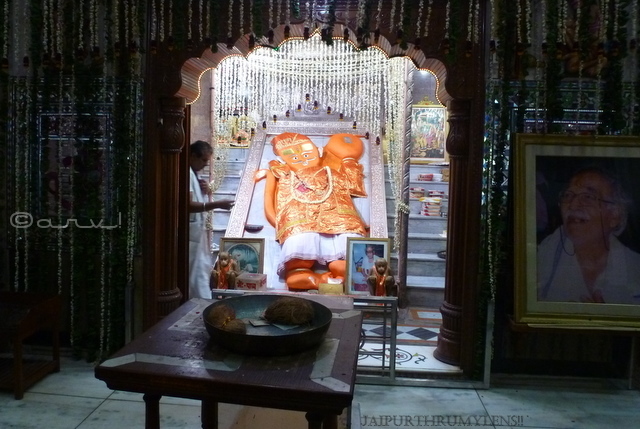
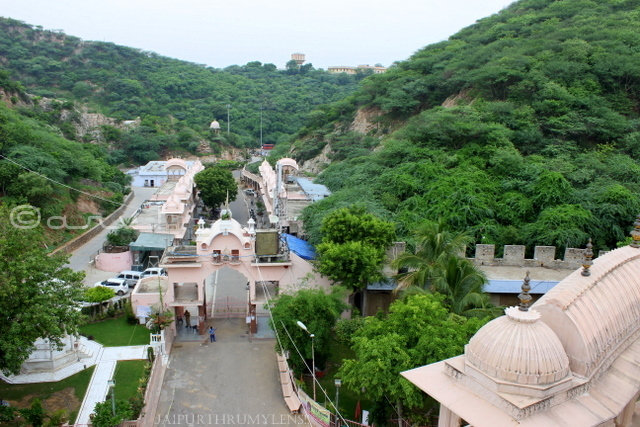
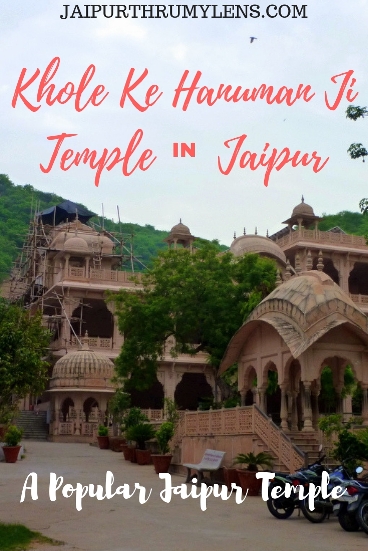
Khole Ke Hanuman Ji Temple is one of the most popular temples in Jaipur. Dedicated to Lord Hanuman, the temple is situated in an idyllic surrounding off the Jaipur-Delhi highway. It is nestled in a valley of Laxman Dungri hills. I’m sure most Hindu devotees of Jaipur must have visited this temple at some point in time. It is the most famous & visited Hanuman temple in Jaipur. The temple is famous for its many Rasoi (kitchen), Sawamani Prasaad, and Dal Baati Churma in Jaipur.
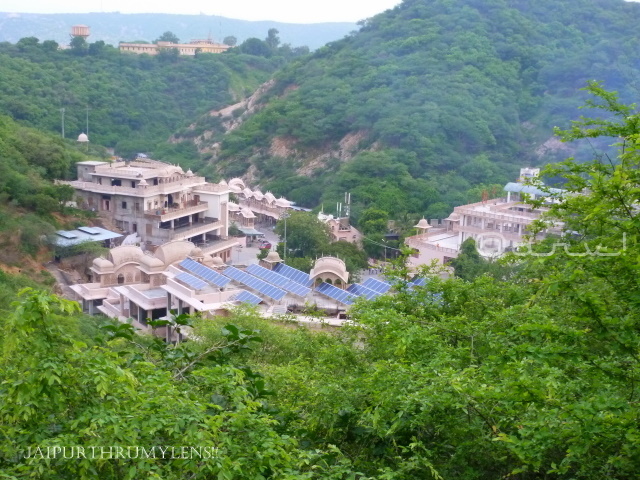
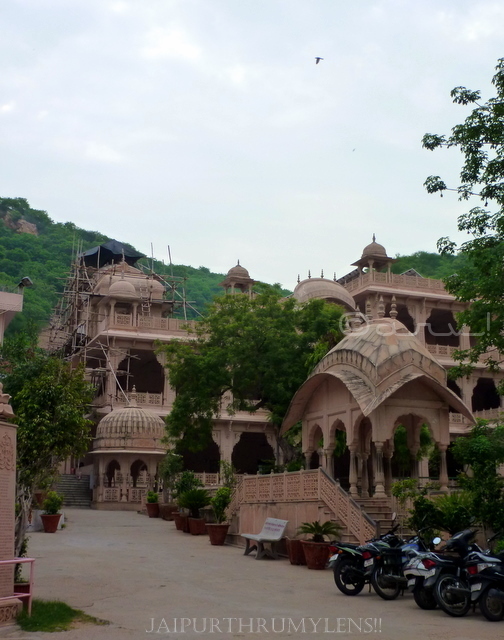
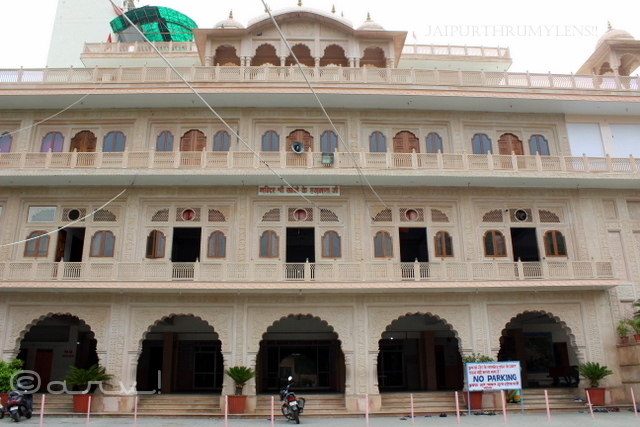
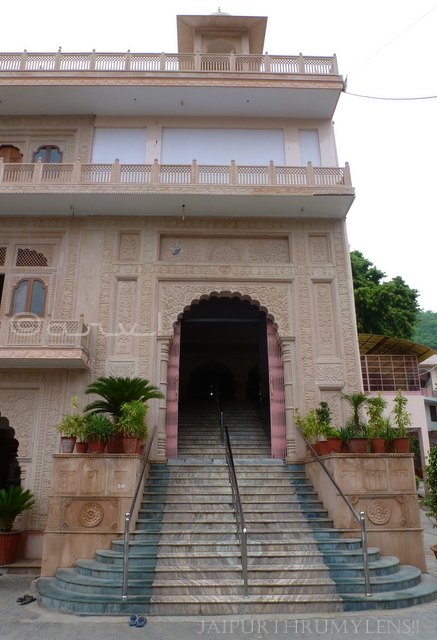
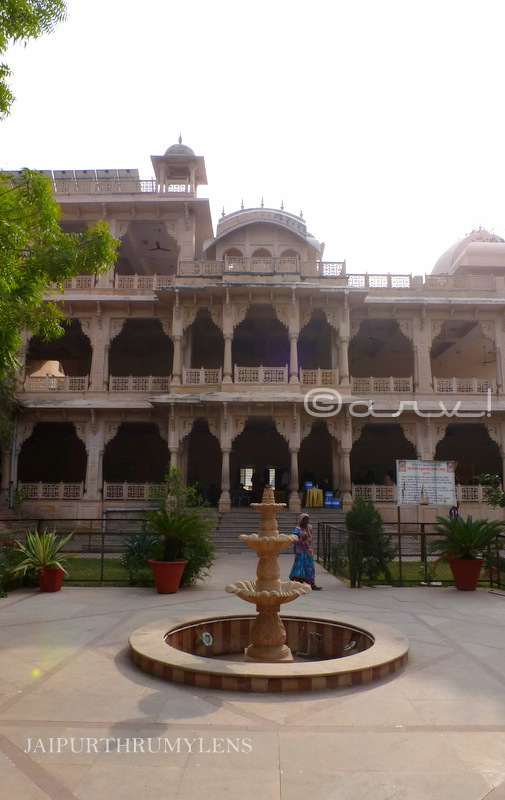
Made from Dholpur stone, a popular sandstone of Rajasthan, it replicates the architecture of a bygone era.
What is Sawamani Prasaad? Sawamani is an offering made in the Lord Hanuman temple by the devotees. Sawa means one and a quarter, Mani/Mun/Mann is an old Indian measurement system called Maund & equals 37.32 Kg. A Sawamani Prasad means 46.65 Kg of the offering. This is not usually followed strictly and is rounded off.
Read Dal Baati Churma In Jaipur
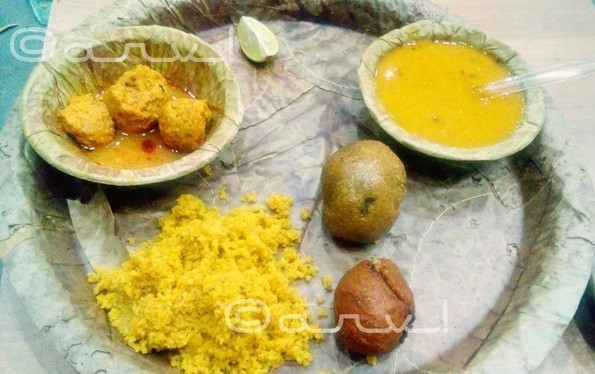
A Guide To Khole Ke Hanuman Ji Temple in Jaipur
What makes Khole Ke Hanuman Ji Temple so popular in Jaipur? It is hard to answer this question. It is certain that it is not linked with the history of Jaipur City. One of the oldest Lord Hanuman temples in Jaipur is Ghat Ke Balaji temple. The royal family of Jaipur has been one of its patrons for years.
What is certain is the fact that Khole Ke Hanuman Ji Temple hosts a large number of “Sawamani” in Jaipur. The multiple kitchens here can serve thousands of visitors. Sawamani Prasaad is hosted in this Jaipur temple on a regular basis. This facility does make it very popular among devotees. Many other Hanuman Ji temples in Jaipur have also replicated similar facilities. It is common for people to host Sawamani on the occasion of birthdays too.
History
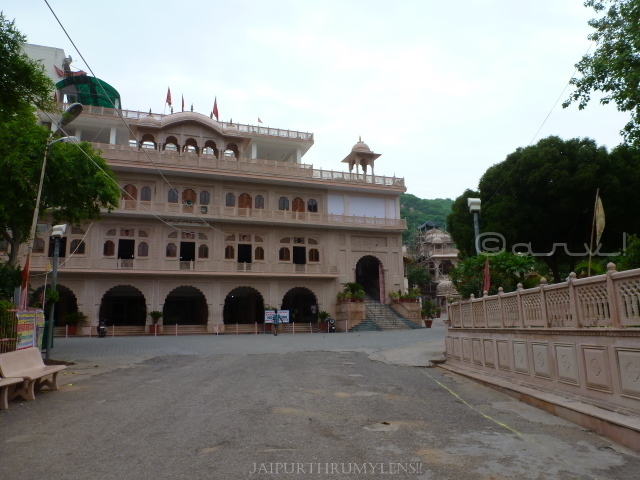
The temple was constructed in 1960 with an area measuring less than 100 sq feet. Over a period of time, the temple complex has grown to 300 times. It was founded by Pandit Radhey Lal Chaubey.
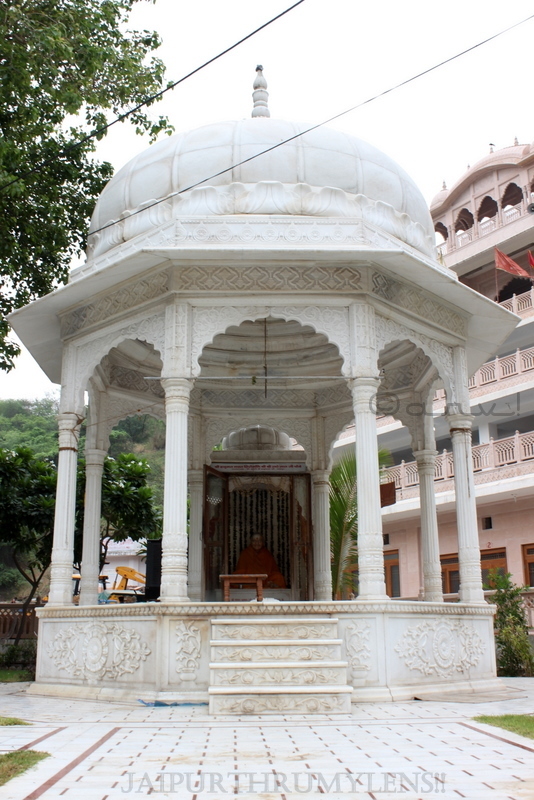
As per the popular legend, Pandit Ji was a resident of Jamwa Ramgarh and by a chance event, he spotted an image of Hamunam Ji carved on a rock during a picnic excursion. A few centuries ago, Baba Nirmal Das worshipped Hanuman Ji at the same site. This area was called Narwar Das Ki Khol.
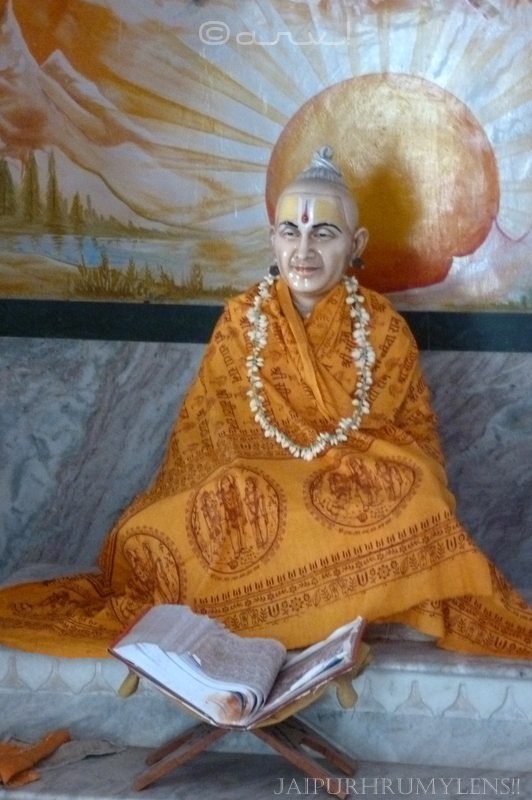
With the passage of time, the temple kept adding new annexures which explains the non-homogenous construction.
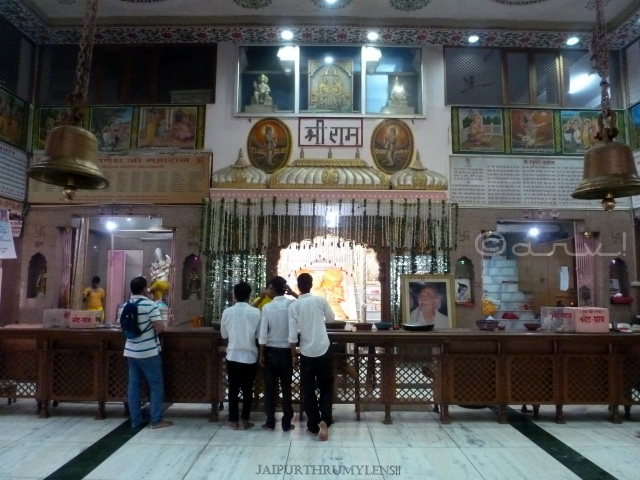
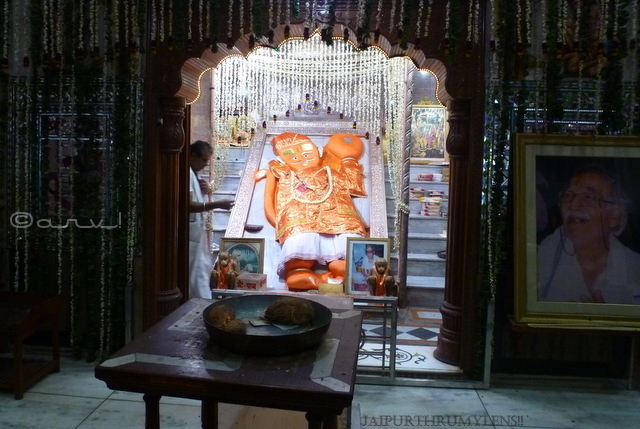
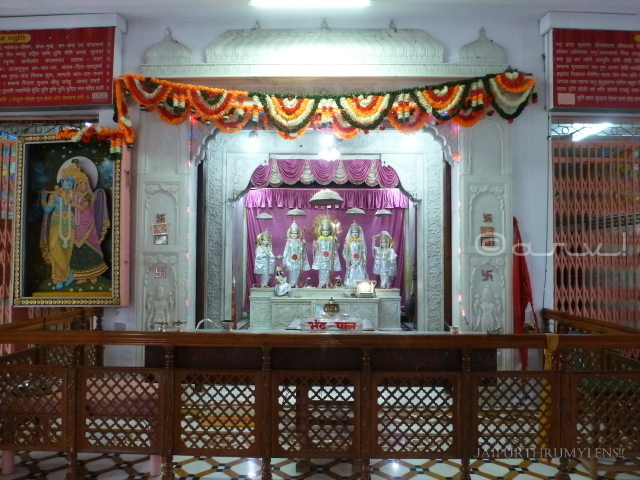
Apart from the temple dedicated to Lord Hanuman, there are temples having idols of Lord Ram, Lord Ganesha, Durga Mata, and Lord Shiva.
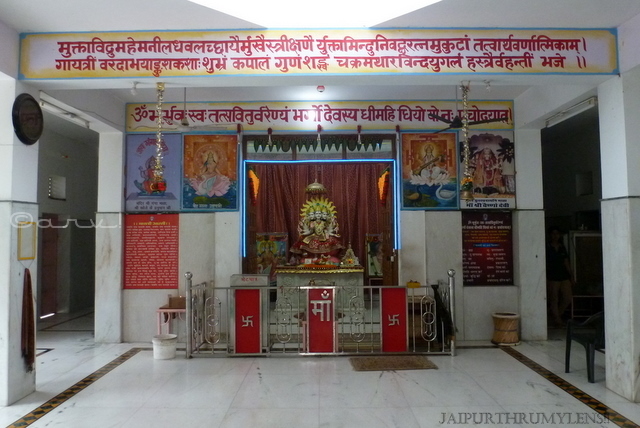
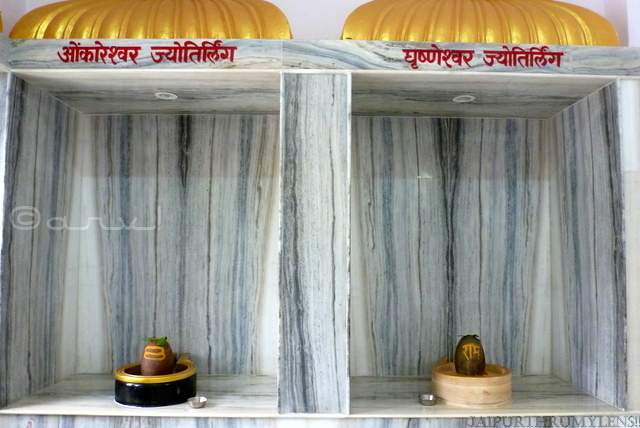
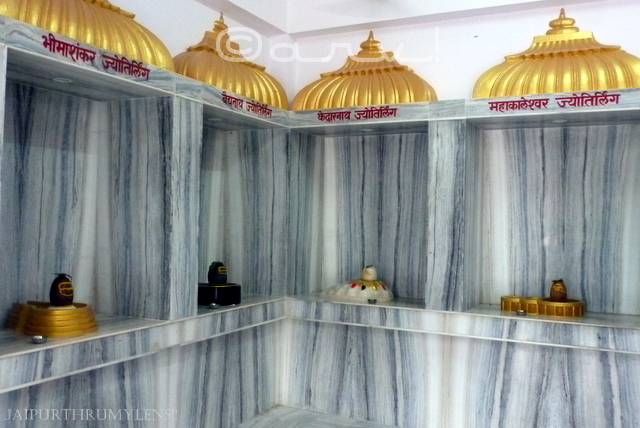
An interesting addition to Lord Shiva temple is the replicas of Shivlings from the famous 12 Jyotirlingas in India.
The Khole Ke Hanuman Ji temple has 24 kitchens that can serve Prasad to 5,000 people in its dining halls. New kitchens have also been constructed recently taking the number to 40 kitchens, More information in the Khole Ke Hanuman Ji Temple Rasoi section of this blog. The traditional Indian system of serving Prasaad has devotees sitting on a carpet on the floor of a dining hall. This is how Prasaad is served in most temples and Gurudwaras. However, some dining halls now have the facility of tables and chairs.
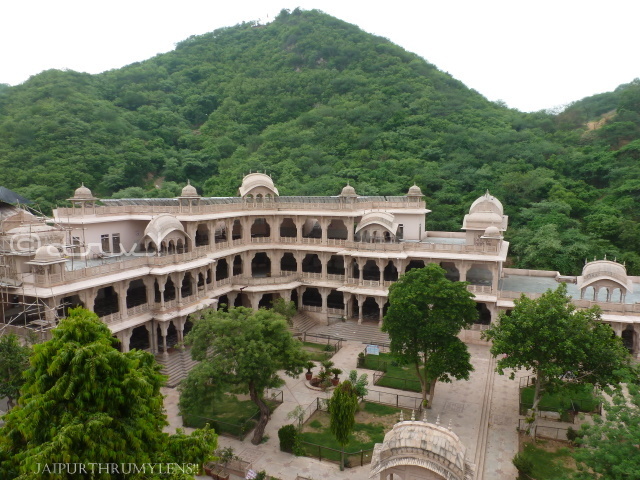
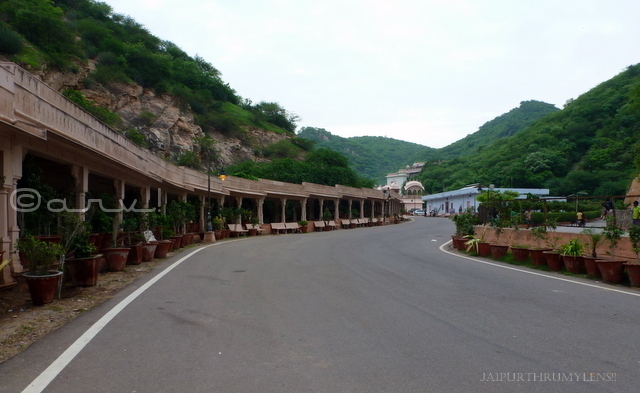
During the tenure of the last government, a sum of Rs 27 Crore or US $ 4 million was spent on the development of temple premises and infrastructure. Ten new kitchens and guest houses have been added along with a parking lot which can accommodate parking of 2500 vehicles.
It is surprising how authorities allocate such a huge sum of taxpayer money to private trusts for development in the name of the religious tourism circuit. There are other private temple trusts who have also benefited from this act of “generosity”. It is a classic case of having resources to influence government decisions.
There are many heritage temples in Jaipur that are being managed by Devesthan Vibhag under the state government and are in bad shape. Devesthan Vibhag was formed after India gained Independence and it took control of all temples run and managed by the princely state of Jaipur. Most such temples are in need of urgent repair and maintenance but this department doesn’t have enough resources.
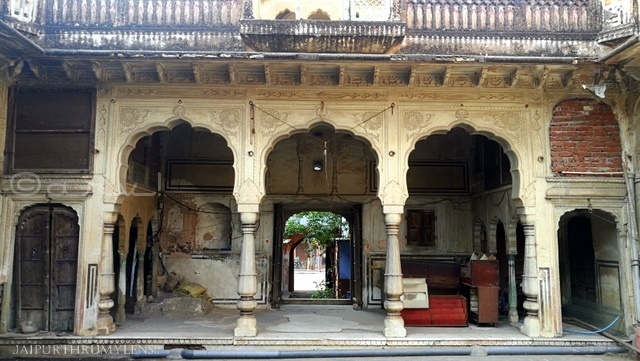
I’m sure if the government allocates money to these heritage temples, it can help preserve our heritage as well as promote tourism.
Is it worth visiting the temple?
From an architectural or heritage point of view? No. If you love visiting and exploring offbeat places, and people-watching, it is an interesting place as it is very popular among the locals. I can say without an iota of doubt that Khole Ke Hanuman Ji Temple is the most popular Lord Hanuman temple in Jaipur. The temple is a big draw for Dal Baati Churma Prasad in Jaipur.
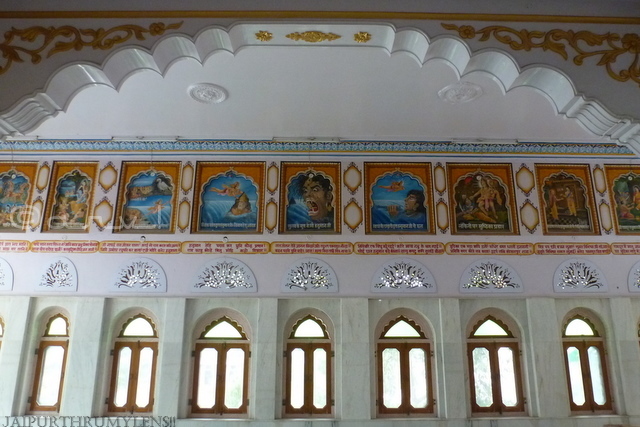
Locals visit this place in great numbers during the monsoon when the number of Goths goes up drastically. Goth refers to a picnic in the local language. Indian month of Posh is also popular for organizing Posh Bada Prasad apart from the Sawamani.
Sawamani Prasaad in Khole Ke Hanuman Ji Temple Jaipur
Sawamani refers to food, usually Indian sweets like Ladoo offered by a devotee to the deity. The word is derived from the word “Sawa” meaning one & quarter and “Mann” referring to the unit of measurement used during colonial India – Maund or Mann. Therefore Sawamani usually involves offering approximately 47-51 Kg.
Temple Distance from Jaipur city center
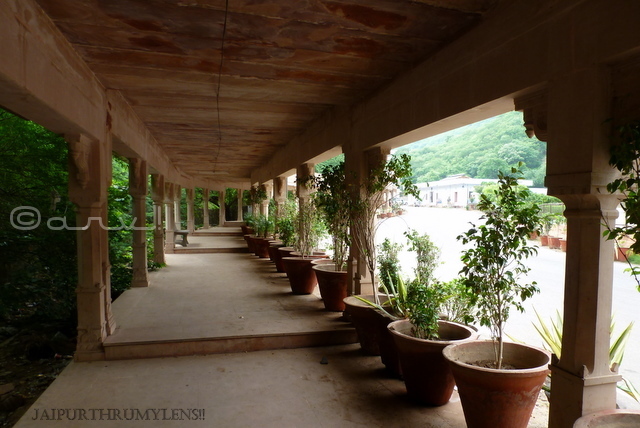
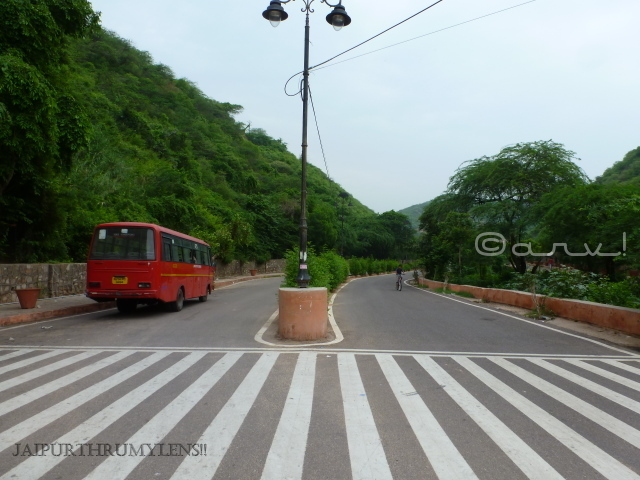
From Johari Bazaar Khole Ke Hanuman Ji Temple is approximately 7 Km on the Jaipur-Delhi highway. The temple is located 2 km in a valley off the highway.
Temple Timings
Khole Ke Hanuman Ji Temple is open throughout the day and one can have darshan from 5 AM to 9 PM.
Khole Ke Hanuman Ji Rasoi Booking
It is easy to host Prasad at Khole Ke Hanuman Ji Temple. Even though the menu options are fixed, there are many variations to choose from. All you need to do is contact the management and check if any Rasoi or kitchen is available on your chosen date. If it is available, you can book the same. The charges are based on the number of people and the menu. There is rent for the kitchen along with per-person charges. The rent for the kitchen ranges from Rs 1600-9100. The most expensive being Rasoi No 23 & 24, rent for Rasoi 1 to 22 ranges between 1600-3100. The per-person charges for Rasoi 1 to 22 are Rs 200/person and Rasoi number 23-24 is Rs 500/person. Some of the Rasoi’s can host from 400-1000 people. A new wing has been constructed near Khole Ke Hanuman Ji Temple Parking with new Rasoi or Kitchen numbering Rasoi Number 31 to Rasoi Number 40. These Rasoi are before the main temple and are easier to access but these are comparatively smaller in terms of capacity. Located on the 1st and 2nd floor, the new Khole Ke Hanuman Ji Mandir Rasoi can be reached using a lift or staircase.
Khole Ke Hanuman Ji Temple Ropeway
In September 2023, the Khole Ke Hanuman Ji temple trust inaugurated a ropeway to the Vaishno Devi temple on a hilltop. The distance to this temple is approximately 400 meters and will be covered by a ropeway. The initial plan is to operate 12 units with a capacity of 6 people in each. The time taken will be around 4 minutes.
Khole Ke Hanuman Ji Temple Ropeway Charges
The charges for the Khole Ke Hanuman Ji Temple ropeway are Rs 150 per person for an adult and Rs 75 per person for a child up to 5 years. The rates are for the round trip. The estimated cost of the Khole Ke Hanuman Ji Temple ropeway is around Rs 18 Crores. In another statement, the temple authorities have offered free ropeway rides for kids up to age 5 and senior citizens above the age of 70. Kindly check with the temple trust as this offer may be withdrawn at a later date.
Khole Ke Hanuman Ji Temple Ropeway Timings
The Khole Ke Hanuman Ji Ropeway timings are 9 AM to 9 PM, everyday.

Is Vaishno Devi Temple and Khole Ke Hanuman Ji Temple ropeway worth the money? For the former, no. For the latter, if you have never been on a ropeway, it is worth the experience. If you have experienced ropeway in India and elsewhere, the ropeway might not provide you a unique experience. The views on the ropeway might be interesting, especially during monsoon. I have had the chance to explore this area and I can definitely say that during the monsoon, the backdrop of Jaipur city with a green foreground is magnificent. I have not had a chance to undertake the Khole Ke Hanuman Ji Temple Jaipur ropeway as yet so I will refrain from passing any judgment.
Is it the Most Famous Hanuman Temple in Jaipur?
Many people especially travelers from other countries get confused between Khole Ke Hanuman Ji Temple and Galta Ji Temple. Even though both these temples are close by there are many differences. Khole Ke Hanuman Ji temple is the most famous Hanuman Temple in Jaipur, especially among the locals. It is not a heritage temple, the construction is fairly new and ongoing.
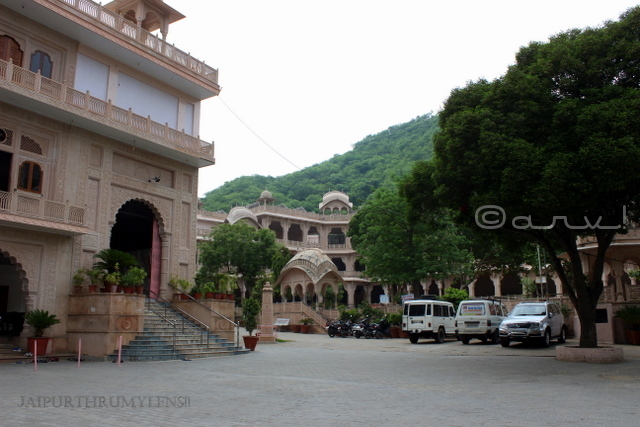
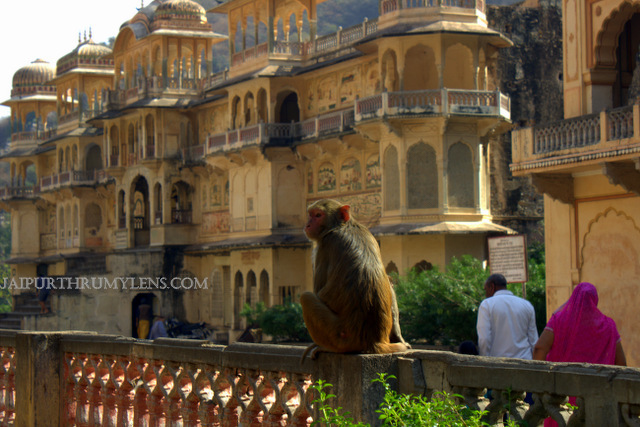
Galta Ji on the other hand despite being called the Jaipur Monkey Temple is dedicated to Lord Rama. So if you are looking for the Monkey Temple, this is the place to go. You will find hundreds of monkeys at Galta Ji. It is a historic heritage temple.
Read the complete blog on Galta Monkey Temple – The Captivating Galta Temples
Sand Dunes in Jaipur
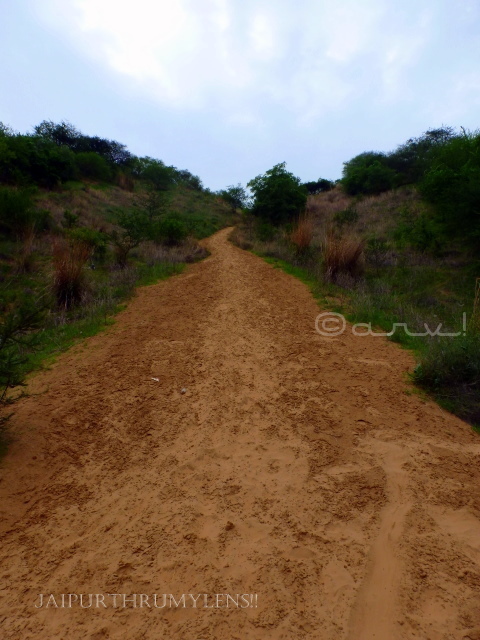
I can recall playing in sand dunes on every visit to Khole Ke Hanuman Ji Temple during my childhood years. The temple wasn’t that developed and there were many sand dunes in this area. Kids racing on the way up was very common and so was rolling down by losing balance. All that has changed now and the chances of spotting a sand dune are not easy though there are a few left, even now! Have you ever rolled down a sand dune?
Stay updated via Facebook, Twitter, Instagram
Check out other Heritage Temples of Jaipur
Discover more from JaipurThruMyLens
Subscribe to get the latest posts sent to your email.
 JaipurThruMyLens
Never heard of this temple before. Will try to visit it this time.
LikeLiked by 1 person
I suggest this temple for those who are keen of religious or spiritual places as there is no architectural or historic significance. If you enjoy visting temples, I suggest you do! 🙂
LikeLike
Let’s see…I will be in Jaipur for 3 days and want to cover as many places I can.
LikeLiked by 1 person
Great! Let me know if you need any help. 🙂
LikeLike
Sure… thanks!
LikeLiked by 1 person
Interesting information on how a temple grew from 200sq ft to this big. Religious places always multiply, I hope the same happened with hospitals and schools in India. I love dal bati churma and always look forward to having them. LOvely post with great information.
LikeLiked by 2 people
Thanks, Balaka! I agree. Religion tends to attract money. By influence, respect, or fear or may be all! Unfortunately, this sum has no productive use unless these institutions invest in society by sponsoring education, run schools or hospitals. Some religions are active in that sphere as well. Sadly, rest all are power centres.
You love Dal Baati Churma? Where did you get lucky?
LikeLiked by 1 person
Whenever I visit Rajasthan, I head to eat dal bati churma, peyanj kachori and ghevar. And I love the rabdi.. especially the one in Udaipur. Rajasthan is a food paradise.
LikeLiked by 1 person
Cool! 🙂
LikeLiked by 1 person
Really nice description and coverage. Would love to visit it now.
LikeLiked by 1 person
Looking forward to hear about your experience. Planning a rip to Jaipur? 🙂
LikeLike
Not anytime soon bro but who knows since it’s at a stone’s throw away 😋.
LikeLiked by 1 person
I know 🙂
LikeLike
Amazing information and lovely pictures as well! I love the fact that you take the pains to capture the beautiful symmetry of the structures. Great post… Cheers! 🙂
LikeLike
I’m glad you liked this post. Thanks for sharing your thoughts. 🙂
LikeLiked by 1 person
Wish you a happy new year Arvind! 🙂
LikeLiked by 1 person
Thanks. Wish you the same 🙂
LikeLiked by 1 person
You refreshed my childhood days spent in Jaipur. Rolling down the sand dunes was one of our favourite activities to do. 😁
LikeLike
I appreciate your post which has so much information, its like a virtual tour for me:) I am not keen on visiting religious places, if it has historic significance and art work its a pleasure as I enjoy getting to understand the history. All the pictures are beautifully captured.
LikeLiked by 1 person
I’m happy you enjoyed this virtual tour. I have clearly mentioned that this place doesn’t have historical relevance. You can check out other posts which are historical like Ghat Ke Balaji temple.
LikeLike
Such a beautiful temple, and probably not over crowded by the usual tourists. Thank you for sharing such a treasure, Arv.
LikeLiked by 1 person
Cornelia, well, this place is always crowded- not with the tourists but locals. 🙂
LikeLike
So what took you to this temple? Was it ‘pet’puja? or real puja? 😉 Thanks for this exhaustive information on Hanumanji’s temple….. Another place for me to visit when I go to Jaipur next. My daughter wants to visit Jaipur and after each of your posts, the list of places to visit get longer – just like Hanuman’s tail!
Happy New Year ARV to you and your family
LikeLiked by 1 person
Haha! It was surely pet Puja! I have already mentioned that you can feast on the best Dal Baati Churma here! I have visited Khole Ke Hanuman Ji on invites. If your daughter wants to visit Jaipur, this is a good season. Dec-Feb are the best months.
I like your comparison of Hanuman Ji’s tail with list of places to visit in Jaipur. Good one!
Happy New Year to you all too, Sunita! 🙂
LikeLike
I wonder if all trees carried this message would we listen? We pass by many trees without so much as a second glance. I’m glad this notice at least will make people look at the tree! Thanks for sharing this thought provoking post
LikeLiked by 1 person
I agree. We hardly look up and think about the trees that provides us shade, oxygen, and makes this planet habitable. 🙂
LikeLike
Hi Arv, what an enormous exploration in growth the temple’s size since its inception in 1960! 300x! The management must be doing something well. Although I’m surprised to hear that the government would allocate tax money towards building a new temple vs preserving history. It’s odd, because temples usually generate plenty of income from worshipers.
The dining halls and prasad sound impressive.
Overall, I really enjoyed reading your detailed article.
LikeLiked by 1 person
Jyoti, I’m not sure if this is because the temple management was able to influence the government or the government wanted to influence the voters. Can be either or both. Yes, temple trust generate huge sum of money. As reported this temple generates Rs 50 crore in offerings and donations.
I’m happy you liked this post, Jyoti 🙂
LikeLike
This blog has brought all the nostalgic memories to me. We always had all the “goth-bati” here !
Great work…
LikeLiked by 1 person
Happy to know it rekindled old memories. Khole Ke Hanuman Ji temple is famous for Dal Baati Churma. 🙂
LikeLike
I love offbeat and people watching, Jpr, this sounds like the perfect temple to visit!
LikeLiked by 1 person
I’m sure you will love visiting this place if you enjoy people watching. It is a busy temple that attracts hundreds of people everyday!
LikeLiked by 1 person
Another great travel post!
LikeLike
Even tough it is not the best for architectural visit, I still found that the temple is beautiful. It’s interesting to see the interior of the temple and compare it to other Hindu’s temple. I am in Bali at the moment, where most of population are Hindu. I had visited some temples but unfortunately nowadays, the interior is not available for visitor. Seen from the exterior, the architecture of temple in India and Bali have some difference. Will post it once I have chances to see the interior..
LikeLiked by 1 person
And by the way, Happy New Year 2019…
LikeLiked by 1 person
Thanks, Nurul. To you too! 🙂
LikeLiked by 1 person
Happy to know you are chilling in Bali, Nurul. Even though Hinduism traces its origin in India, I’m sure geographical and cultural influence must have led to these differnces.
Happy to know you liked this temple.
I’m looking forward to reading more about it in your post.
Are you planning to list out these differences, Nurul?
LikeLiked by 1 person
ahaa.. it needs more serious research.. but I will think about it…
LikeLiked by 1 person
Sure it does. 🙂
LikeLike
Quite a palatial temple that is! The rasoi is so huge. It is indeed sad to see such huge funds being allocated to one place while some others are neglected. The green surroundings of the temple is nice.
LikeLiked by 1 person
We all know hoe things work around here. You just need a link or connection to make or stop things from happening.
The temple is indeed situated in a beautiful setting. Thanks for sharing your thoughts, Neel 🙂
LikeLiked by 1 person
Another very nice and elaborate post on Jaipur and things to see around the city. The post is very informative. You raise questions if tax payer money should be paid to temple upkeep. I think in our country one should not pay money to temple trusts. With money comes control and temple will be forced to follow government rules. I think temples should not be treated as sight seeing places. These should be restricted to devotees only.
LikeLiked by 1 person
Thanks, Abhijeet. My point is simple, the government should spend money only on temples which have historic and heritage value along with tourism prospects. There is no point in spending tax payers money on private temples trusts whose annual income/donations is in a few crores. They have enough resources to build it themselves. I guess we are in agreement on this here. Right?
LikeLike
Yes the money you talk is about archeological purpose. If government pays money then sanctity of rituals will be lost to. Courts may dictate because tax payer money is being used.
LikeLiked by 1 person
True 🙂
LikeLike
Have been to Jaipur so many times, but this place hasn’t been covered yet… Next trip surely.
LikeLiked by 1 person
Looking forward to your experience on your blog, Swati 🙂
LikeLike
Very interesting. I liked the location of the temple the most. It looks serene and secluded. The architecture looks beautiful with the stone. We listed Ranakpur Temple in 2012. The architecture, artworks, and paintings from Rajasthan are exquisite. True craftsmanship there.
LikeLiked by 1 person
Cheryl, Ranakpur and Dilwara Jain temples are in a different league. In any case, Jain temples are known for their rich & ornate interiors and intricate carvings. I agree that Khole Ke Hanuman Ji temple is situated in beautiful surroundings. Must have been many years ago since you last visited Ranakpur?
LikeLiked by 1 person
I agree. It just took me back to 2012. 🙂
LikeLiked by 1 person
🙂
LikeLiked by 1 person