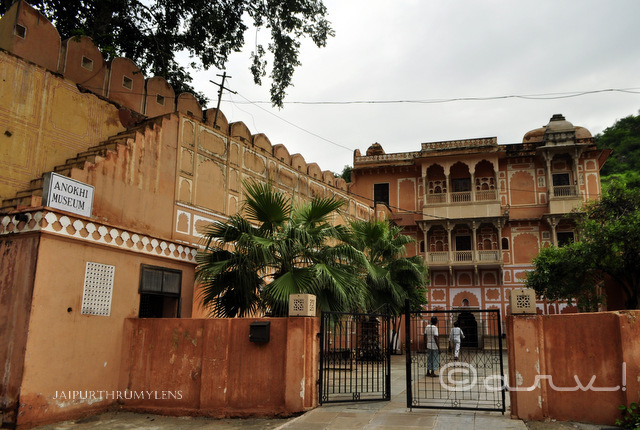
“Can you suggest places to visit in Jaipur on Saturday?” it was my friend from Gujarat on the other side of a telephone conversation. He was on a vacation in Jaipur during Navratra. I suggested Amer Fort, Jagat Shiromani Temple, Panna Meena Kund, and Anokhi Museum of Printing in Amer Town. “It will be great if you can join me,” he added. I affirmed my presence for a visit to the Anokhi Museum and for exploring Havelis and temples in Amer. He later told me, he had never heard of this museum and ended up searching for Anokhi Museum in Jaipur on Wikipedia and Google.
Anokhi Museum In Jaipur – The Complete Guide
I have been contemplating a visit to the Anokhi Museum in Jaipur for the last four years and this seemed the most opportune moment. Considering the festive season and the traffic situation in the walled city, a drive to Amer would easily translate into 45 minutes. I chose a bike ride over the car to reach Anokhi Jaipur’s museum in Amer.
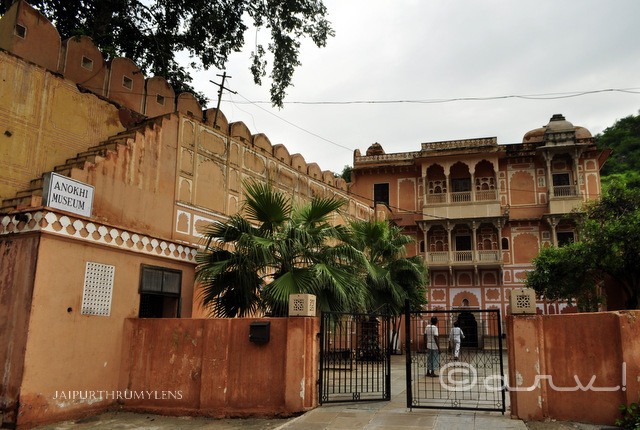
I have never been to Amer on a bike since I gave up riding many years ago. A ride through Kanak Ghati in the post-monsoon season seemed like an excellent idea.
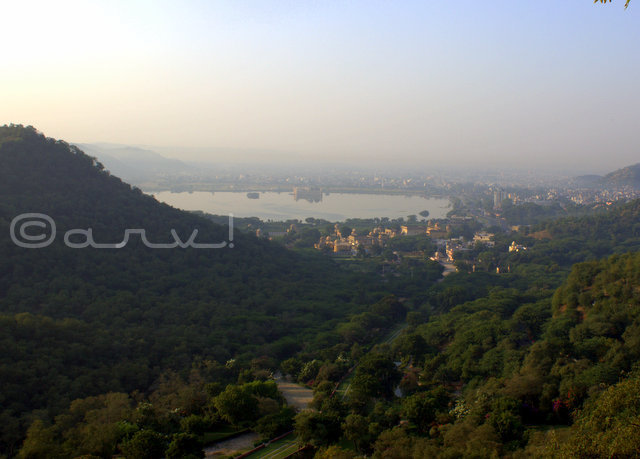
Anokhi Museum seemed familiar yet a novel experience. Over the last few years, I have seen this mansion so many times during my explorations and hiking trips in Jaipur which led me to Amer. The opportunity to explore the museum, however, never took shape.
What is Anokhi Museum All About?
Anokhi Museum represents an attempt to curate the history, process, and techniques of the traditional local craft of hand block printing. Jaipur is closely associated with hand block printing; the city has been one of the leading hubs of this heritage craft. Anokhi Museum of Hand Printing was established to curate, educate and preserve this unique craft of hand block printing.
India was at the forefront when it came to the making of dyed & printed textiles for centuries. Block printing and the Tie-Dye method of printing were the first hand-printing techniques in India. Each region in India developed its own process and method of hand-printing fabric. The variations were due to the raw material used, processes, climatic conditions, quality of water, and so on. Some of these are better known as Sanganeri, Bagru, Dhabu, Ajrakh, Kalamkari, Leheriya, and Bagh.
Everything about the brand Anokhi Jaipur?
The word Anokhi is taken from the Hindi language which means unique. Anokhi is a Jaipur-based brand with operations spanning multiple countries. It specializes in hand-block printed fabrics and garments with both Indian and Western styles.
Anokhi Brand & Museum History
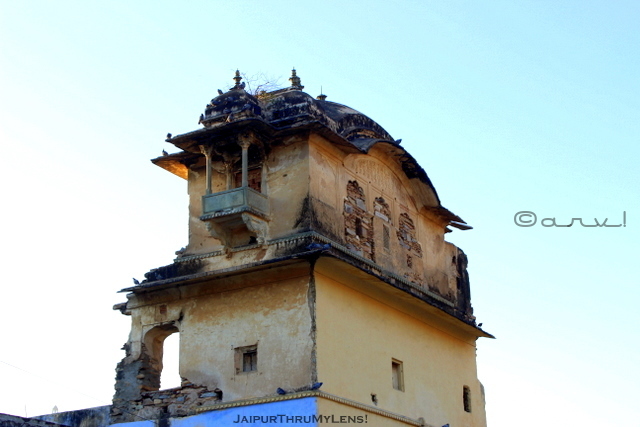
The museum building is the 16th-century Haveli or mansion known as Chanwar Palkiwalon Ki Haveli. Not much information is available about the former occupants of this building. It is one of the prominent Havelis of Amer and is situated near the Kheri Gate. Kheri Gate is one of the gates of the wall of Amer which provided security to the occupants of this medieval town.
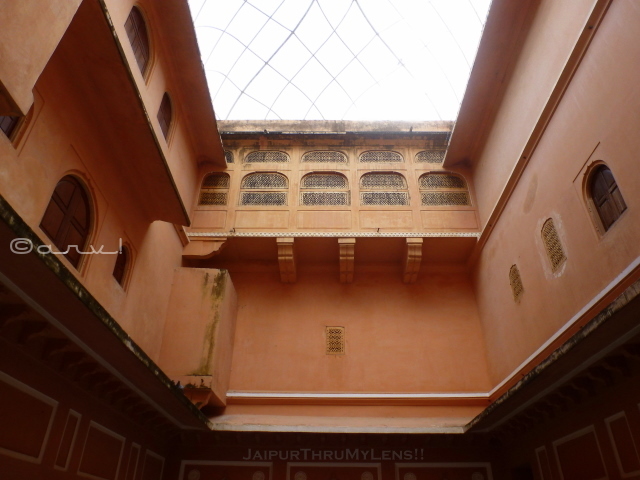
The Haveli was purchased by the founder of Anokhi, Mr. John Singh during the 1970s in a dilapidated condition. It wasn’t until the late 80s that the idea of the museum took shape. The Haveli was painstakingly restored over an extensive period of time. The local artisans were provided full liberty for the restoration process rather than relying on an architect’s plan.
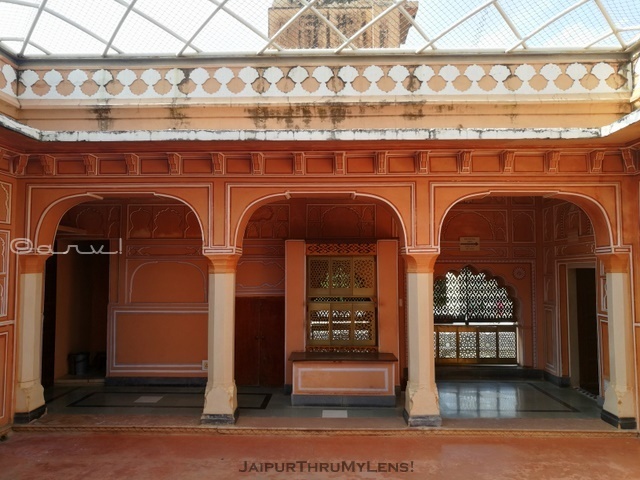
It is apparent it took a lot of effort to restore this building to its current position. A special mention needs to be made that the restoration process was undertaken using traditional building materials and processes and it took four years to restore the building. In the year 2000, the Anokhi Museum Haveli won the UNESCO Award for cultural conservation.
The Experience
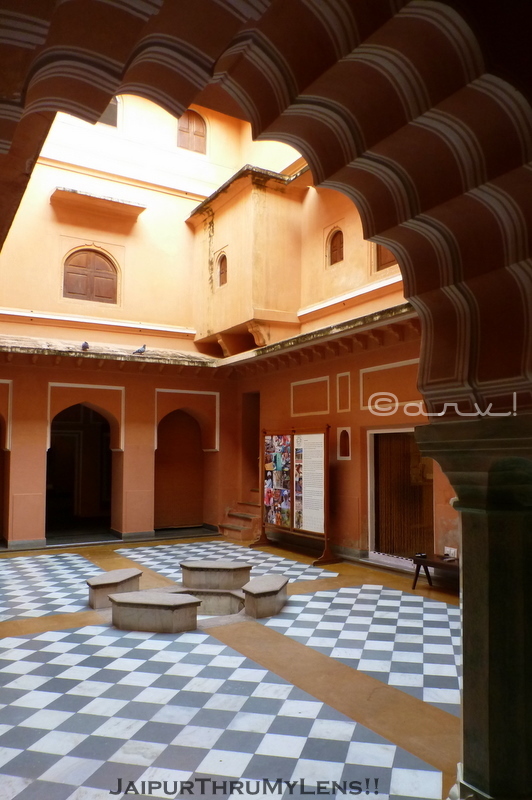
After buying tickets for the Anokhi Museum entrance, we walked into a Chowk, an open courtyard. A Chowk is an essential feature of Havelis in Rajasthan. A section containing before and after restoration pictures can be found in the chowk along with other relevant information.
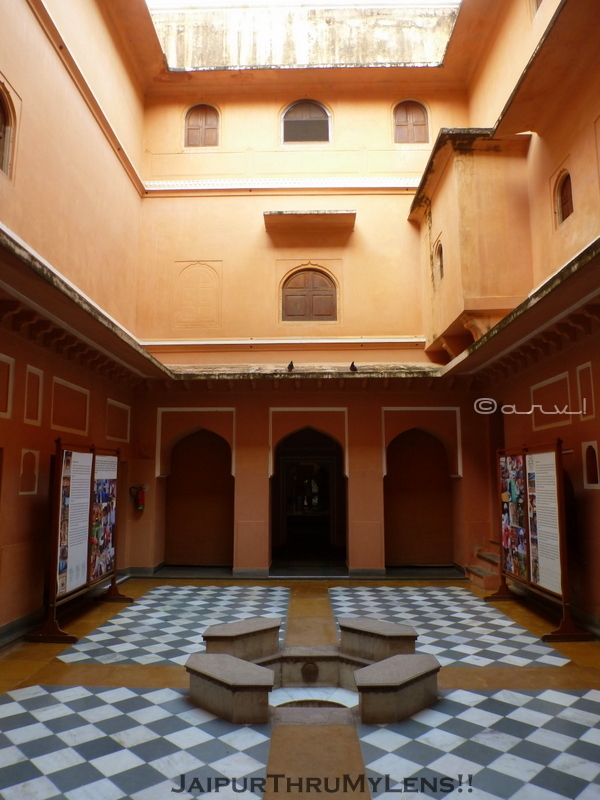
On the ground floor is a gallery dedicated to Jajam and a small Anokhi shop. Apart from these two, one can find information on the restoration of the Haveli and the history of block printing in India,
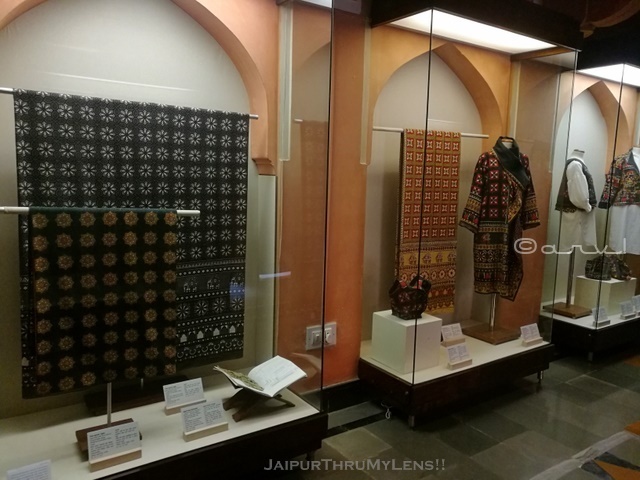
What meaning of Jajam?
Jajam is a traditional durry or a thin carpet used by locals for seating on the floor. The concept of Jajam has vanished from urban areas with the advent of Western seating systems. It does exist in some rural hinterlands. I witnessed the use of Jajam during my childhood years. Jajam is made from thick fabric. Anokhi collaborated with artists to revive the forgotten art of Jajam making. The designs of Jajam are inspired by architecture, animals and birds, and traditional motifs.
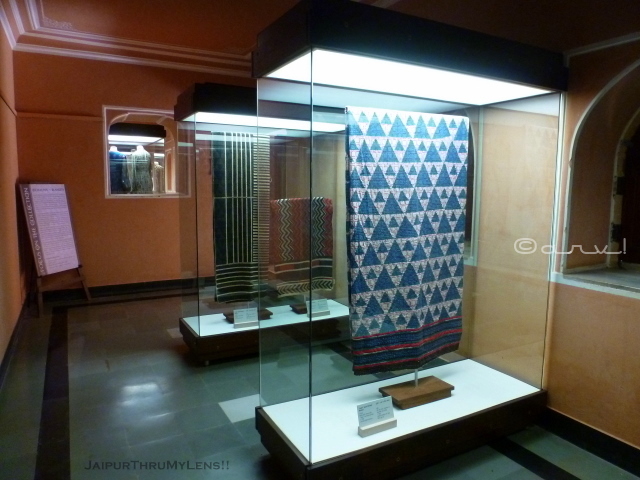
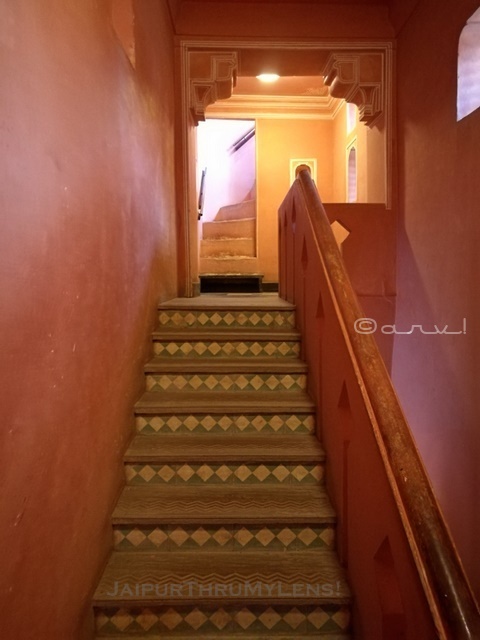
Once done with the Jajam section, we used the staircase to reach the galleries on the first floor. Typical with the ancient Havelies of the Dhundhar region, the staircase is steep with a small tread and high riser.
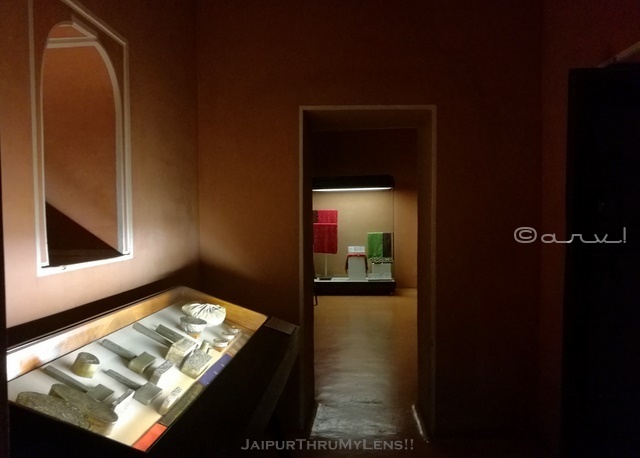
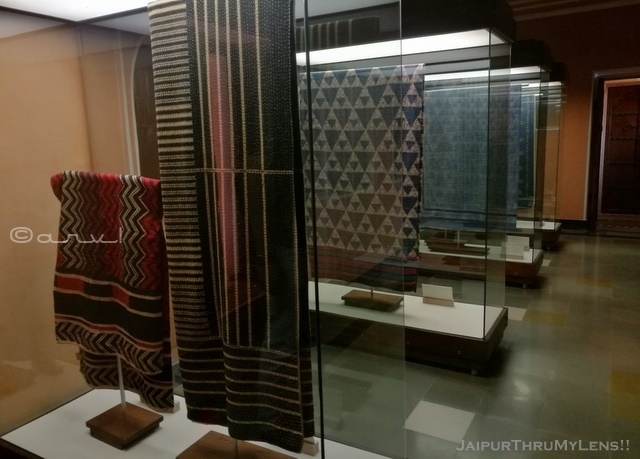
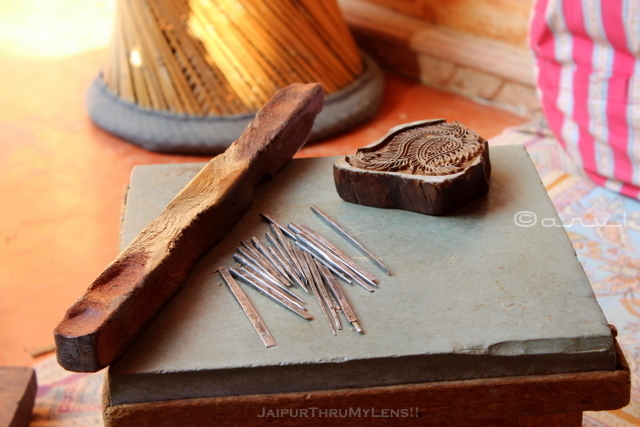
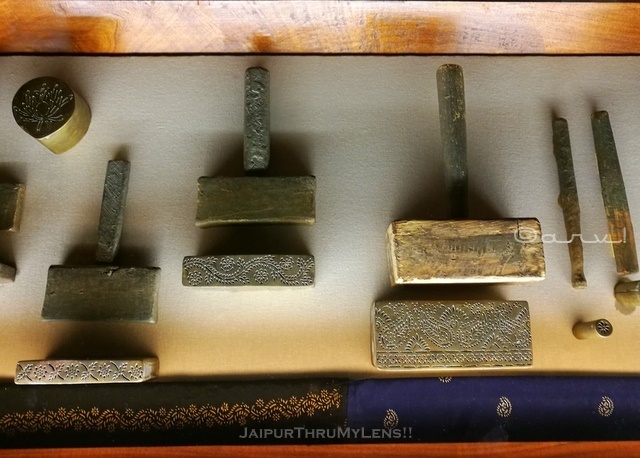
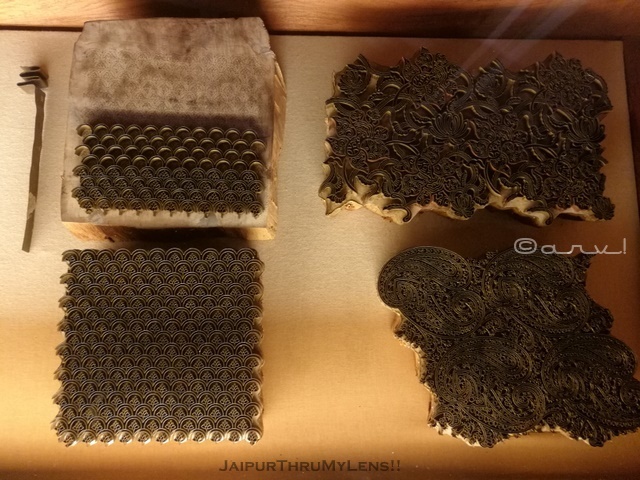
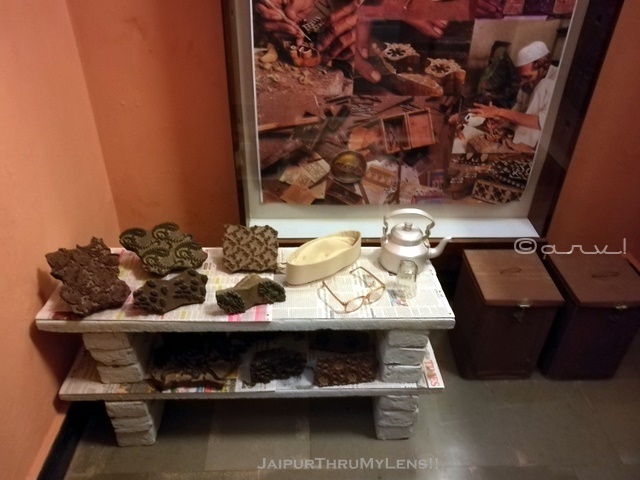
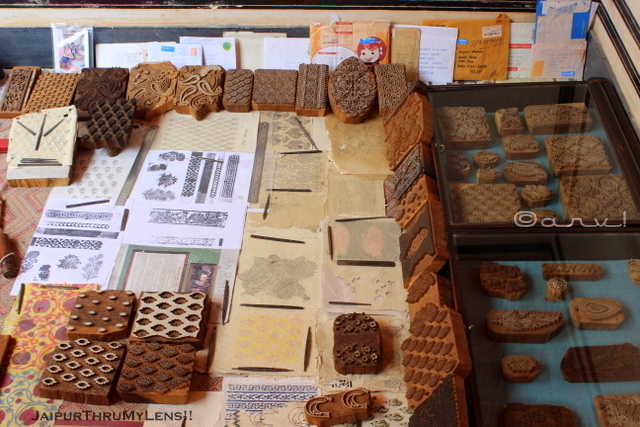
The museum is a goldmine with extensive information on block printing processes, and features of block printing of each region like Sanganer, Bagru, Ajrakh, and Bagh. One of the galleries contain tools used in the block printing process.
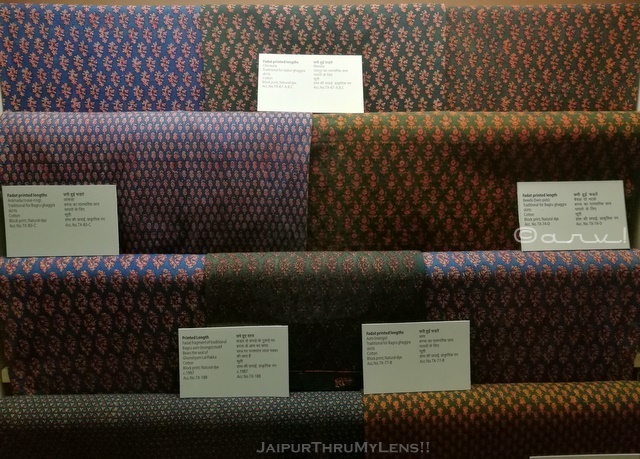
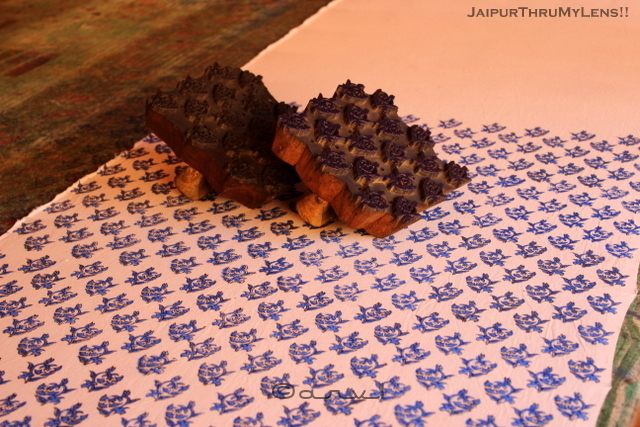
Featured in the previous picture are hand-block printed fabrics from Bagru in Jaipur while the one below has Bagh prints of Madhya Pradesh.
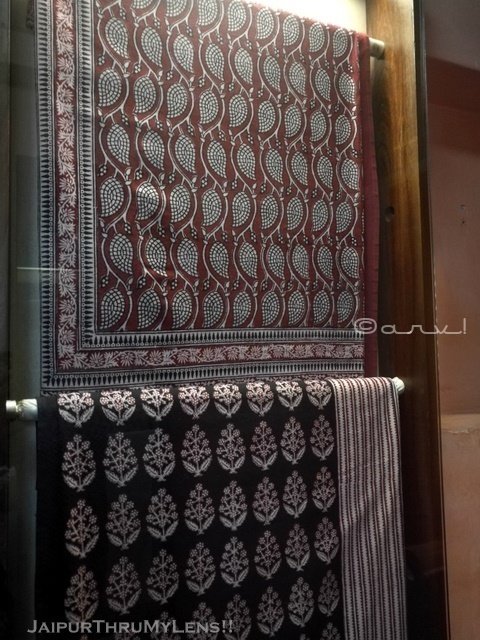
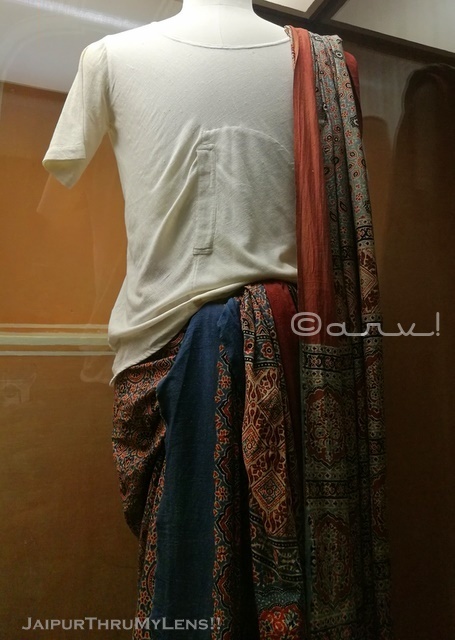
Ajrakh is a traditional block printing technique from the Gujarat-Sindh and Barmer regions.
While I have witnessed the block printing process in some of the factories in Sanganer and Bagru, there was something in the museum that captured my attention. The information on the use of gold in block printing is exclusive to royalty and the affluent business community. The museum displays the tools and processes used for this craft.
We moved from one gallery to another uncovering the information related to block printing. It is interesting how well the space inside an old Haveli has been utilized for the museum. The rooms are unsymmetrical and some areas are pretty narrow.
Once done with galleries the route steered us to the terrace where an artist creates blocks used in the printing process. In a way, this is a foundation for the Indian block printing process. A significant thing to note is a block with a delicate and intricate design is not every artisan’s cup of tea.
Anokhi Museum Workshop
The two floors of the Anokhi Museum were devoid of human interaction. But here we were sitting in the Anokhi Museum workshop in conversation with Mr. Salim who has spent close to 35 years working in this industry, largely for Anokhi.
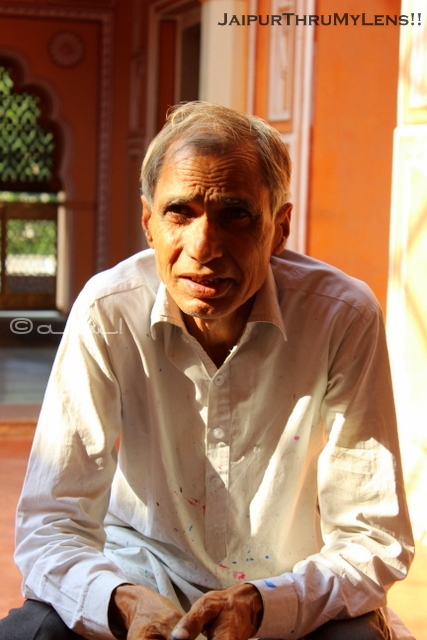
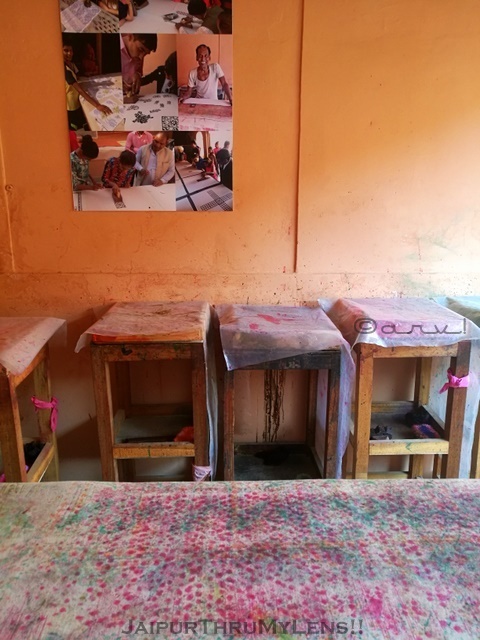
He shared with us the interesting life experiences of the founder of Anokhi Jaipur, Mr. John Singh, and the philosophies which contributed to the growth of the organization and its people. It revived the traditional art of hand block printing with a new perspective; developed a market for block-printed garments internationally by introducing contemporary prints. It constantly encourages artisans to innovate and improve the standards of workmanship. The respect for the founder and management of Anokhi India among its people is evident. We took a tour of the block printing section in Anokhi Museum workshop.
Anokhi Museum Shop
The tour of the Anokhi Museum ended here and we were back in the courtyard on the ground floor exploring the Anokhi Museum shop.
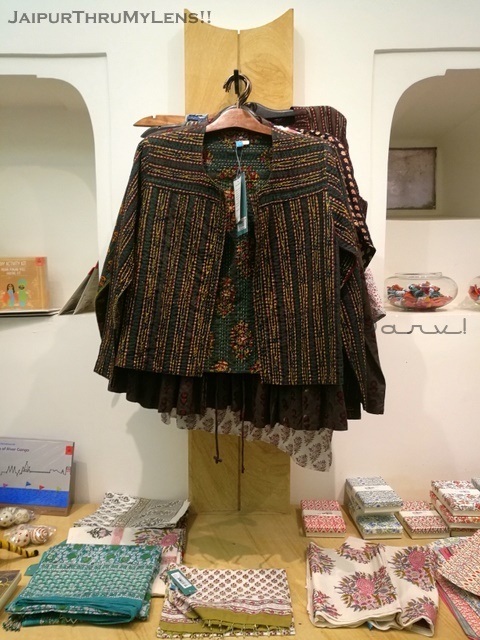
Anokhi Museum Shop is no match for the variety and size of the Anokhi Store in C-Scheme Jaipur but they have many interesting things to see and buy. I highly recommend securing Anokhi Publication’s books on block printing. These are well-researched, precise, and one of the most reliable books I have found on Indian block printing. I especially appreciate the compact size and inclusion of fabric swatches for better understanding. A must-buy for people who love textiles and block printing.
Why should one visit the Anokhi museum in Jaipur?
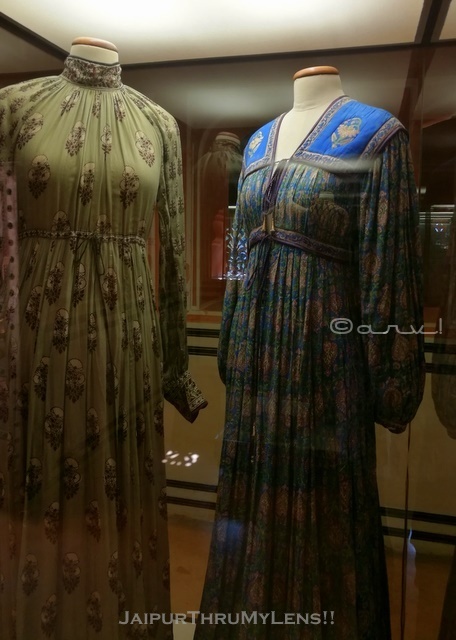
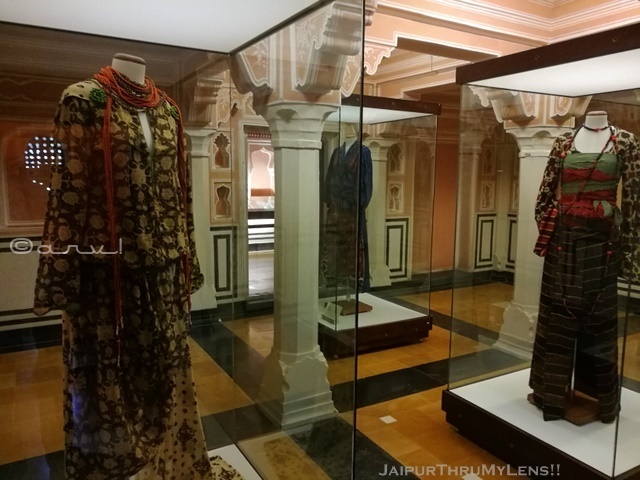
I recommend the Anokhi Museum for art, craft, history, and heritage lovers. People who appreciate choicer things in life will find it an enriching experience. The galleries in the museum highlight the range and complexity of this craft. It showcases a variety of hand-printed fabrics, some of which have vanished completely along with the ones in use currently. The museum has a collection that includes clothes and home furnishings. In a gallery spanning two floors, the exhibit includes traditional and Western garments along with tools that help make them. Where else can you get a more thorough understanding of the history and techniques of traditional Indian block printing craft? Like the Calico Museum of Textile in Ahmedabad, Anokhi Museum is one of its kind in the World.
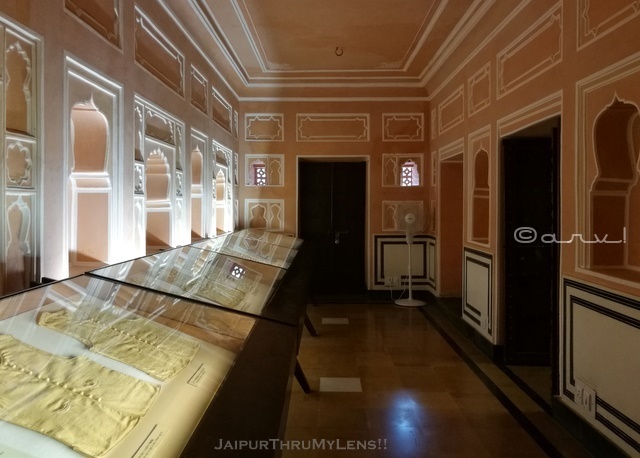
The visit to the Anokhi Museum was an incredible experience. In the hindsight, a not to miss section in the museum is a step-by-step process of the block printing process. The journey of grey cotton cloth from various processes to the finished product is noteworthy. Unless one is undertaking a block printing workshop in Jaipur, it will be challenging to experience this transition anywhere else.
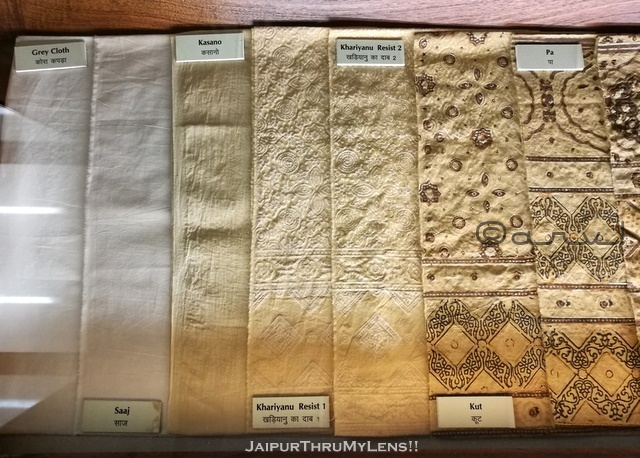
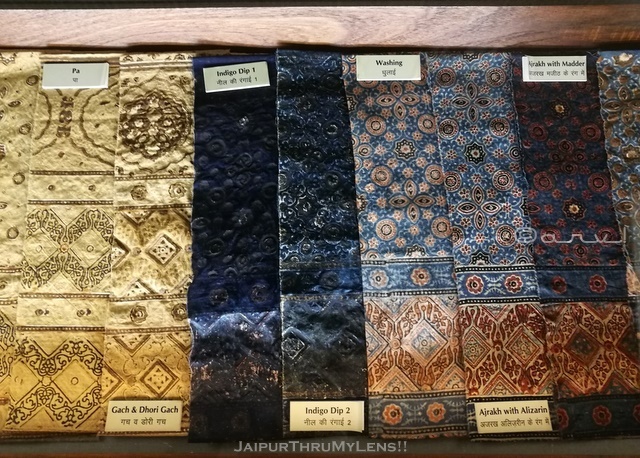
There were many magnificent Havelis in Amer most of which were lost over a period of time. Some do exist, but only one or two Havelis have been restored. The rest of the surviving ones are suffering a slow death. Anokhi Museum sets a remarkable example of how we can save these Havelis and discover ways to connect it with people.
History of Block Printing in India and Sanganer
Experts opine most block printers in Rajasthan and Madhya Pradesh emigrated from Gujarat. Political situations forced them to relocate. A significant number of block printers shifted to Rajasthan.
There are many different theories pertaining to the history of block printing in Jaipur. This region emerged as a key center for block printing between the 16th and 18th centuries; the presence of flowing water of the Dravyawati river in Sanganer and plenty of sunshine seems to be the primary reason for its development and growth as a major block printing hub. In addition, Jaipur a trading town founded in 1727 AD with a strategic location helped grow block printing immensely. Block printers belong to the Chhipa community.
Apart from Sanganer, Bagru is another important block printing center in Jaipur. There are technical differences between Bagru and Sanganer block printing processes and techniques. More on that in a detailed follow-up post on block printing.
Have you been to Anokhi or any other outlet selling traditional handcrafted products? Do you like hand-block printed fabric and garments? What are your views on heritage and traditional crafts?
Entrance Fee
The Anokhi Museum entrance fee is Rs 80 per person. This fee is valid for foreigners too.
Timing
Anokhi Museum is closed on Mondays.
For the rest of the days, the timing is as below:
Tuesday – Saturday:10:30am – 5:00pm
Sunday: 11:00am – 4:30pm
Please note Anokhi Museum is closed during the summer season from mid-May to mid-July for maintenance. You check for exact information on their website or by calling up the museum.
Follow Jaipurthrumylens Facebook Twitter Instagram

Discover more from JaipurThruMyLens
Subscribe to get the latest posts sent to your email.

 JaipurThruMyLens
That looks like a beautiful building full of beautiful fabrics, Arv.
LikeLiked by 2 people
It sure is, Mick. Artists like you will surely enjoy a visit to Anokhi Museum.
Have you ever used fabric as a medium instead of paper/canvas?
LikeLiked by 1 person
No, it’s probably the only medium I’ve never tried. I suppose I’ve never really had any ideas or projects that seemed suitable for fabric. Perhaps I should think about it!
LikeLiked by 1 person
A lot of artist use fabric as a medium either as a challenge because each medium has its own nuances or because of commercial reasons.
LikeLiked by 1 person
I should probably try it, Arv.
LikeLike
Never heard of this museum!
LikeLiked by 2 people
Highly recommended for creative and craft lovers, Rajeev.
LikeLiked by 1 person
Next time I am in Jaipur
LikeLiked by 1 person
I guess you mentioned you keep traveling to the city.
LikeLiked by 1 person
Not in the last few years. But, who knows?
LikeLiked by 1 person
I agree!
LikeLiked by 1 person
A museum worth visiting! There is so much to see in Jaipur. Thank you for this interesting post, Arv!
LikeLiked by 2 people
Absolutely. Do you enjoy visiting museums?
LikeLiked by 1 person
Yes, but living out in the country, I have very few opportunities to visit museums.
LikeLiked by 1 person
I can understand. How far is the nearest big city?
LikeLiked by 1 person
A two hour trip over a mountain pass.
LikeLiked by 1 person
Ah. Now that requires some planning.
LikeLiked by 1 person
Love, love, love Anokhi. I visited the Jaipur shop on both visits to your wonderful city. Next time I must visit the museum. I didn’t even know it existed. Thanks for the tip! Mel
LikeLiked by 2 people
Happy to know you loved visiting, Anokhi, Mel. You must visit museum too. I’m sure you will love it.
So what is your recommendations for people visiting Anokhi?
LikeLiked by 1 person
Don’t miss out on the beautiful handkerchiefs and pyjamas – such soft cotton and so comfortable. Also lovely handmade paper stationary. And and and … 🙂
LikeLiked by 1 person
I know the list is endless, Mel. I love hand block printed fabrics. It is all about individual style!
LikeLiked by 1 person
Im perennially in awe of the beauties of our country.
LikeLiked by 1 person
You must visit this museum someday. Have you been to Jaipur?
LikeLike
Ive been to Udaipur and thats all. But I plan to soon.
LikeLiked by 1 person
Winters is a good time to visit Jaipur, Asha!
LikeLike
What a beautiful museum.. Packed with information for anyone interested in block printing and its history..
LikeLiked by 1 person
Absolutely, Carol. In a way, it is our heritage. Unfortunately, the residents of the city don’t know much about block printing art. Have you ever used any block printed fabric since you live in a country which is also well known for crafts?
LikeLike
No, Arv.. but I have done some silk painting which was fun and interesting 😊
LikeLiked by 1 person
I’m sure it must have been, Carol. 🙂
LikeLike
Arv, This is such an informative and fascinating post! I love so many things in it- the chowk and architecture of the haveli so beautifully restored, the art of block printing and the various types and regional influences in it and your detailed photos!
Jajam took me straight to my childhood. My mother used to get jajams made for special occasions. I am a huge fan of the dhurrie and have a couple of them in my home here.
LikeLiked by 1 person
I’m happy to hear that this post connected well, with you, Sandya. I’m sure you still have some of those Jajams stacked somewhere. I guess these must have been handmade and from Maharashtra?
Happy to know you cherish the connection with your roots and the old memories through the Durries. 🙂
LikeLiked by 1 person
Great post! I enjoyed the details about traditional block printing a lot, thanks Arv!
LikeLiked by 1 person
I’m glad you enjoyed this blog on block printing. Do you love such fabrics?
LikeLike
That’s very interesting, I never knew that there is a museum dedicated for block printing!!
And what a wonderful renovation!! I wish if little bit extra efforts could be made to make this place popular for tourists by tourism department.
LikeLiked by 1 person
Deeksha, I agree locals are not aware of this museum. It is popular among international travelers. I have never come across tourism dept. promoting privately run attractions.
By the way, Jaipur hand block printed fabrics are quite popular in Bangalore too.
LikeLiked by 1 person
Block printing is popular every where Arv!!
Courtesy my two sisters artistic interests my parent’s house used to look like a small workshop for different types of paintings, tie and dye and block printing. Everywhere we had either block printed or tie and dye bedsheets, sarees, pillowcases or dresses 😂 😂
LikeLiked by 1 person
Wow. That’s Interesting, Deeksha. Have your sisters continued with their passion?
LikeLiked by 1 person
No Arv,both have moved on with complete different activities now!
LikeLiked by 1 person
Oh! well, it happens, Deekhsa 🙂
LikeLiked by 1 person
Yes…
LikeLiked by 1 person
cool
LikeLiked by 1 person
That’s Anokhi indeed! A museum for block printing. How cool is that! Wonder how many people know of it though. I never knew. Shall recommend to people who will be interested in these kind of things.
LikeLiked by 1 person
Neel, the museum is popular among the foreign travellers. The awareness of the museum is quite low even among the locals. By the way are you a museum person?
LikeLiked by 1 person
I am not quite a museum person 😛
I’m am outdoor person as you would know 🙂
LikeLiked by 1 person
I totally get that, Neel. 😊👍
LikeLiked by 1 person
Am yet to visit it too 😄 and yes high on the list for years now. I indulge in lots of block print and this post has so much to share.
LikeLiked by 1 person
I’m glad you found this relatable, Monika. Do you want to say you do a lot of block printing? Where?
LikeLiked by 1 person
No no…… Buying indulgence 😁😁😁 fabric, bed linen etc etc
LikeLiked by 1 person
Haha! cool! Your contribution to this craft is appreciable 🙂
LikeLiked by 1 person
Yeah!!! 😁😁
LikeLike
I would love to see the displays set out in this museum, Arv, and one of my daughters who is very much ‘into’ some of these crafts herself (on a much smaller scale, of course) would probably love it even more so! For the museum to have won the UNESCO award for cultural conservation says so much about it. It certainly looks a wonderful place.
LikeLiked by 1 person
It’s certainly one of its kind, Millie and I’m sure your daughter will love visiting here. By the way, what craft is your daughter into?
LikeLike