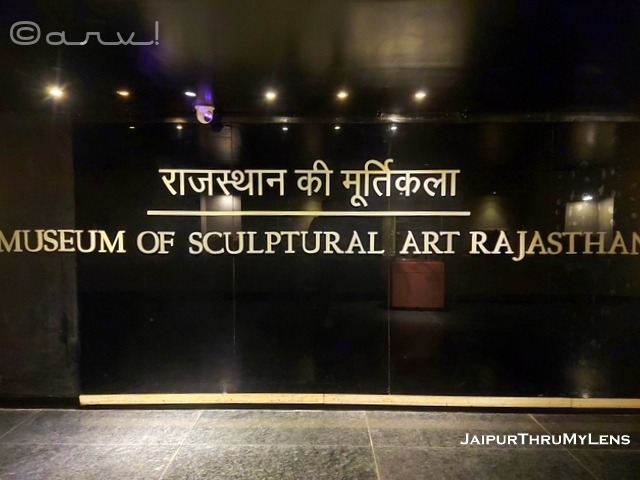
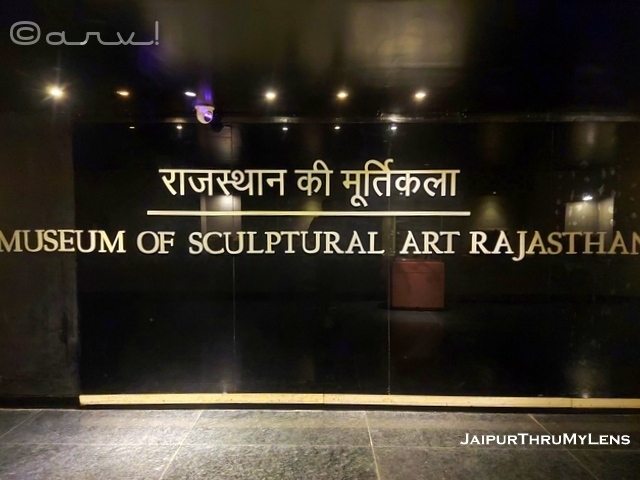
Choti Chaupar Metro Sculpture Art Museum of Rajasthan is probably one of the lesser known museums in Jaipur. Even the commuters who regularly use Jaipur Metro are not aware of this museum which has many antique idols. There are many reasons why Choti Chaupar Metro Sculpture Art Museum remains elusive. More on that later in this blog on Choti Chaupar Metro Sculpture Art Museum. Read: Choti Chaupar Then and Now
Sculpture Art Museum of Rajasthan at Choti Chaupar | Complete Guide
History
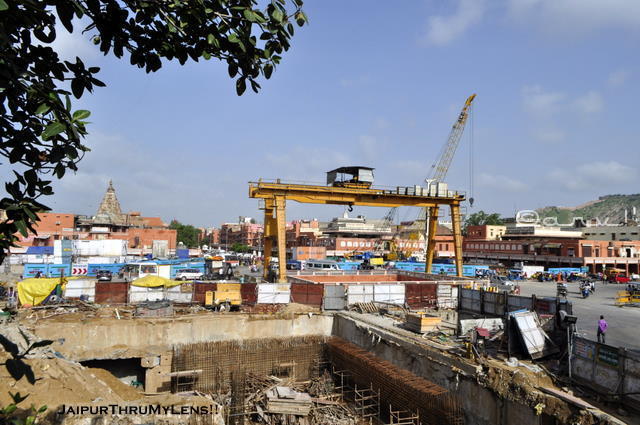
This sculpture art museum took shape after the Jaipur metro work was completed. Some claim that during the excavation for the metro construction, “Gau Mukh” was destroyed along with other built heritage. A few even claim ancient water channels or aqueducts dating to pre 19th century were destroyed. The authenticity of these claims could not be verified. Gau Mukhs are cow heads and act like a spout through which water flows. Similar Gau Mukh can be spotted at Galta Ji Kund. Jaipur Metro construction has caused a lot of controversy. Many feel it caused damage to the built heritage of Jaipur. A movement called Dharohar Bacahao aimed to put an end to Jaipur Metro construction in the walled city, was initiated. It did not result in anything concrete, though. Upon completion of project, items found during the excavation of Jaipur Metro project were displayed at Choti Chaupar metro station. Idols from other places in Rajasthan are displayed here since there is no dedicated museum in Jaipur at the moment.
What is displayed in Choti Chaupar Metro Sculpture Art Museum?
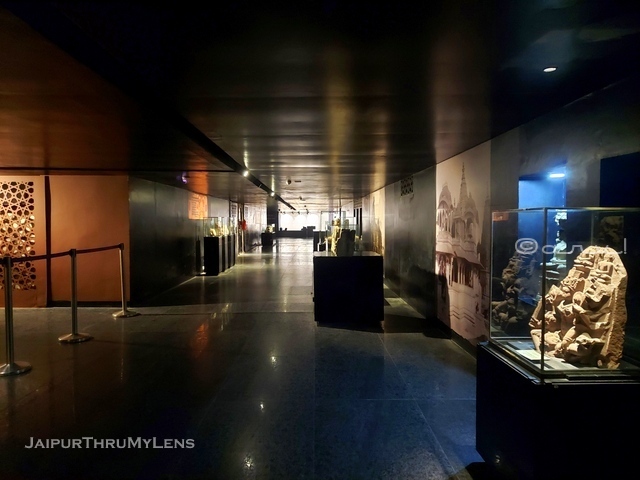
There are many sections in Choti Chaupar Metro Sculpture Art Museum. Most of these have antique idols of gods and goddesses. They are as follows:
Jain Gallery
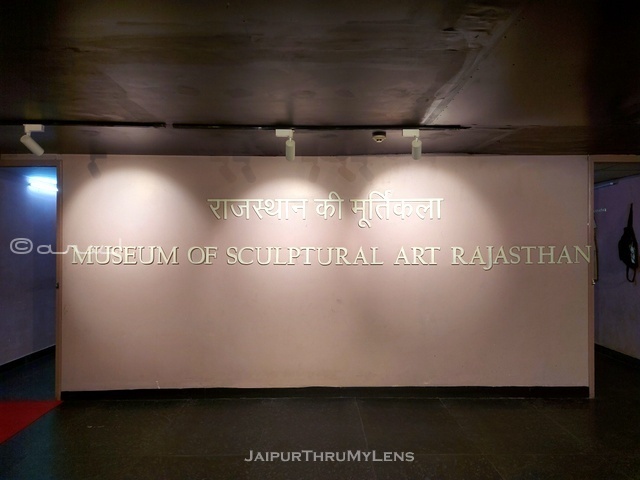
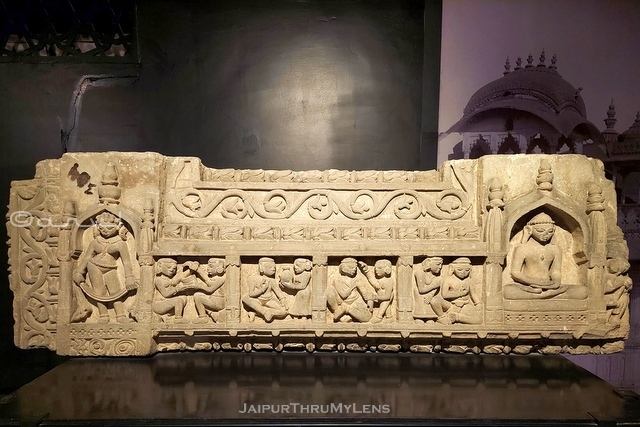
Jain Gallery has many Jain idols, some dating to the 10th century. The idols represent Jain Tirthankars. These idols are made out of rocks, a norm of the period they represent. Some of the idols of Tirthankars in this museum are Adinath, Neminath, and Mahavir. These idols were discovered not just in Jaipur but many other sites in Rajasthan.

Goddess Statue Gallery
Goddess statue gallery has idols of Hindu goddesses. Some of the goddesses one finds in the museum are Lakshmi, Chamunda, etc. Goddess is an important part of Hinduism or Sanatana. Shaktism or Goddess practice has existed for centuries. There are innumerable temples of goddess spread all over India. Some of the most prominent are Tripura Sundari, Dakshineshwar Temple, Vaishno Devi etc. Prominent goddess temples in Rajasthan are Jeen Mata in Sikar Dist, Karni Mata in Bikaner, Sheela Mata in Amer Fort Jaipur, and Tanot Mata near Jaisalmer.

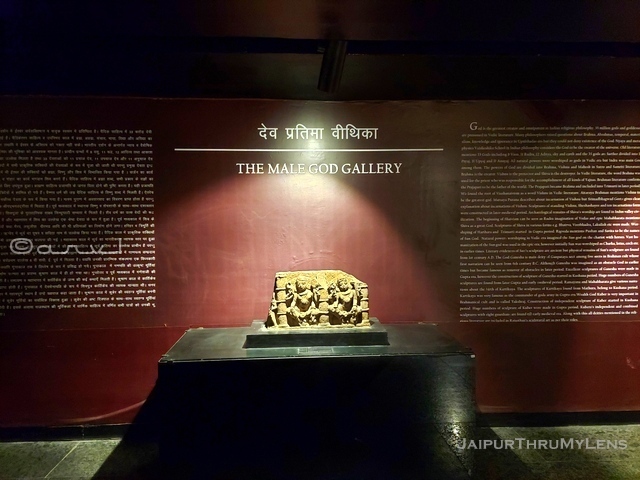
God Statue Gallery
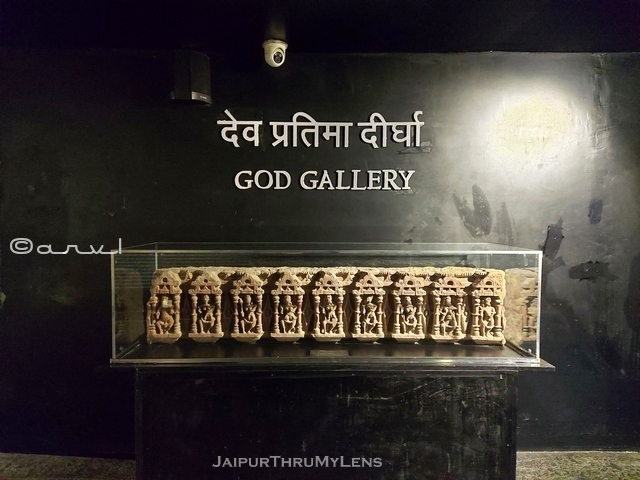
There are many ancient temples in Rajasthan dating to 10th-11th century. Many have been destroyed either due to forces of nature or sometimes by attacking enemies. Idols of Hindu gods discovered from excavations from all across Rajasthan have been displayed here. Idols of Brahma, Shiva, Vishnu and their incarnations or “Rup” can be spotted in this museum section. Even Kuber and Surya are found here.
Ragmala Gallery
The word Ragamala when translated from Sanskrit means “Garland of Ragas.”
They are a series of illustrative paintings that depict the various Indian musical modes known as ragas. Each raga signifies a specific mood, emotion, and time of day. These are visually represented in the paintings through verses and colors. Some paintings also associate specific Hindu deities with particular ragas. In this museum, Ragamala paintings are depicting Ragas and Raginis from 2 literature, Sangeetmala and Ragamala. They are showcasing six ragas and 30 Raginis.
Temple Architecture Gallery
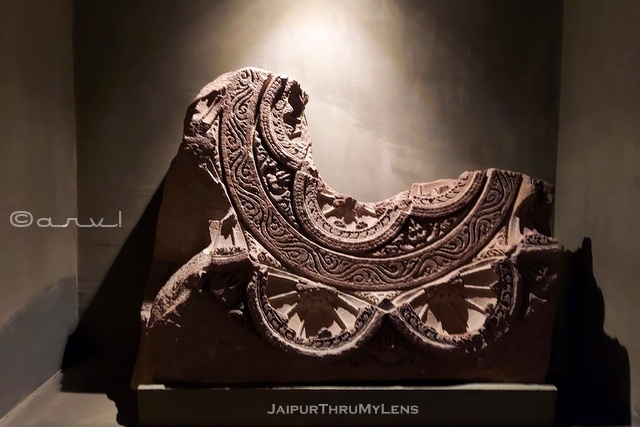
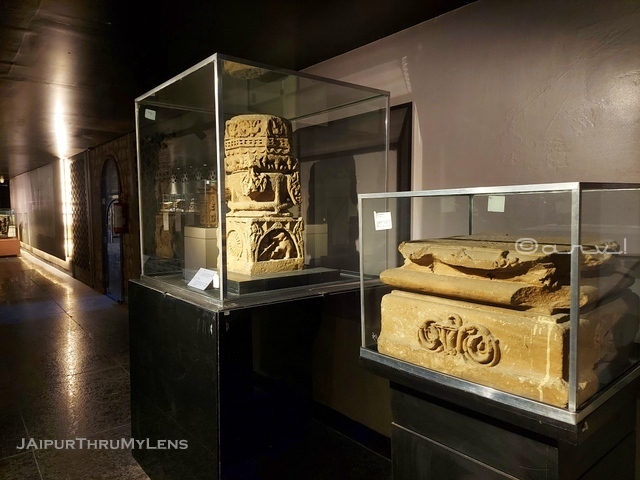
Temple architecture gallery consists of parts and pieces of temple architecture. Some of the items displayed here are broken but are beautiful and depict the epitome of Indian temple architecture. Among these are parts of columns, pediments, etc. Temple architecture in India evolved with Puranas as per historians. Many feel it was during Gupta period that temple architecture got a huge impetus. Temples from the 10th-12th century are a testament to the same. Till date we have many beautiful surviving temples from the 10th century.
Choti Chaupar Stepwell
It is possible to walk in to Choti Chapuar which has been restored to its old glory, a stepwell structure. A few photographs of Choti Chaupar from the late 19th century depict it as a Stepwell structure. Water was pumped from Amanishah water works; this area was referred to as Panipech. You can read more about it in Dravyawati Bird Park. The most prominent is a picture by one of the rulers of Jaipur, Sawai Ram Singh II, with a picture of Badi Chaupar in a similar style. Read: Jaipur Stepwells
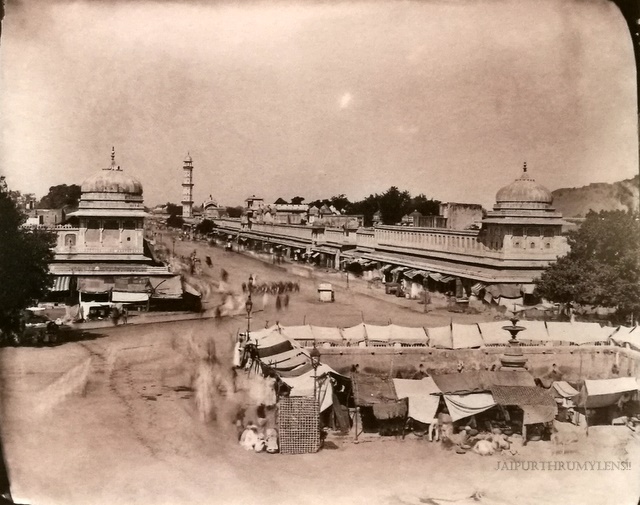
During Sawai Man Singh II, Jaipur’s last king, Choti Chaupar stepwell was filled in and decorative fountains were installed. Many accounts mention presence of “Kund” like structures at Chaupar in Jaipur. Kund refers to a water storage structure. During excavations by Jaipur Metro, historic “Kunds” with beautiful marble carved Gau Mukh were discovered. Many claim these to be from the 18th century. In the center of Kund was a beautiful a fountain shaft with decorative lime stucco plaster and steps on the sides. Jaipur Metro took the decision to restore Choti Chaupar to its lost glory.

How to visit?
Entry to Choti Chaupar Metro Sculpture Art Museum is from the Gangauri Bazaar Tripolia Bazaar corner.
Entry Ticket
Entrance tickets are priced at Rs 20/person.
If you love art and antiques, Choti Chaupar Metro Sculpture Art Museum is one of the worthy museums in Jaipur to visit. It is unfortunate that very few residents of the pink city have heard about this museum. If you are visiting this museum, do check out these two beautiful temples – Chaturbhuj Temple and Roop Chaturbhuj Temple.
Discover more from JaipurThruMyLens
Subscribe to get the latest posts sent to your email.


Great post with great photographs of an interesting museum, Arv! Thanks for taking us along!
LikeLiked by 1 person
I’m glad you liked it, Marcus 🙂
LikeLiked by 1 person
Hopefully one day I will get to visit. Thanks for sharing.
LikeLiked by 1 person
I’m sure you will love Jaipur, Nikki 🙂
LikeLiked by 1 person
I skipped this one! Thanks for sharing. Definitely covering it on our next visit.
LikeLiked by 1 person
Great! do you keep visiting Jaipur?
LikeLike