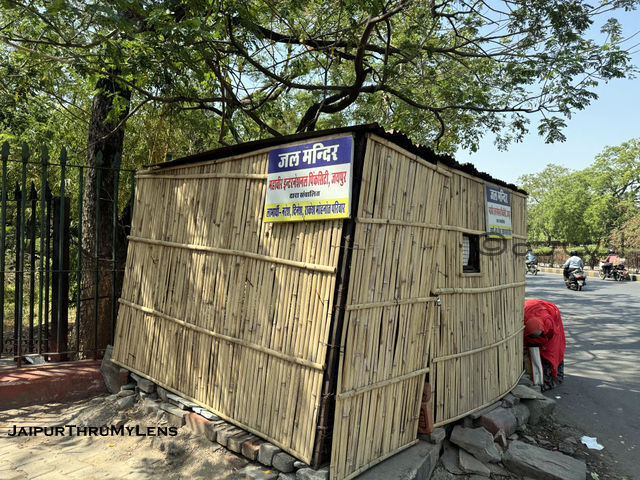
While growing up, it was fairly common to see a Pyau in Jaipur. Considered an act of benevolence, these structures, sometimes temporary during summers, would provide drinking water to passers-by on the roadside. In some cases, the Pyau were permanent. These days, it is hard to find a Pyau. Over time, these structures have been replaced by water coolers. Is that bad? It depends. Like everything else, we are increasingly turning to mechanisation and automation, removing the role of humans. Water is no exception. But it is not just a question of human involvement; rather, it is about Indian culture and tradition.
Recently, I saw a few Pyau popping up in the city during summer. This year is an El Niño season, and the heat is excessive in Jaipur as well as many other cities and regions in India. As a result, many people and charitable trusts have decided to bring back the traditional system of offering water to passers-by. Some have held on to the concept of Pyau over the last few years, though that remains the exception rather than the rule.
Water Culture in Jaipur and India
Before we explore Pyau and the tradition of offering water, we need to understand the water culture in India.
Indian Water Culture | Sacredness of water
- In Indian culture, water is connected to every aspect of life and serving water to a thirsty person is considered the highest form of benevolence. It is also linked to the concept of karma in Hinduism.Water charity is common pratice in Indian culture especially, in Hindusim.
- In Hindu temples, deity idols are bathed in a ritual called Abhishek. In many temples, the priest often sprinkles water over devotees at the end of the Puja ritual. Basil-infused water is also served to devotees in small quantities. There are many other rituals that highlight the importance of water in Indian culture.
- The River Ganges is considered sacred and has a deep link with Lord Shiva in Indian mythology; the Ganga is often depicted as flowing from Shiva’s hair. Offering water at Shiva temples is a common practice. A dip in the Ganga river is believed to wash away one’s sins; it is synonymous with purification of the soul and rejuvenation of the mind in Hinduism. Many other rivers are also considered sacred.
- Over centuries, water has been considered sacred because of Indian agriculture’s dependence on rainfall. Without water, there would be no food. People prayed to Indra, the god of rain.
- In many countries, rain is considered a nuisance, but in India, people yearn for it. The rainy season – the monsoon, is considered a season associated with happiness. Festivals like Teej in Jaipur are linked with the celebration of rain. Similarly, Diggi Kalyan Ji Yatra begins in Jaipur during rainy season. Many other regions in India also have their own ways of celebrating rain and water. Read Teej in Jaipur
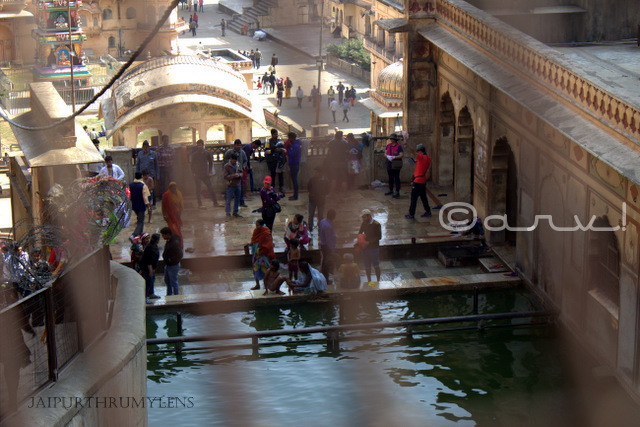
- Because water is considered sacred, wells, the primary source of water, were also considered sacred. The same was true for the stepwells which can be found in abundance in Jaipur like Panna Meena Kund. People were forbidden to wear footwear around wells and stepwells. It was common to find a small shrine or a temple linked with them, usually dedicated to Shiva. Read complete post on Stepwells in Jaipur, Kadam Kund, and Panna Meena Kund Jaipur.

- Many Indian religious ceremonies take place around water body. For example, many Bihari people of Bihari origin living in Jaipur, visit Galta Ji Kund during Chhath Puja. Read about Galta Temple in Jaipur
Also worth reading in connection with this blog Nahargarh Water Walk
The old and changing culture of water and Pyau in Jaipur
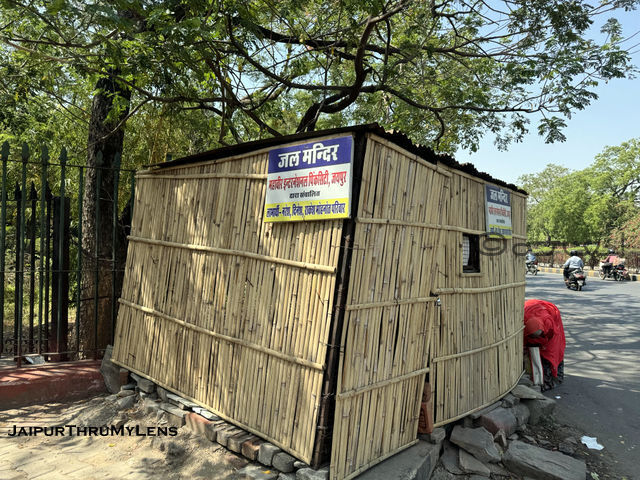
As mentioned, Pyau were fairly common in India. They were typically built as temporary structures made of straw – thatched huts. These would be built mostly before the onset of summer, from March until the monsoon season, around September.
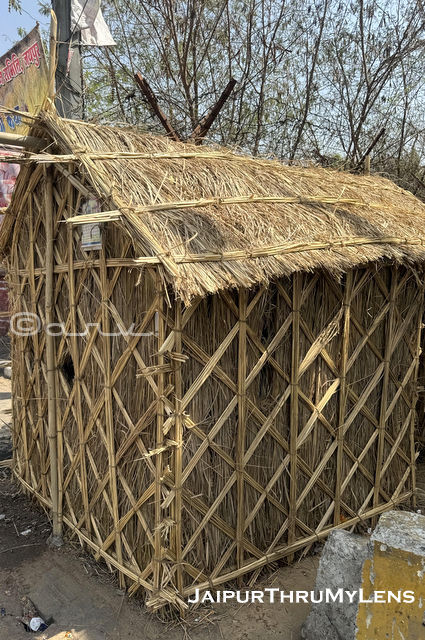
But there were also a few permanent Pyau where someone, usually an elderly person or a woman, would offer water throughout the year. In some cases, they were operated only during the hotter months. In fact, in Jaipur, some places were also named after Pyau. The most famous was “Thandi Pyau” signifying the availability of cold water. Though I have never personally seen it, the name refers to a place in C-Scheme, close to Statue Circle, near Bagadia Bhawan opposite The Anokhi. Everyone regognized the area with the name “Thandi Pyau” rather the name of the lane- Chitranjan Marg.
What are water Pyau?
Water Pyau are structures, permanent or temporary, that serve drinking water to the public. Usually, Pyau were set up during summers by individuals, community groups, businesses, or religious trusts as an act of benevolence or public charity. In Hindi, it would be called – Seva, Daan, and Punya. A person sitting inside the hut would serve water using a “Ramjhara”. More about Ramjhara in the next paragraph. These Pyau were set up outside homes, temples, or road sides. In the old days, rich and wealthy individuals or communities would set up Pyau with clean water stored in huge clay pots or “Matkas” to provide cool drinking water for free of cost to everyone during summer season under scorching sun. But today, they’ve nearly disappeared.
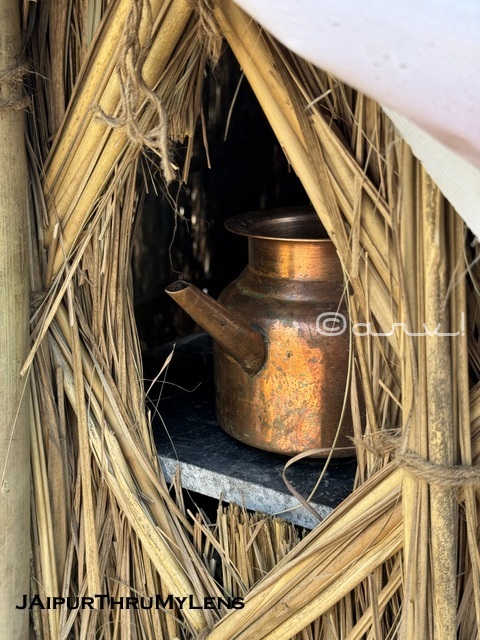
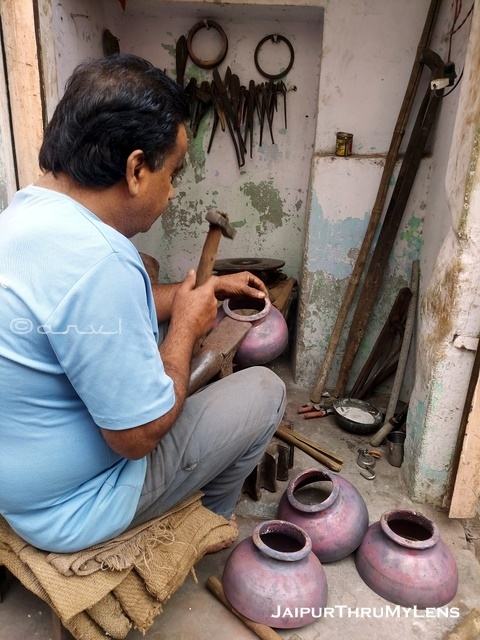
Ramjhara are water pots made of copper or brass; a long-spouted jug, tilting it would allow water to flow out for the drinker. In the old days, before plastic water bottles were easily available, they were used to serve water during meals to guests, especially at large gatherings like weddings, etc. This remains a cherished part of Indian custom and tradition. A similar vessel is also used in Jal Neti, a practice followed by yoga practitioners. Even now many people use Ramjhara daily, taking water with them to the nearest Shiva temple to offer water to Shiva Lingam, a daily ritual for many. You can see Ramjhara in the above picture. These Ramjhara have traditionally been made in Jaipur by a specific community. Here is a picture of one such person.
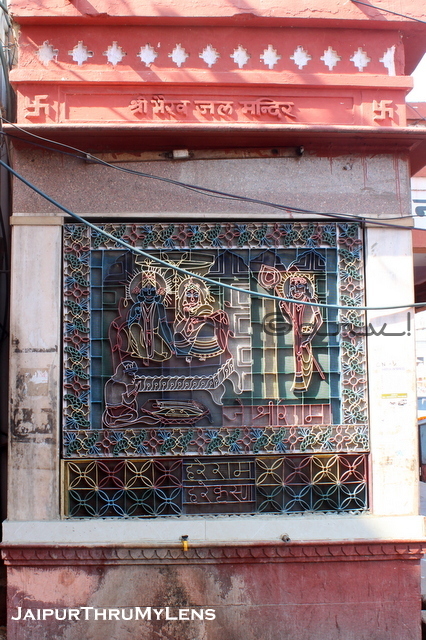
In many places, Pyau are called “Jal Mandir” meaning water temple. Why are these called Jal Mandir? Jal Mandir reflects water’s deep sacred association with Hinduism. Water is important for life, and treating water as sacred is a reason why Pyau are often referred to this way. A picture of Jal Mandir in Jaipur can be seen in the next section.
How Pyau were replaced by water taps?
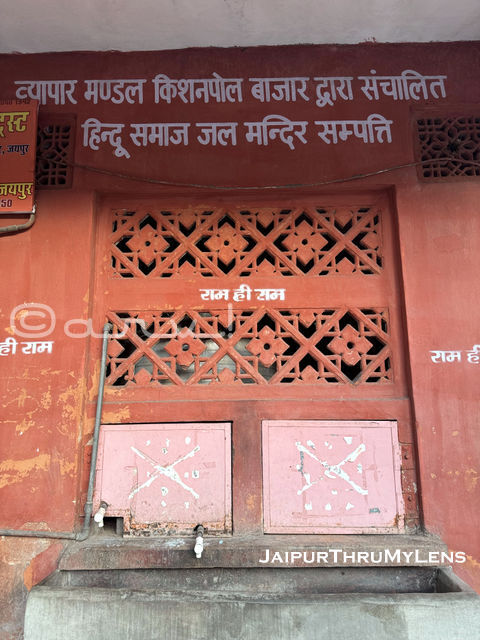
Over time, the system of building water Pyau was replaced by taps due to the easy availability of piped water. Rows of water taps appeared across cities, most visibly on railway platforms. Long before airlines were used by most people in India, people would use railways for travelling to distant locations. In the old days, bottled water was not available, and during summers, people would wait at train stations to fill their water vessels or containers. These water taps removed the need for human attendants and were available around the clock. But even then, Pyau continued to exist in many places because of cultural association & pratice.
How Pyau replaced by water coolers?
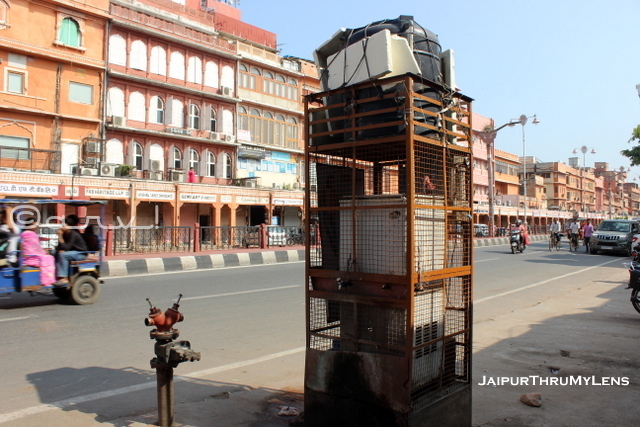
Water Pyau were a source of cold water that people craved in summers. Water pots were used in traditional Pyau. Being porous, the clay pots kept water naturally cool through evaporation. There was no need for refrigeration. The water would be cool enough to drink but not chilled. However, many people preferred removing the human element since an automated cooler could be operated around the clock. This is one reason why we can see many water coolers on the roadside in Jaipur, including in the old city area.
Availbility of bottled or mineral water
Over the last three decades, the spread of bottled plastic water has completely removed the need for Pyau. The educated classes completely gave up on water Pyau in Jaipur, believing that water served in Pyau was unhygienic and that packaged water is pure and free of human contact. Previously, water was available only in 1 and 2 litre bottles. But now it is available in 500 ml and 200 ml formats, increasing consumption and market penetration. So who uses public water coolers and Pyau? The economically weaker sections, and according to some, those dismissed as “illiterate” for not appreciating how “unclean” Pyau water supposedly is.
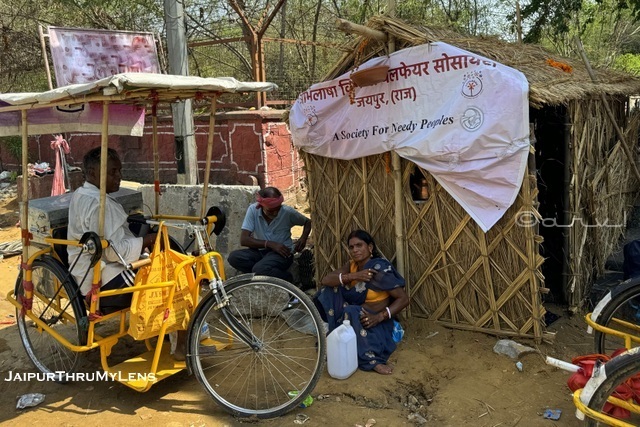
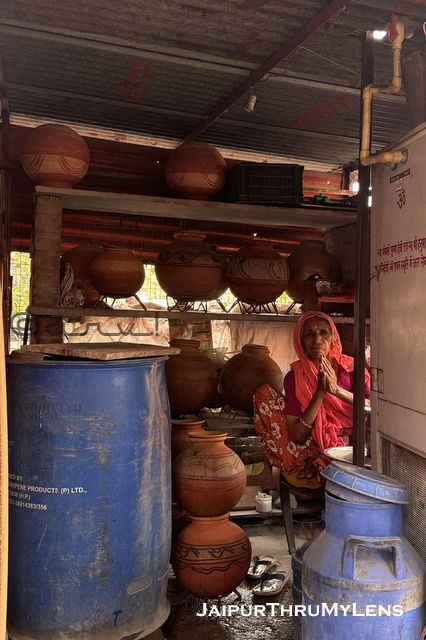
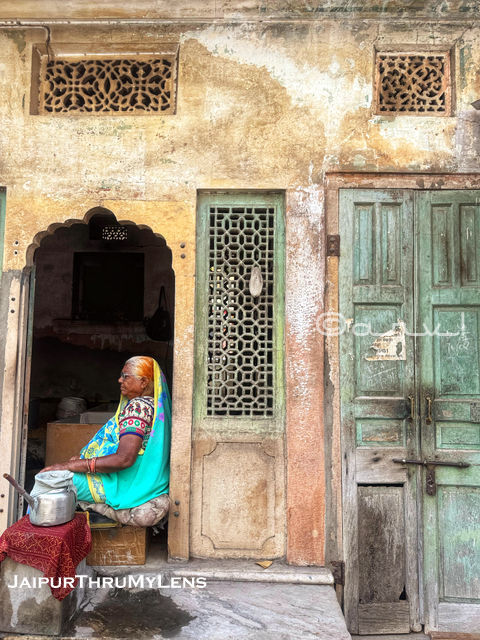
Here is a picture of a Pyau with a lady to serve drinking water in Ramjhara. This water Pyau is in the walled city of Jaipur.
Water sustainability and environment
I’m not sure how valid those “unclean” claims really are. I agree there are hygiene concerns when it comes to water coolers, taps, and Pyau, but bottled water is not a perfect solution either. There are issues with disposal of plastic bottles and environmental challenges around plastic recycling. There are also concerns about using low-quality plastic as water tends to be contaminated with microplastic particles. Experts warn against consuming water from bottles left in direct sunlight or heat.
Many people argue that generations were raised with the traditional system of water Pyau without any significant reported outbreaks of waterborne disease in cities like Jaipur over the past 150 years. If this system was so bad and the water so unsafe, how did our ancestors survive? Many argue the shift to packaged water is driven more by commercial interests than genuine health risks; a narrative, not a proven necessity. The systems that survived for centuries were discarded for monetary gains rather than proven health benefits; so the argument goes. I will leave this for you to decide. I do feel that plastic generation and the waste generated by single-use drinking water packaging are definitely a menace and something needs to be done. Fifty years ago, India generated a fraction of the waste it does today; much of it attributable to plastic and disposable packaging. Interesting read Jamwa Ramgarh Heritage Water Walk
Will water Pyau become extinct?
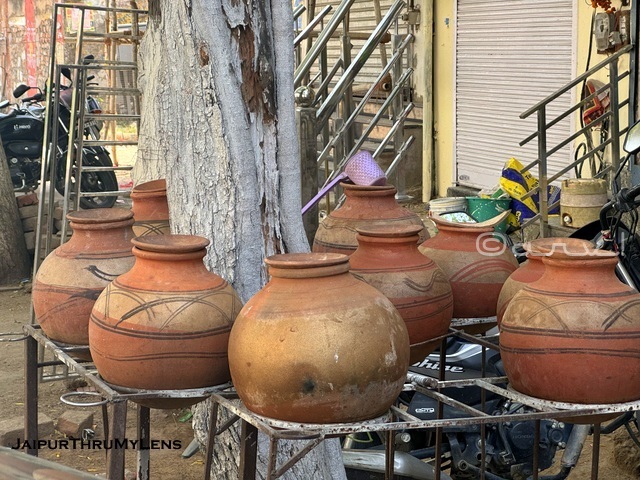
There is no doubt the Pyau system has declined significantly. But I don’t think extinction will come for at least another five to eight years; the generation that has witnessed and experienced this system is still with us. After a decade, however, that continuity may be lost. The new generation has disconnected from it and manpower has become expensive. Many temples and temple trusts continue to build water Pyau in Jaipur as part of their charity work. Even now, during summers, temples build Pyau around them. Recently, many people and organizations fill “Matka” or water pots for public instead of building water Pyau. Here is a picture of “Matkas” in Jaipur. But Pyau, an important part of Indian culture and tradition will not survive for long in Jaipur.
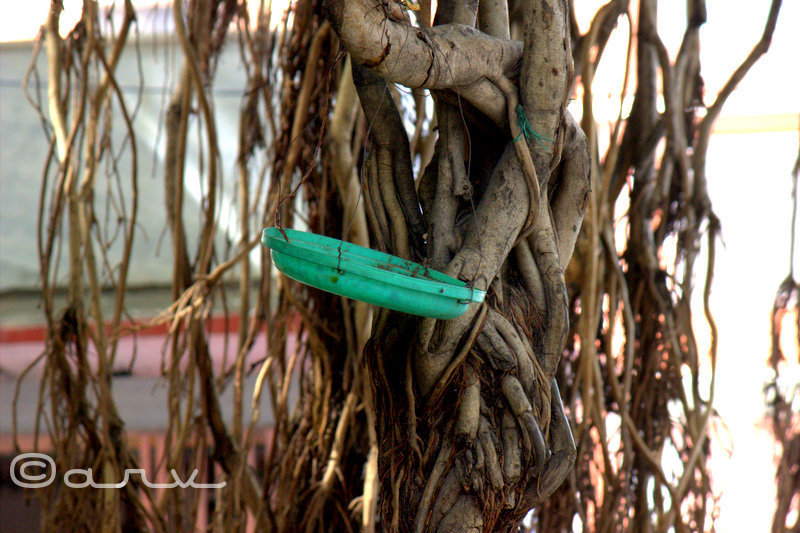
On another note, people continue to offer water to birds through similar system called Parinda, locally. People hang pots/containers with water in it on tree branches so water is accessible to birds. Read The water pot for birds
Discover more from JaipurThruMyLens
Subscribe to get the latest posts sent to your email.


Water is a very precious commodity. Thank you for sharing your thoughts on the Pyau culture and the importance of water!
LikeLiked by 1 person
This is a fascinating write up about the Pyau and water culture in India. Wonderful that you got shots of the Pyau and those huts look like one of a kind in each place. In parts of Asia like Malaysia and Singapore, rain especially heavy rain isn’t always welcomed – it makes it hard to get around. But it’s interesting to read how in India water is sacred for agriculture and something to be prayed for. I remember when I was younger, there was water rationing whene I lived in Malaysia. The water tanks would come by and we would store water in buckets. Some might say it wasn’t all sanitary but it was all fine. Water is sacred until you don’t have it – it really is what we need.
Agree that bottled water has its cons and it proliferates plastic everywhere, creating even more problems for this planet. It’s the price for convenience and more education is needed around this. From what you described at the end, perhaps the Pyau will continue to exist alongside temples and charitable places. Hope you are doing well, Arv 😊
LikeLiked by 1 person
In India, people have always celebrated water. This is conveyed by how rains have inspired artists and creators. Rains in India signify happiness because, as I mentioned, it would enable agriculture and provide food.
Over the last few years, rains have become unpredictable as anywhere else. In some places, rains have become nuisance because of excessive rainfall especially in the Himalayan regions which are mountains.
I suppose you don’t witness much rainfall in Australia, where you live.
LikeLike
Not much rainfall where I am here in Melbourne, Arv. Not the torrential kind you get in Asia. There are days where rain is all day. Other parts of Australia do get a lot more rain though. Climate change and humankind actions on this planet might be to blame.
LikeLiked by 1 person
Ah, I see. Thanks for an update Mabel.
LikeLiked by 1 person