I met Dhruv during one of the heritage walks that I was leading for an event. The tour was organized around the themes of climate, civic sense, and heritage by a local organization. During our conversation, Dhruv mentioned that he hosts cooking classes in Jaipur for travelers. While I’m aware that there are many people who offer food walks and cooking classes in Jaipur, this was the first time I had met with someone who does this so passionately. I ran into Dhruv again at a local event the following week. Curious to know what his food experience was all about, I accepted his invitation to his home the following week to experience it firsthand. Read Jaipur Heritage Walk
Beyond the Marketplace | Connecting Sacred Traditions with Home-Cooked Flavors
I reached Dhruv’s home in the evening. After a brief round of introductions with his family, he suggested a visit to a nearby “Gaushala” (cow shelter) to experience something unique. While I have been to that very Gaushala many times many years ago, things have changed dramatically. This Gaushala is renowned locally for selling pure cow milk.
Gaushala Walk | Traditions & Daily Routines
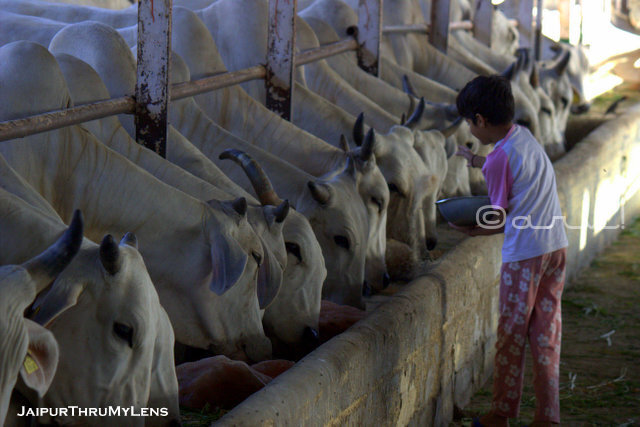
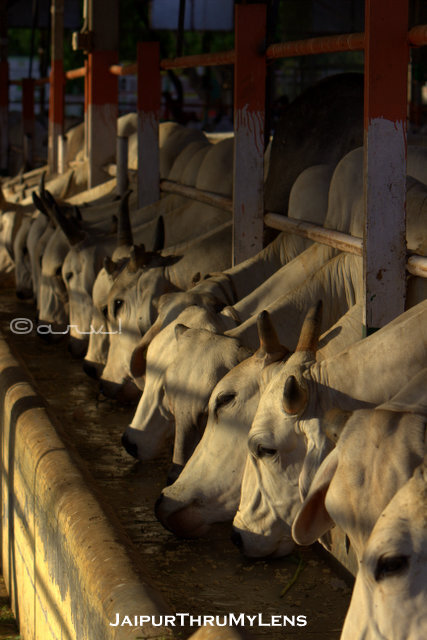
Upon reaching the shelter, the first sight is of hundreds of cows being fed by locals. It is a very popular place where residents gather to feed the animals. The fodder is sold by the Gaushala management, allowing visitors to purchase and feed the cows themselves. This activity is deeply rooted in Indian culture and custom. In Hinduism, the cow is considered sacred and feeding them is part of a daily ritual for many; it is believed to generate good karma.
Discovering the Thar Parkar Cow
Dhruv shared that the Gaushala is famous for a specific, indigenous cow breed called Thar Parkar. While I was familiar with other native breeds like Rathi and Gir, as well as crossbred Jersey and Holstein cows, the Thar Parkar cow was new to me. Over the last few years, A2 cow milk has been marketed heavily in Jaipur. A2 milk is claimed to have better nutrients, be easier to digest, and offer numerous health benefits. Both Rathi and Gir cow milk are claimed to be superior because of their A2 beta-casein protein profile. Dhruv shared that Thar Parkar cattle are also highly sought after for their A2 milk.
The Thar Parkar breed of cow originates from the arid regions of western Rajasthan. The name is connected to the Thar desert, and these animals are known to be an incredibly hardy breed. The Thar Parkar cows in this Gaushala were strikingly white. In most Hindu mythological stories and pictures of deities, the cow is depicted as pure white, and the Thar Parkar comes very close to that mental imagery. In contrast, on most Indian streets, one typically finds mixed breeds. In the streets of Jaipur, for instance, the Sahiwal cow is quite common.
Understanding Gaudhuli Tradition
Dhruv mentioned that witnessing “Gaudhuli” is special, which is when the entire cattle herd moves to a separate holding area. What is “Gaudhuli”? The word “Gaudhuli” has deep cultural connotations and refers to the time around sunset. Literally translated, Gau means cow and Dhuli means dust. Historically, around sunset, cows would return to their sheds after grazing in the fields or forest; their movement could be seen from a distance because of the rising dust cloud. Therefore, Gaudhuli refers to a specific, poetic time of the day. Because of its purity, Gaudhuli is also considered an auspicious time for Indian wedding ceremonies.
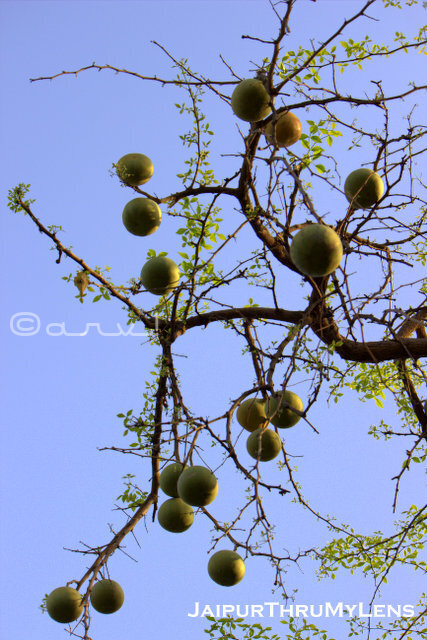
After witnessing Gaudhuli, Dhruv took me for a walk across the Gaushala grounds. I told him that the Gaushala was quite popular for its abundance of “Bel” (Indian Bael) trees. The fruit is also called the stone apple or wood apple. Just then, I spotted quite a few trees with the fruit hanging from the branches. Bael is scientifically termed Aegle marmelos. A quintessential summer fruit, it is noted for its medicinal properties in Ayurveda, especially for stomach and gut health. Dhruv also shared that the walk through the Gaushala ground was deeply energizing because of the surrounding eucalyptus trees and their crisp fragrance. Read The Bael | Sacred Summer Fruit
From Garden to Kitchen
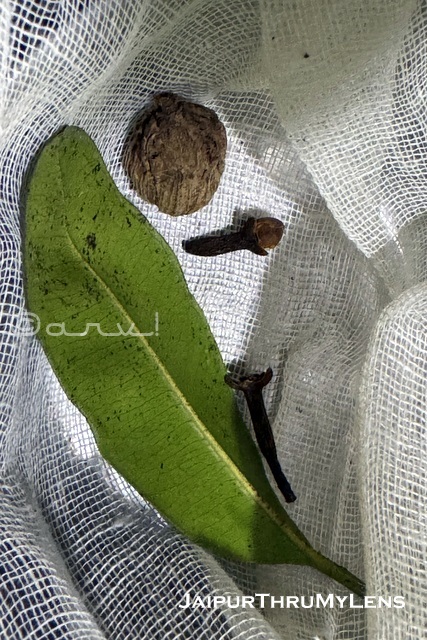
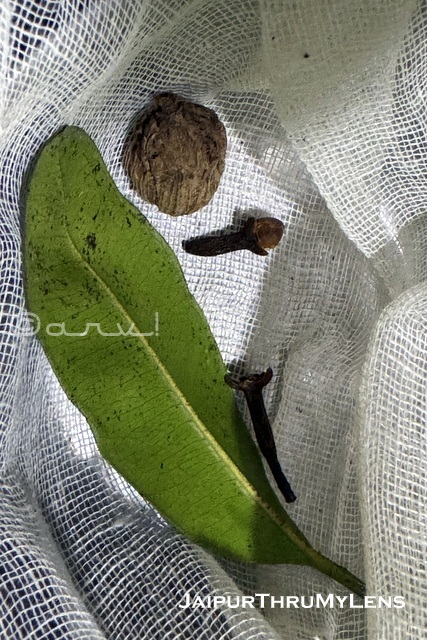
When we returned to his residence, he gave me a quick tour of his little kitchen garden, where the highlight was an Allspice plant. I had never seen this plant grown locally before; this plant is native to South America and the Caribbean. Dhruv pointed out that like bay leaves, fresh allspice leaves can be used to add deep flavour to traditional dishes.
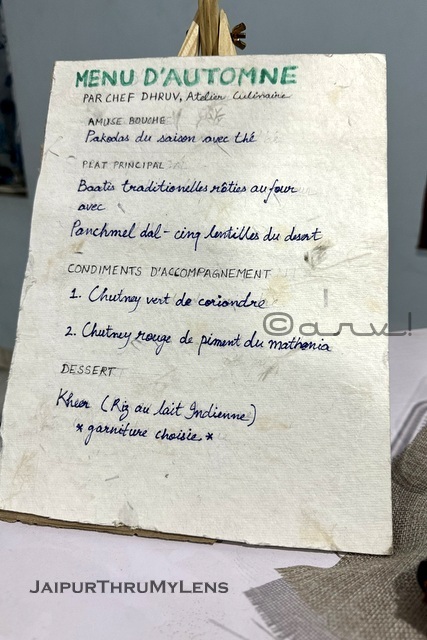
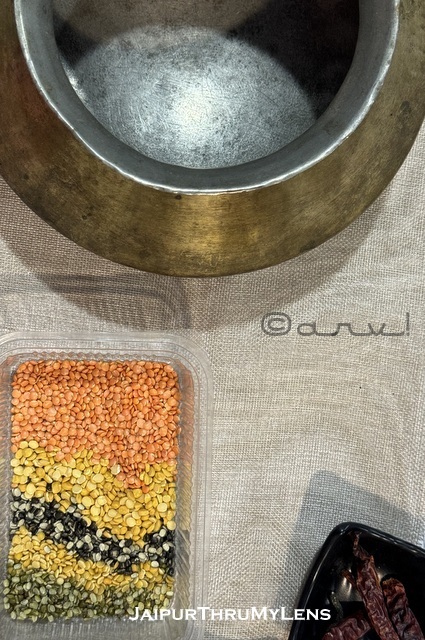
Inside, he gave me a small tour of his kitchen, dining hall, and a dedicated room where he gives guests an introduction to the ingredients before heading into the kitchen. Dhruv mentioned that he had chosen Dal Baati and Pakora for today, along with fresh buttermilk. He took a short break and returned in his chef’s attire to get to work.
An Authentic Home-Cooked Rajasthani Feast
At the dining table, the first thing Dhruv served was the buttermilk. It tasted entirely different because it wasn’t the usual blend; this one was infused with freshly crushed coriander and roasted spices. It tasted incredibly refreshing and perfect for the hot weather. I’m certain that if given a choice, everyone would pick this over the regular buttermilk.
Crispy pakoras with Chutneys came next, followed by the star of the evening – Dal Baati. It is rare to enjoy truly authentic Daal Baati in a home setting these days. The only places where I usually have Dal Baati are on special occasions, like Prasadi feasts in temples like Khole Ke Hanumanji Temple or at weddings. Read Dal Baati Churma in Jaipur
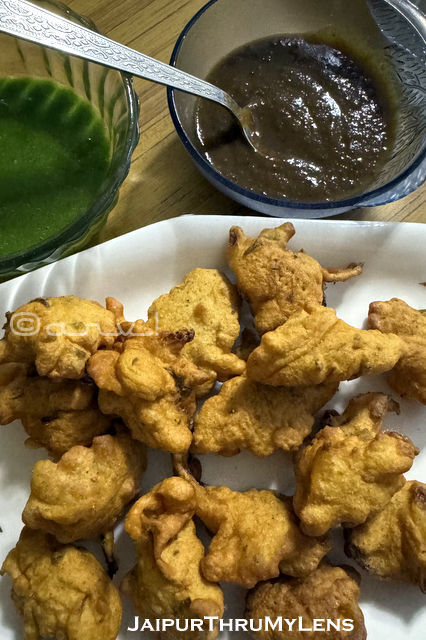
The beauty of a home-cooked meal is its wholesomeness and simplicity. In stark contrast to the heavy, commercially prepared food one encounters in temples or weddings, the Dal Baati prepared at Dhruv’s home was light and easy on the digestive system.
Final Thoughts: Is it Worth Booking?
After the meal, it was time to leave. I thoroughly enjoyed this evening at Dhruv’s cooking space and the warm conversation with his parents; their affectionate nature added so much to the experience. Our conversation naturally drifted to the old city of Jaipur, which remains one of my favorite topics.
Do I recommend Dhruv’s cooking classes in Jaipur? Yes, absolutely. For anyone seeking an authentic, personalized, and immersive vegetarian culinary home experience, Dhruv’s cooking classes are worth booking in Jaipur. His cooking classes are also useful for people who want to learn or eat Dal Baati in Jaipur even if it is not prepared using the same technique; one is unlikely to use those methodolgy in real life and learning in his kitchen is as realistic as you can be.
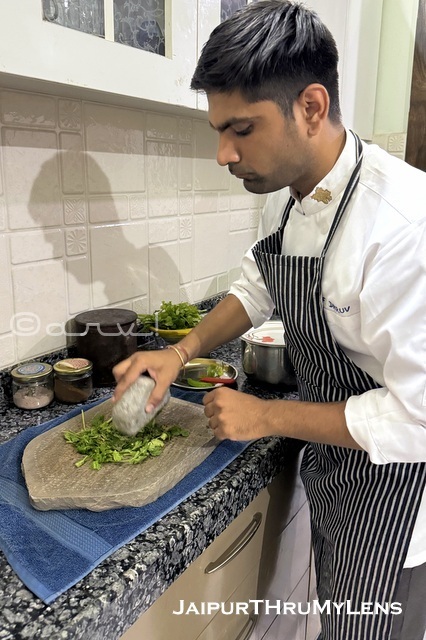
Who is Dhruv?
Dhruv is a trained chef; he is an alumnus of IHM Bangalore and has extensive industry experience, which shines through in the way he translates culinary experiences to travelers in Jaipur. You can reach out Dhruv on IG – @dhruv__kumawat
Discover more from JaipurThruMyLens
Subscribe to get the latest posts sent to your email.


I love Indian cuisine. I would take a cooking class if I lived in Jaipur.
LikeLiked by 2 people
Happy to know you love Indian food. Is i easily available in your region? Have you tried vegetarian Indian food?
LikeLiked by 1 person
What a mouthwatering menu! Yes, gaudhuli is very poetic and evocative of a beautiful time of day.
LikeLiked by 1 person
I’m glad you are aware and may be might have experienced Gaudhuli
LikeLiked by 1 person