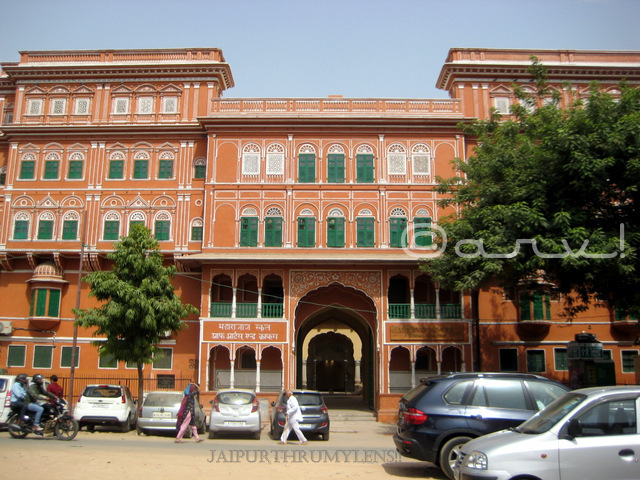
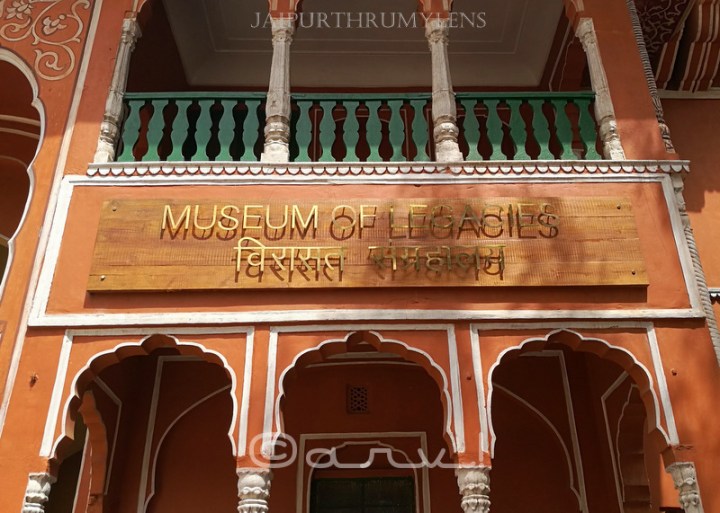
Humans built museums to store and display historical, scientific, artistic, and cultural objects. Most museums curate objects from the past. The moment someone mentions the word museum, it implies history. The Museum of Legacies is a new addition to the list of museums in Jaipur.
History of Museum of Legacies / Rajasthan School of Arts & Crafts
The museum is housed in a Haveli of an important minister in the court of Jaipur –Pandit Shiv Deen. The popular opinion is he donated his residence to the ruling king to be converted into an art school. For years, this Haveli was called Rajasthan School of Arts. In 1857 AD Maharaja Sawai Ram Singh II established the school of arts, later called Maharaja School of Arts & Crafts. It was in use as an art school for many years.
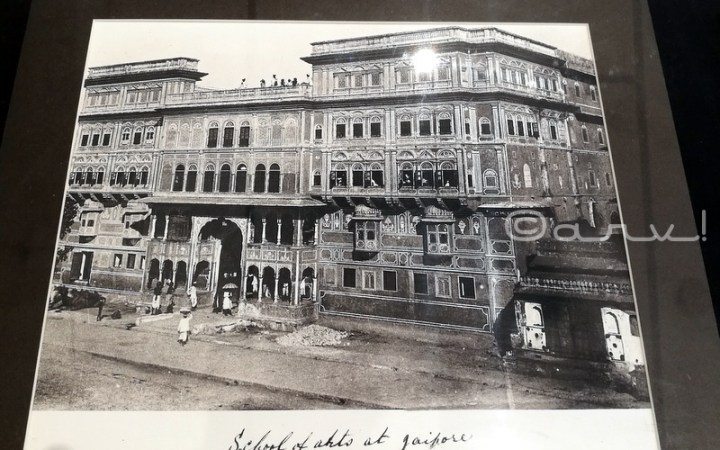
For 29 years it was called – Madarsaa-e-Hunar which implies the school of arts & skills. Thereafter it was popular as the Maharaja School of Arts & Crafts. As per available information, Pandit Shiv Deen was the first principal of Jaipur Maharajah college in 1844 AD. He was a tutor to Maharajah Ram Singh II (1835-1880 AD)
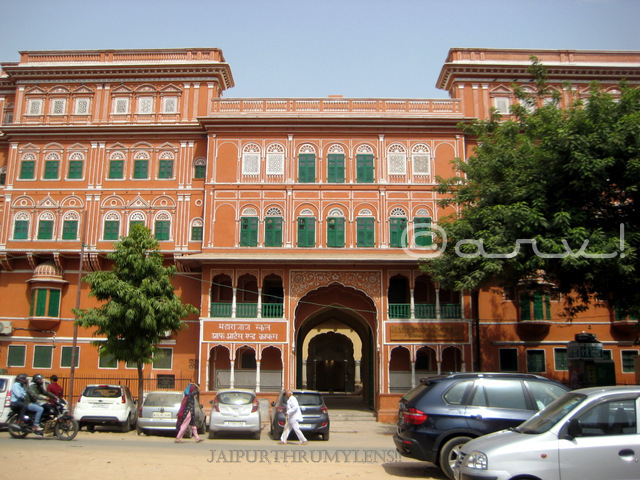
Museum of Legacies is situated in Kishanpol Bazaar, one of the prominent bazaars of the walled city area in Jaipur. The museum is run by the Department of Archaeology. Popular tourist attractions like Jantar Mantar, Hawa Mahal, and Nahargarh Fort are managed by this department.
There have been talks to convert this Haveli into a museum for a long time. The building was closed to the public during the last few years under the renovation plan. I had an opportunity to explore this building during one of the events in Jaipur – Travel Photo Jaipur. You can read about my exploration of this building in this post. Travel Postcard Exhibition
Sharing a few pictures from my last visit to what was then called Maharajah school of arts & craft.
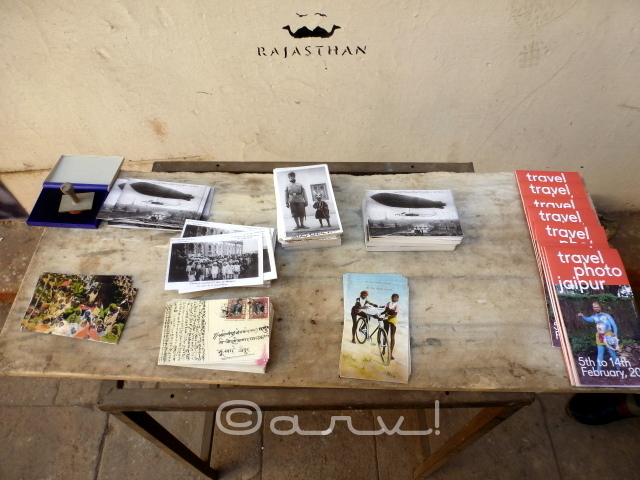
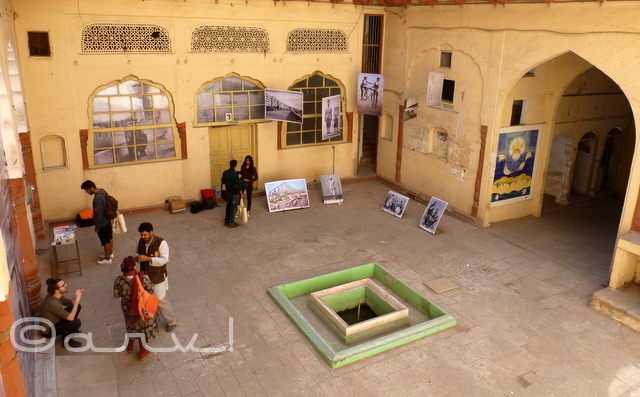
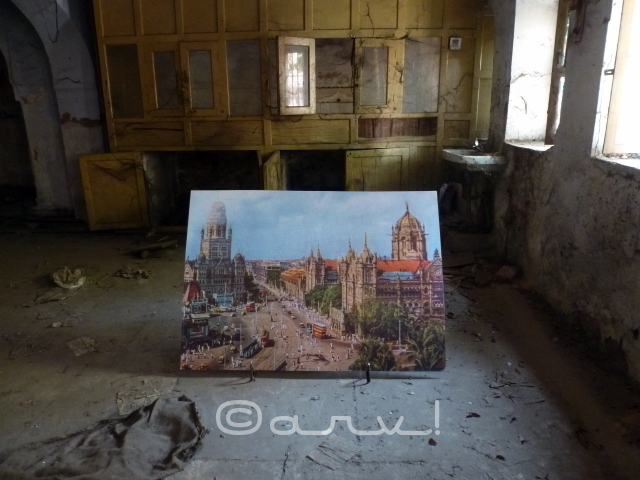
Here are a few pictures of the Museum of Legacies from my recent visit.


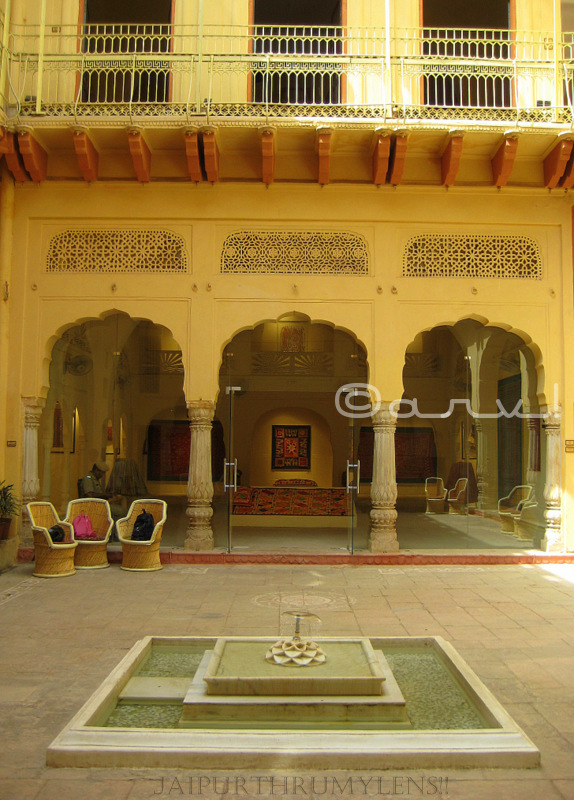
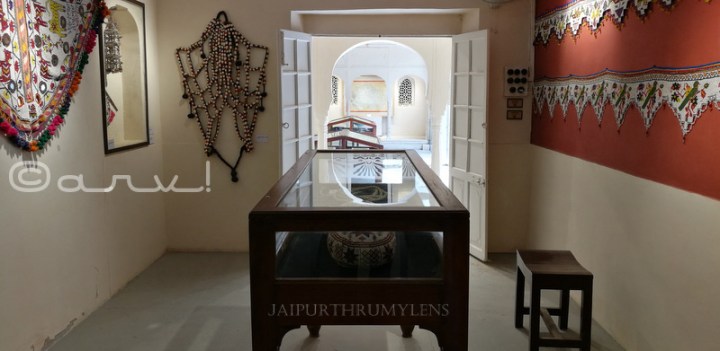
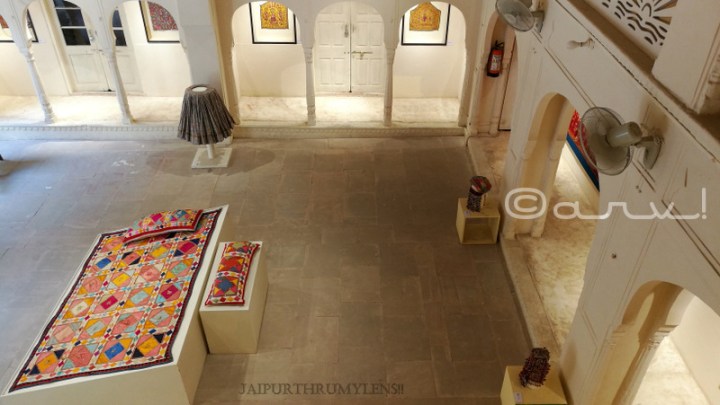
From the courtyard, one can choose to visit any of the three galleries on the ground floor. I chose a gallery on the left side – the fabric and garment section. It is the biggest of all three galleries. Called Everyday Embroideries, it focuses on embroidery work on fabrics.


Rajasthan has a rich tradition of embroidery work and the articles on display highlight the same. The gallery has a few pieces on display. Unlike traditional museums, it is patterned on the “Boutique” layout. I flipped through the display but wasn’t impressed. Even though there is a description beneath each, it doesn’t add to the experience.
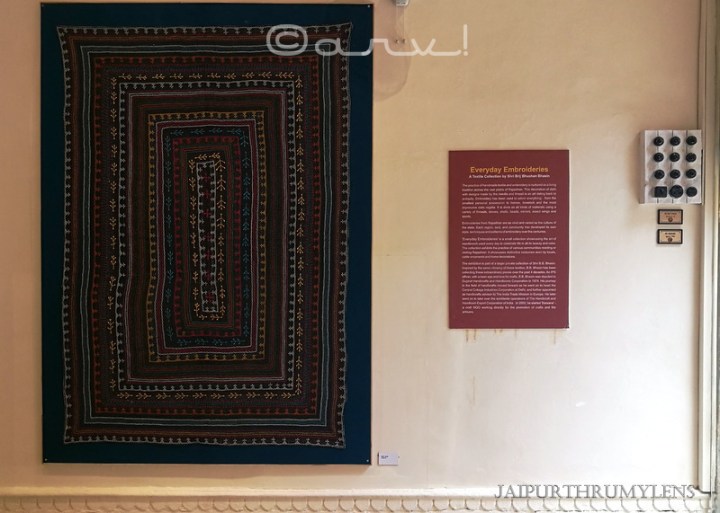
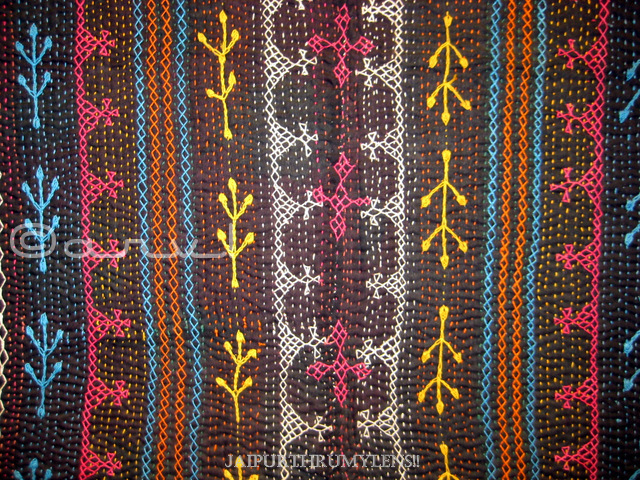
I strongly feel that before one starts with the exhibits he or she should have a clear understanding of things to expect. The museum ignores certain regions of the state. Rajasthan is a huge territory and has a diversity of clothes and garments. They are not captured fully in this museum.


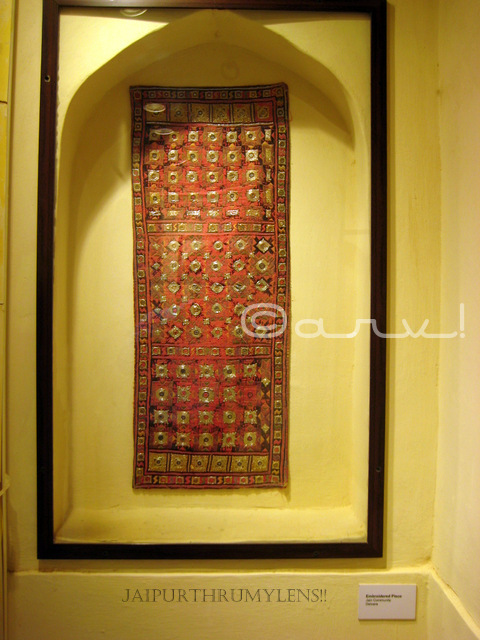
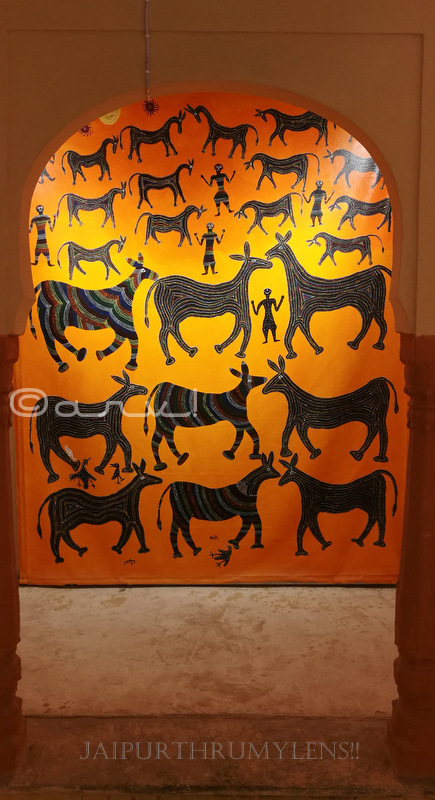
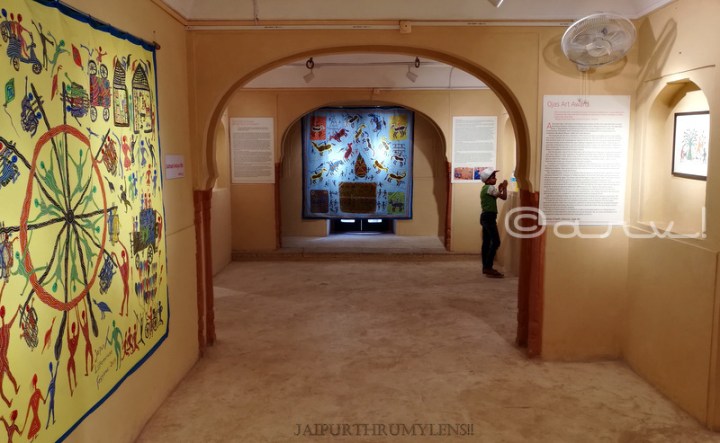
This mezzanine floor has a section dedicated to tribal art especially the Bhil art of Rajasthan. The section is interesting and colorful & follows a different style and pattern. Here are a few pictures from this section.
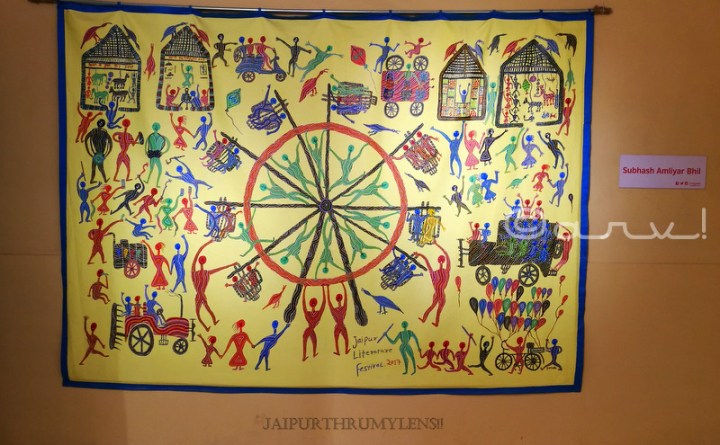
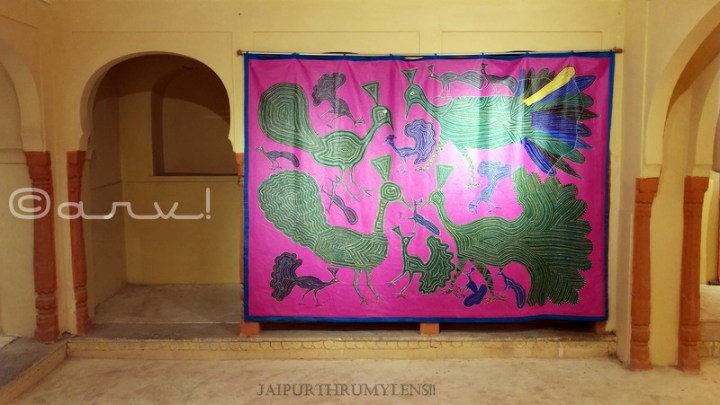
The second gallery on the ground floor has art pieces. It is called Visual Journeys and contains a small collection. Some of the pieces curated here are unique and outstanding.
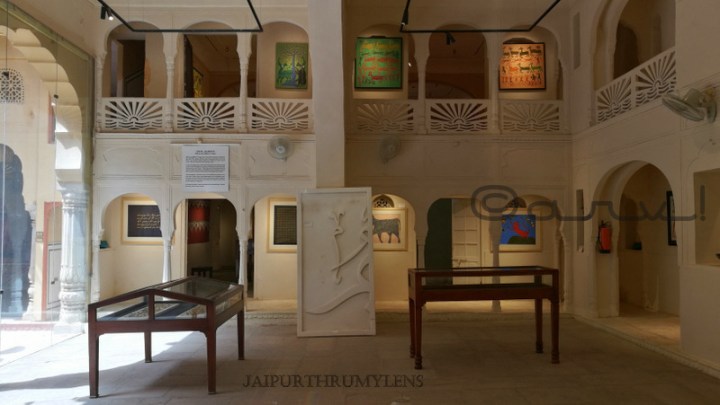
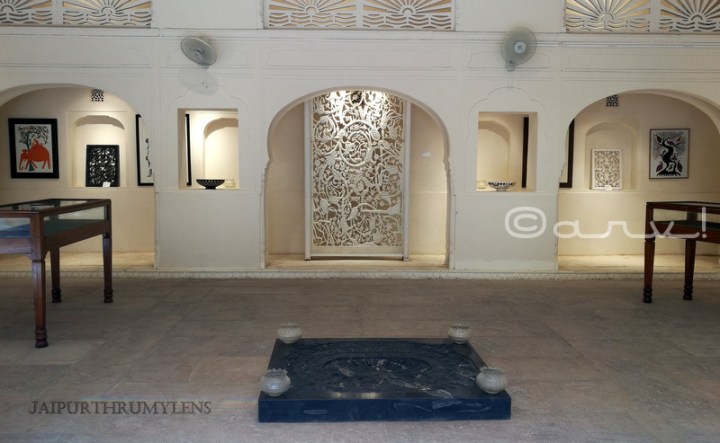
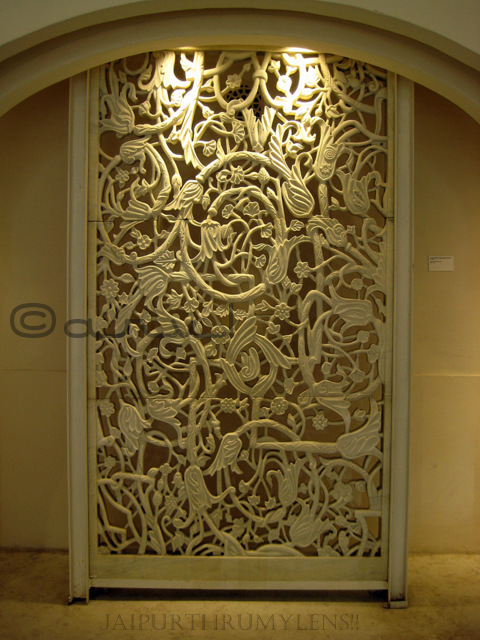
Two of my favorite ones are marble jali and Chhipkali Pakshi artwork. Marble Jali is made out of white marble from the Aandhi region in Rajasthan and is inspired by the painted ceiling in Jaipur City Palace. It is a beautifully carved piece presented as a lattice or Jali.
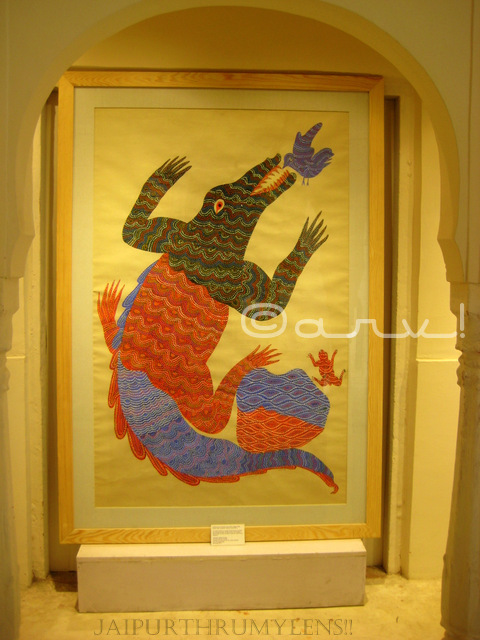
Chhipkali Pakshi is a painting in the Gond style. Gond is a tribal painting from central India. This painting has a lizard and a bird. Gond art is not well known even in India.
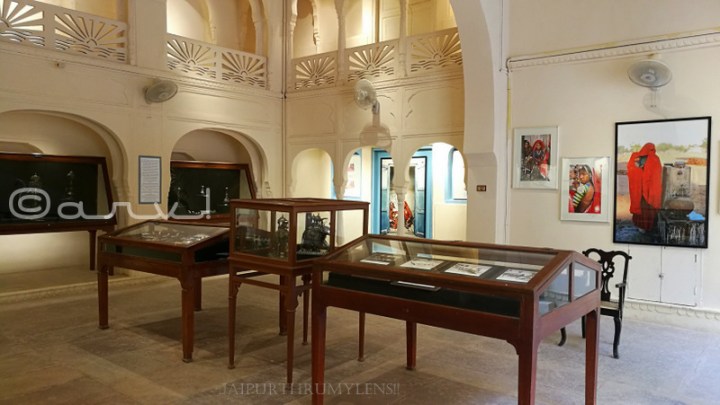
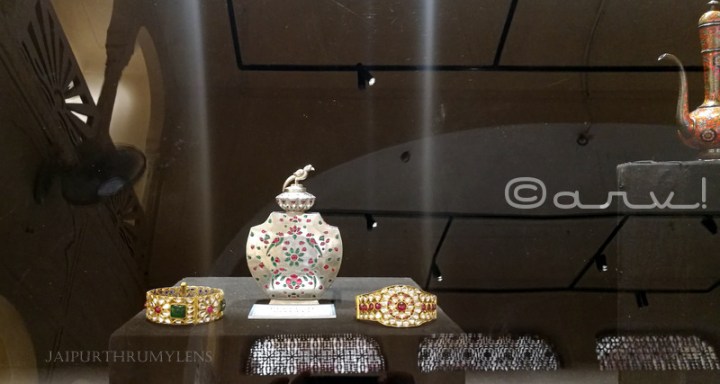
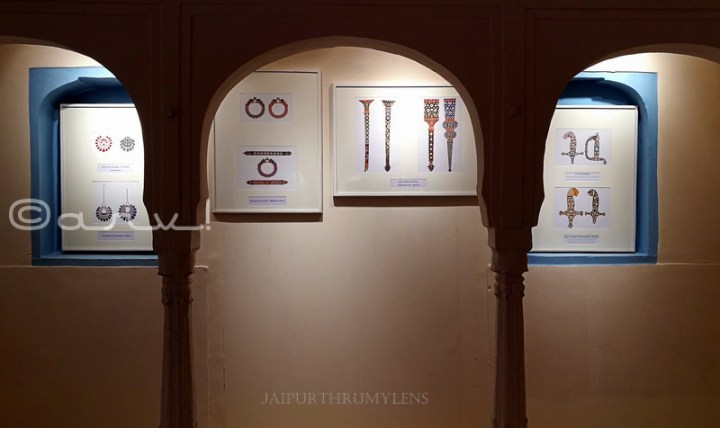
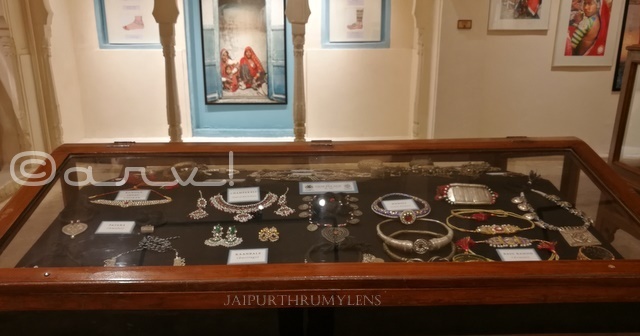
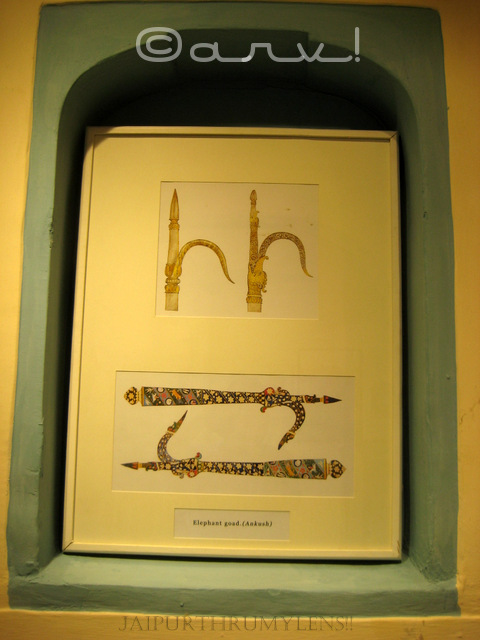
From this section, I moved on to the third section on the ground floor having a display of jewelry as well as photographs of tribals with jewelry. There were a few jewelry pieces on display and the walls were adorned with illustrations and photos. The display pieces were mostly silver work.


From the ground floor, I took the staircase to the first floor. Since the ground floor has double-height- a mezzanine, technically, it is the second floor.
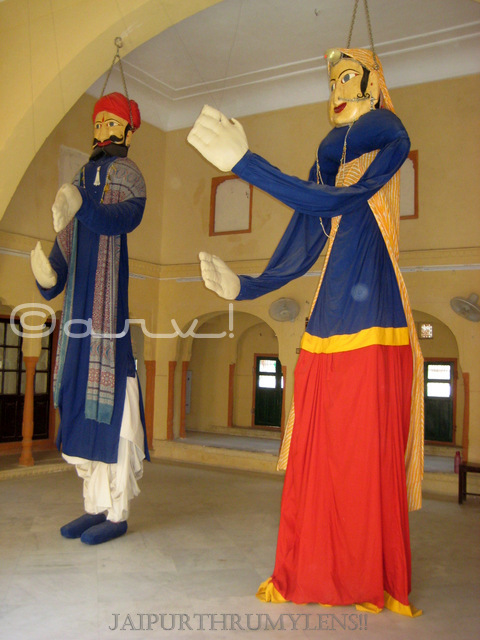
Only two galleries are open to the visitors on this floor. The first gallery has two giant Rajasthani puppets.
The second gallery focuses on Pichwai paintings i.e. Nathdwara style Pichwai as well as its variant, Kota style. I have already provided details about Nathdwara style paintings in my write-up Stories of real artists from Jaipur Kala Mahotsav
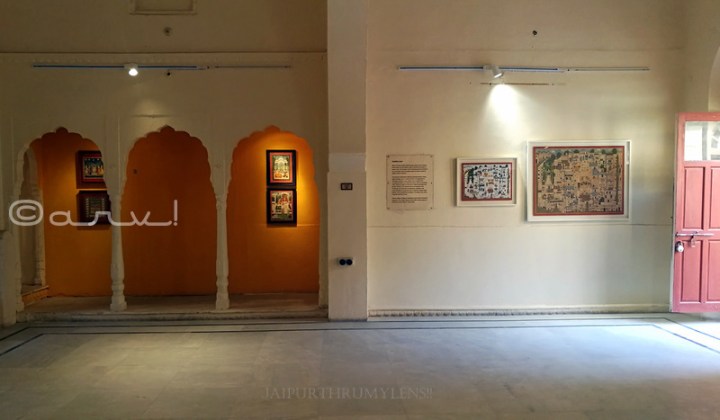
Pichwai is a painting made on textile & hung behind the idol of Srinath Ji, an incarnation of Lord Krishna. This style of painting is popular in Nathdwara, Mewar (Udaipur) Rajasthan. Earlier it was used in temples but over a period of time, this started being used as wall adornment in residences. Pichwai paintings are rich and detailed.
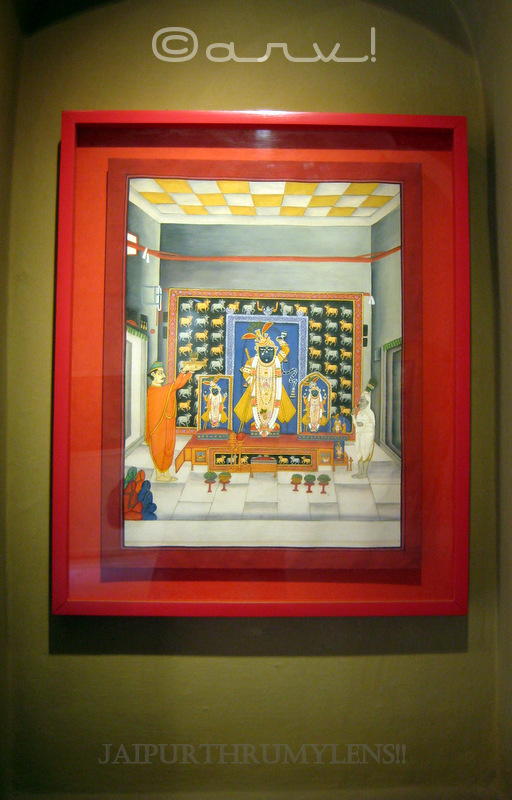
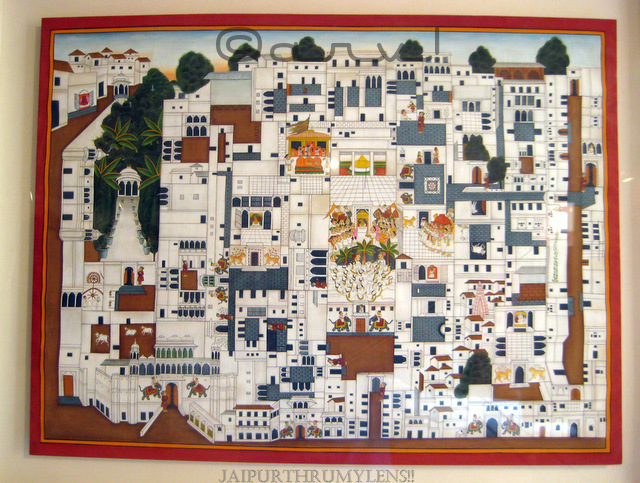
This is a small gallery and has very few paintings on the wall. With nothing else to see the tour of the Museum of Legacies came to an end.

As I descended the stairs on way back, I wondered whether it was worth a visit?
Here are my views on the Museum Of legacies. The word Museum of Legacies is quite vague and not cohesive. It doesn’t conjure up any images. Two, the collection on display is neither convincing nor complete as it comprises random pieces. Ideally, each collection should at least represent a complete geographical area or a certain time period. It does neither.
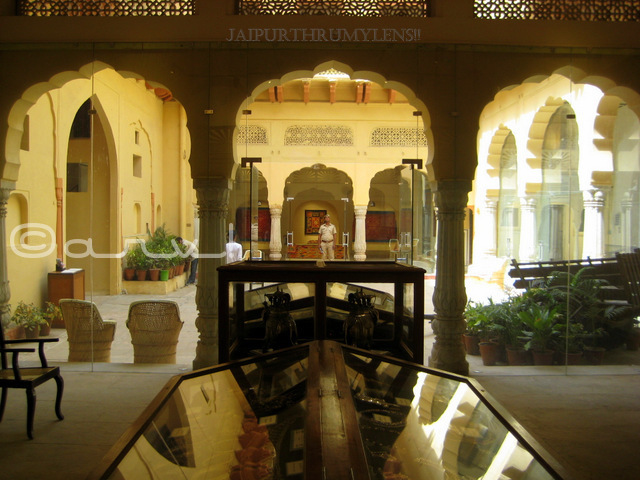
Display pieces have been sourced from a few individuals and commercial enterprises. Therefore the collection has its limitations. Three, since these collections have been sourced from firms and individuals, they have been allowed to advertise their names discreetly.
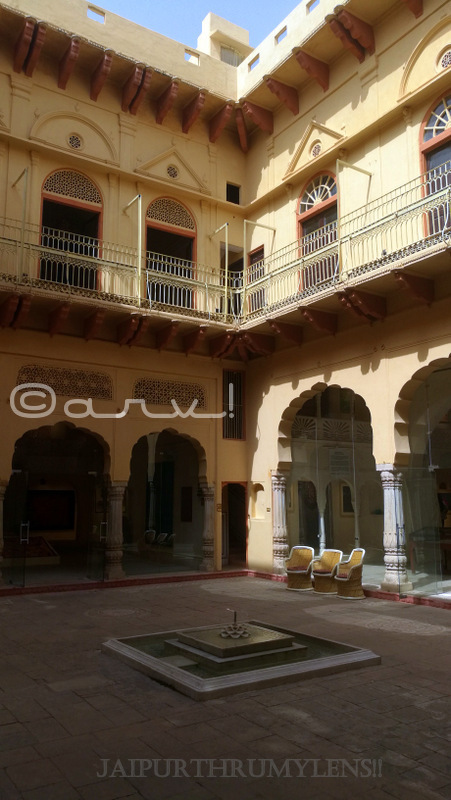
Four, Kishanpole Bazar is off the tourist map. With nothing else to explore around, it is unlikely that many tourists will visit the Museum Of Legacies. The manner in which the heritage look of Kishanpole Bazar is being tinkered with lately in the name of a “smart city” is not encouraging. It has been chosen as an ideal market for this project. The entire market has been dug up under the name of “Jaipur Smart City Project“. It will complete in a few months but the heritage conservationists have raised an alarm as it has altered the original form and look of the market. Many people have questioned the motives of the authorities.
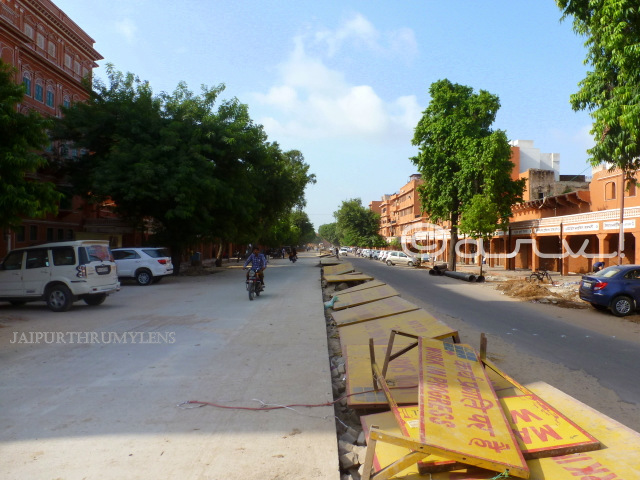
Jaipur Smart City Project
State governments receive grants for a specific project from the central government. A few years ago, low-floor buses were given to select cities under the JNURM project and now it is the Smart City project. Can a city become smart by undertaking “unwanted” beautification and spoiling its heritage look? Why only one market is being modeled for Jaipur Smart City Project? It is simply an eyewash and wastage of resources. When the authorities fail at basic things like parking facilities, waste, and traffic management, wasting money on “unwanted” beautification is nothing less than an offense.
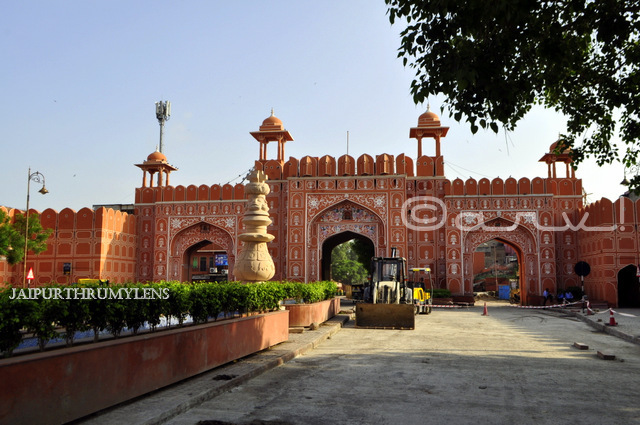
Here are two pictures of Ajmeri Gate, one of the eight old Gates of Jaipur – Before and after the “Jaipur smart city project” beautification drive. Just for your information, Ajmeri Gate leads to the Kishanpol Bazar.
Before
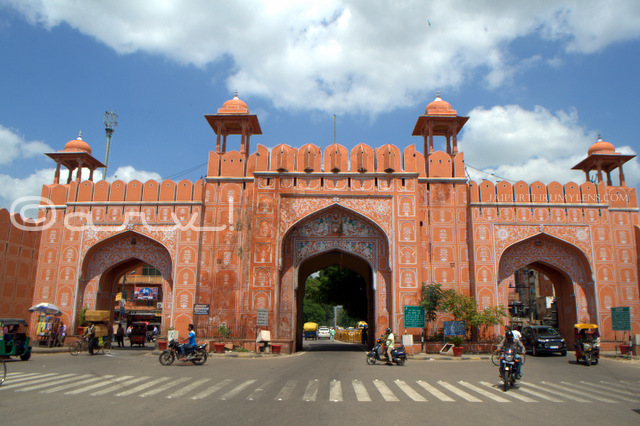
After
A huge fountain has been added along with a divider spoiling its heritage look.
Do read my post on heritage conservation Our Attitude Towards Heritage Needs A Big Change?
Stay updated with Jaipurthrumylens!! on Facebook Twitter Instagram
The authorities need to reconsider what they want to show and depict. The current display collection is not convincing enough to attract visitors/tourists. This new museum in Jaipur doesn’t do justice to the building considering its legacy and how it has been associated with art and craft for centuries. If you are visiting Jaipur and love art and architecture, do explore and let me know your thoughts on the Museum Of Legacies. I will recommend a visit to this beautiful Haveli for all its beauty and heritage.
Adaptive use of the Haveli Architecture
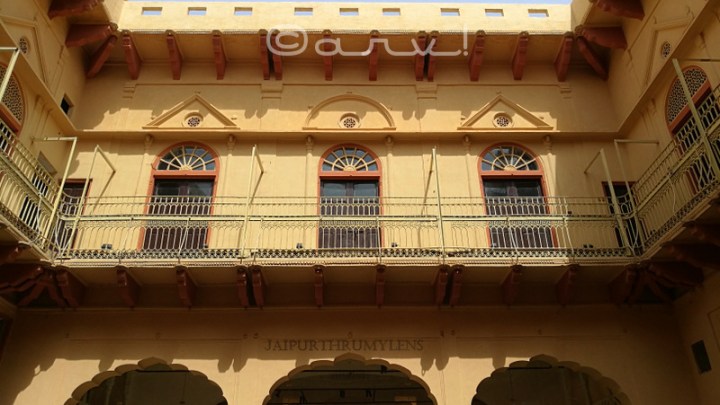
Museum of Legacies is a good example of the adaptive use of Havelis. The building has been adapted twice ever since it was built for residential use. The first change took place when it was converted into an art & craft school. The second use was when it was turned into a museum. It is a good example of how we can repurpose our heritage buildings. Many architecture students visit Jaipur for case studies on the repurposing of old buildings. Museum of Legacies is a good case study for architecture students.
Museum Of Legacies Address: Kishanpole Bazar, Near Ajayab Ghar Ka Rasta, Jaipur.
Museum Of Legacies Timing: 12 PM to 8 PM.
Museum Of Legacies entry fee: Free for the time being (promotional)
Update January 2020 – The museum building is open but the collections have been taken off. I suppose this is because of a change in the state government; the museum was inaugurated during the term of the previous government. There is talk of relaunching this museum with another collection but there is no official statement yet.
Discover more from JaipurThruMyLens
Subscribe to get the latest posts sent to your email.
 JaipurThruMyLens
Wow amazing post and you detailed all very well. When in comes to exhibits tourists need to know information about the things. Otherwise no point showing anything… It’s just another object. However I liked the architecture of the building, simply beautiful! In the name of beautician most of the heritage and historical items are being defaced in India. Because people without any taste of history have becomes the bosses. But it’s not just Rajasthan but everywhere!
LikeLiked by 1 person
I agree with you on renovation and restoration. I wish authorities had some taste and understanding for all that’s happening across the country. It definitely is a stunning building because it is built in Indo- Roman style. You are right, without conext and connect, they have no meaning. Thanks for sharing your views. Where else have you seen mindless restoration.
LikeLiked by 1 person
Pretty much everywhere, unless its a Unesco heritage site, which is maintained well. I remember in Kanchipuram, there is a very famous 1000-year-old temple, and the idiotic people there installed bathroom tiles for the floor!!! They also freshly painted those beautifully carved and sculpted walls! Its an insult for those people who built those great structures.
Another shabby maintenance I saw was at the JEATH museum at Bridge over River Kwai at Thailand. They just destroyed the so many WW2 memorabilia without any respect for anything for the fallen soldiers.
So problem is there everywhere!
LikeLiked by 1 person
I can understand how you feel about that temple because saw something similar in one of the heritage temple. The problem is that even in government departments responsible for maintaining heritage buildings there are stupids with little understanding of built heritage. With so much heritage around everyone feels it is okay to destroy a lil bit!
LikeLiked by 1 person
The main problem is, people, think, doing a fresh painting is a beautification work. Actually preserving to the original state should be the agenda. No one wants to see how “Asian Paints” looks on a dancing figurine, people want to see the original colour what been applied some 1000 years back! Something is happening in our temples too in the name of renovation(aka money making)
LikeLiked by 1 person
Exactly! You are absolutely right. People equate giving a new look to restoration. Some buffoons have no understanding of the word heritage. What you have described is equal to “killing” it completely.
LikeLike
That’s correct. We will take long time to understand our mistakes, but by then we would’ve lost lot of treasure already!
LikeLiked by 1 person
It is certainly sad but at the same time this is a reality. I have a new post coming up on preserving heritage issue. Did you read me previous post on preserving heritage?
LikeLike
Here it is – https://jaipurthrumylens.com/2017/11/24/importance-heritage-conservation-jaipur-india/
LikeLike
Thanks for this. You have given me a good option to explore in Jaipur. Will try and check it out soon
LikeLiked by 1 person
Do share your experiences, Anuradha 😃
LikeLike
I agree with you arv, authorities deface the heritage in the name of beautification and you are doing a wonderful job in highlighting the issue. Old pictures would speak volumes about the disservice they have been doing to modernise the monuments and markets. There are very few who are really concerned. Many havelis are falling to pieces due to neglect or being locked for years. I wonder how long would the real legacy survive in this materialistic world driven by ulterior motives.
Thank you for some beautiful shots of the museum.
LikeLiked by 1 person
Thanks for the support. I have had the opportunity to explore the heritage of the city in old jaipur during the last few days. The sad news is that heritage won’t survive for the next decade. The old buildings are being razed down to build commercial buildings. This is when there is a law that prevents this from happening. When officials collude for monetary gains who will stop the wrong. It is a sad aspect. They say money can make anything happen.
LikeLike
Museum of Legacies looks interesting and fascinating to me. With a diverse of textiles, jewellery, stoneware and inlay work, painting and pottery, this is another place in my list whenever I visit Jaipur.
LikeLiked by 1 person
Will love to hear your opinion whenever you visit museum of legacies. Thanks for sharing your views, Roma 😃
LikeLike
I am overwhelmed by the sheer magnitude of the splendour and variety in the Museum of Legacies. One could spend all day in any of the sections of the museum. I especially like the one displaying the art and craft of embroidery. The intricate design in the minutest detail is impressive. You did an excellent job describing the museum, Arv!
LikeLiked by 1 person
I’m happy to hear that you liked this museum. I guess you love art in all forms. 😃
LikeLiked by 1 person
This. Was. Someone’s. Residence. …
I’m ever floored (no pun) by the way some people had lived (and I guess, some still do)–from the Frick collection in Manhattan, to some of the estates in Europe and its environs. It jus blows my mind. Who EVER needs so many rooms? (well, maybe if all my family lived in one humongous building then it would sort-of make sense to need dozens and dozens of rooms – I do have a large extended family – but still …).
Now, with that out of my system … thank you for a lovely, comprehensive, and informative post. While I adore museums of many kinds, and can revisit some of the large ones again and again to view different wings or ‘visit’ my favorite exhibitions, I do love small museums (like the Frick Collection in NYC and some I’ve been to in other States), and the relatively intimate setting, with a manageable number of exhibits to explore. That said, a too-presumptive name can make for unfulfilled expectations … BTW, I agree with the eye-sore renovation, BTW. The fountain seems to distract from the beautiful gate …
Well done! Na’ama
LikeLiked by 1 person
Na’ama, I get what you mean. Well, fact is that in the past some people lived life grand size! 🙂
Well, the building has a good frontage, it lacks depth so it looks much bigger than it is. And given its impressive facade, I can understand your thoughts. There are so many heritage sites that need money for restoration, I hope authorities put them for a better use. Thanks for sharing your thoughts, Na’ama. 🙂
LikeLiked by 1 person
🙂 Sure thing!
LikeLiked by 1 person
😃
LikeLike
That is such a beautiful architecture and art collection of this museum. Thank you for sharing, Arv
LikeLiked by 1 person
Happy to know you liked it, Cornelia. Have you finally moved your site with self-hosting?
LikeLike
Hi Arv, unfortunately I haven’t the time at all to look for another blogging site. When you say self-hosting, is that an option I don’t know about??
LikeLiked by 1 person
It means moving to a self-hosted site. You buy a domain and transfer the entire content to it.
LikeLike
Oh, yes, I got it. Thank you Arv, for always responding to my questions. I am checking out wordpress.org and other sites. Have in mind with your blog that you always post in very low resolution, that way you don’t run into the same problem I had to face, that your usage get’s filled up. Have a great weekend
LikeLiked by 1 person
Thanks, Cornelia 🙂
LikeLike
The “Before” image of the museum is more beautiful than the “After”. Thanks for the honest post and I agree that the problem is everywhere.
LikeLiked by 1 person
Thanks Rama for encouraging words. I have posted a colored vintage picture of this building that I’m sure you will like. Have a look at this post. https://jaipurthrumylens.com/2016/08/19/world-photography-day-old-vintage-pictures-of-jaipur/
LikeLike
Hi Arv, this is such an informative article on Jaipur’s Museum of Legacies. Based on your description, I would definitely want to visit it, with or without the ‘beautification’ projects around it. It’s encouraging to see that someone is promoting culture preservation. I do agree it’s silly that money is being spent on adding structures like water fountains that block the historic facades. Are they also adding resources in preservation of the original structure?
LikeLiked by 1 person
Thanks, Jyoti. It is one of its kind of building with a beautiful facade and European influence on its architecture. I’m sure that if they don’t waste money in such worthless projects there are hundreds of heritage buldings that need restoration and are dying away. Thanks for stopping by and sharing your views. I’m hoping you will get to explore this building someday! 🙂
LikeLike
Whatever the merits or otherwise of the collection housed in the museum, it looks a most beautiful building, Arv. And a lovely light and airy place to display exhibits – many of which I would love to see!
LikeLiked by 1 person
Mick, I will agree with you that this is a beautiful building. European influence is evident in its facade. Being an artist yourself, I’m sure you will enjoy a trip to this museum. 🙂
LikeLiked by 1 person
I must make sure it’s on my to do list!
LikeLiked by 1 person
Please do 🙂
LikeLiked by 1 person
This is a beautiful Haveli and through your post you have taken us through the museum. Is photography allowed within this museum or is it because of the Travel Photo Jaipur that you got the opportunity to show us the interior of the Haveli?
As you said it may not have covered artefacts from every region but it is definitely an excellent collection especially the section with the tribal arts, they are just incredible.
Arv, I so agree with you on what you said on beautification project these days. I too feel that the authority should be more sensitive towards these heritage buildings.
LikeLiked by 1 person
Sarmistha, photography is allowed in this museum. I have visited this museum twice. First time it was during Travel photo Jaipur, when it otherwise closed for the visitors. Second time , it was when it reopened as Museum of Legacies. I guess I got you confused as you thought my visit was during Travel photo Jaipur. Please read my previous post during travel photo, I have already provided a link. i’m sure you will like it.
Happy to know you liked the collection. I don’t know if they are overzealous in restoration because they want to prove themselves or what. There are many places where the whole concept changes because of over-restoration. Thanks for stopping by and sharing your views, Sarmistha. And also for the tweet 🙂
LikeLiked by 1 person
A wonderful post though I would like to see a working museum. Watching artisans craft their Durries, Saris and kurtas. I after 20 years in retail, selling authentic artisan fabrics and garments from your region I was surprised to not see any depicting Rhajistan. As usual you have some good photos that match the narrative superbly.
LikeLiked by 1 person
Ellen, I think that’s a fabulous idea. I feel that to keep an art alive it is important to show how laborious & time taking it is. The concept followed in this museum is old. Interaction of visitors with the artist is an enriching experience. I’m delighted to hear that you have been involved in selling fabric/ garments from this region. Where were you working? I would love to hear what you were selling. hanks for sharing your perspective, Ellen. 🙂
LikeLike
I worked for a company in England who sold garments etc from Jaipur. I became the expert in product knowledge and taught staff as regional trainer how and where the items were produced. I then opened two shops in New Delhi and worked closely with William Bissell of Fab India. Who enjoyed my enthusiasm and passion for the products produced, I recruited and trained his staff and eventually he bought the company I worked for in England.
LikeLiked by 1 person
aha! So we have an expert here on fabric. Well, fabIndia is a big name. I assume you must have developed a liking for the local fabrics. I guess it was all hand block printed fabric from bagru and Sanganer. 🙂
LikeLike
Haaha! You know me so well. 😊
LikeLiked by 1 person
😃
LikeLike
Love the intricate details in the architecture 😁
LikeLiked by 1 person
It’s certainly an impressive building 😃
LikeLike
Interesting! 🙂 Although, it makes me wonder why we need to leave behind a legacy at all.
LikeLiked by 1 person
Good question, Cheryl. From a personal point of view it is fine but as a society it is important to understand our story and how we have changed. It also provides a clue to culture as a tourist. I agree people are so fixed on leaving their footprints or remembrance. 🙂
LikeLiked by 1 person
Great post. Beautiful pics.
LikeLiked by 1 person
Happy to hear this, Rupam 🙂
LikeLiked by 1 person
Kudos to the effort you’ve put to take us through the museum and also highlighting the issues, Arv. 😊
LikeLiked by 1 person
I’m glad you enjoyed reading this post, Hariom. 😃
LikeLike
You do write such a good blog
LikeLike
Thanks, Jackie! I’m happy you liked this write-up! 🙂
LikeLike
What a magnificent place! It’s hard to believe that it was someone’s residence at one time.
LikeLiked by 1 person
For years it served as a local art & craft school. But yes, it is a magnificent building especially as a residence. Thanks for sharing your thoughts, Laurie. Even been to India?
LikeLike
Jaipur / Rajasthan is so rich in Arts and Crafts ….. one should have used the building for a far better purpose in this line. Wastage of resources and defeat of the purpose behind donating the Haveli by Pt Shiv Deen. Sad!
Thanks for letting us know “what to avoid” too 😀
I still don’t understand this Smart City bit……. There is nothing smart about the people, department, plan, ideas involved in it.
Ideally we need a major change in kind of people who should be in a particular “government” job/department. The person’s knowledge and experience should be in line with the profile….. Like the corporate rule “Right Person For The Right Job”. Pick up any department and they are full of misfits.
LikeLiked by 1 person
For your information, Monica there’s a smart city conclave taking place in Jaipur. The mayor of Barcelona has explained what smart city means. He said smart city means smart residents. It means that the city has facilities which make life easier. I don’t think we are anywhere near those standards but they still call it a smart city.
Ideally, this site should have been used to display how they make local art & craft. A live demonstration which would have also given employment to local artisans.
Despite all this, I still feel this Haveli is worth the visit for its beauty and history. 🙂
LikeLike
Love the artwork and the tour!
LikeLiked by 1 person
Thanks Susie 😃
LikeLike