


During the hiking trips in Jaipur, I have come across unusual trees & plants. I have shared these in numerous posts on this blog like Dhok tree, Thor Danda, and Sickle Bush. While Dhok is one of the most widely found trees in the Aravali hills surrounding Jaipur, there is another interesting tree that I want to share in this post. The Salai Tree. I have witnessed this tree over the last few years but could never obtain its name until a few months ago. During one of the hikes, I came across this tree with peeling bark.
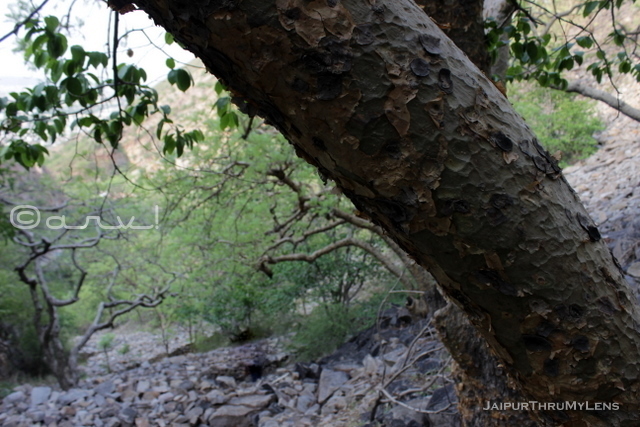
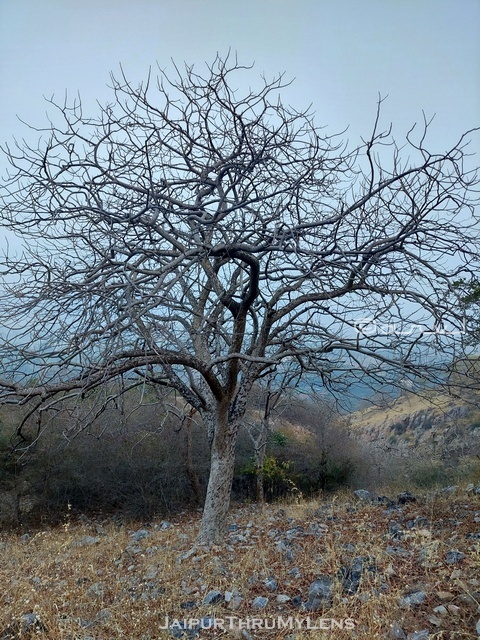
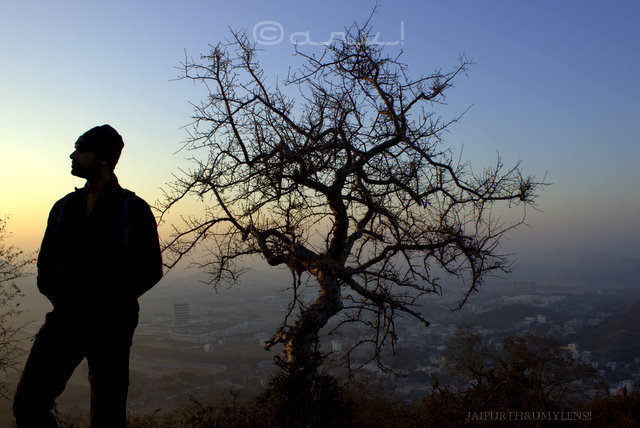
This prompted me to find out more about the tree. I have seen it in different seasons, but I find it fascinating in winters when it is all bare devoid of leaves.
Read Humans & trees | Are we similar?
Scientific Name
The scientific name of Salai is Boswellia Serrata from the Burseraceae family. The tree is also known as Indian Frankincense or olibanum.
Indian Names
The tree is know by following names in India Salai, Saalhe, Salaiyya, Guggal, Dhup, Kungli, Loban, Salga, Shallaki, Kundrikam, Morada & also Salai Guggul.
Climatic Conditions & Geographic distribution
Salai can grow till 1100-1200 m elevation. The tree can be discovered in the regions of the following states- Rajasthan, Madhya Pradesh, Andhra Pradesh, Odisha, Maharashtra, Uttar Pradesh, and Gujarat. The reason it is found in other regions is it can grow even on flat terrain; it attains a large size on fertile soils. Salai can be found in diverse deciduous forests along with Dhau and Babool species especially in forests of Madhya Pradesh. The tree tolerates large temperature variations ranging from 0 to 45 C.
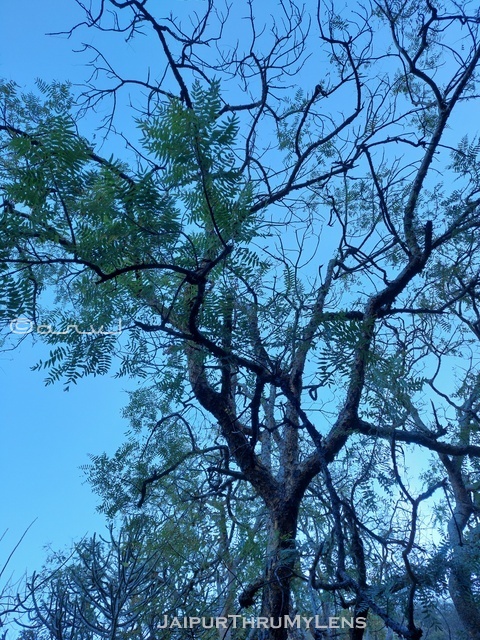
Aravali Hill Range
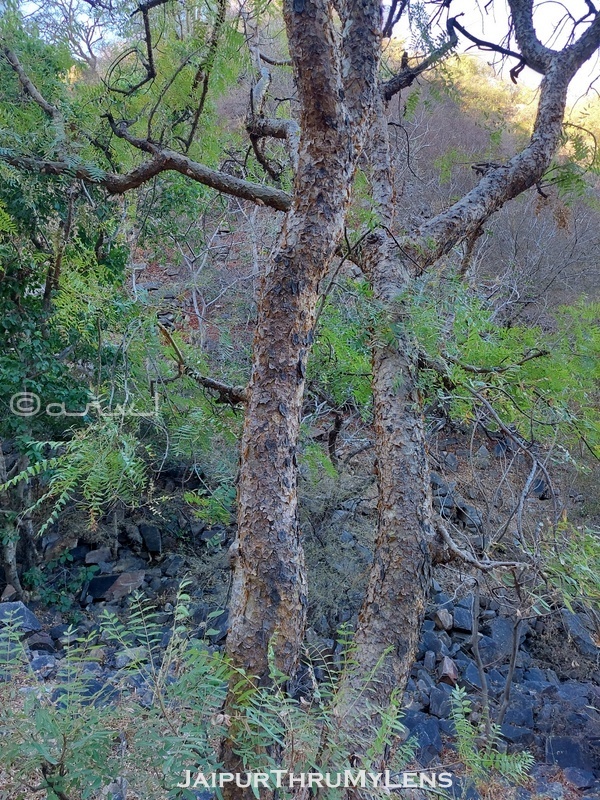
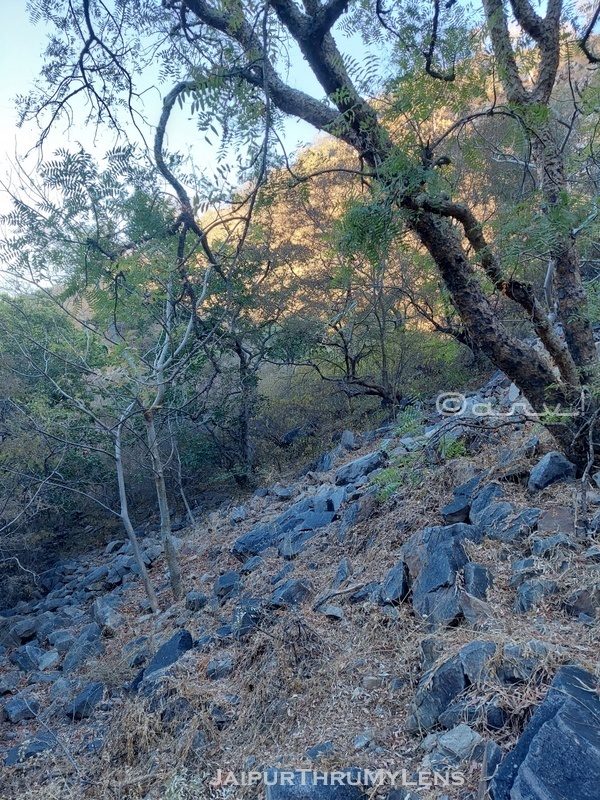
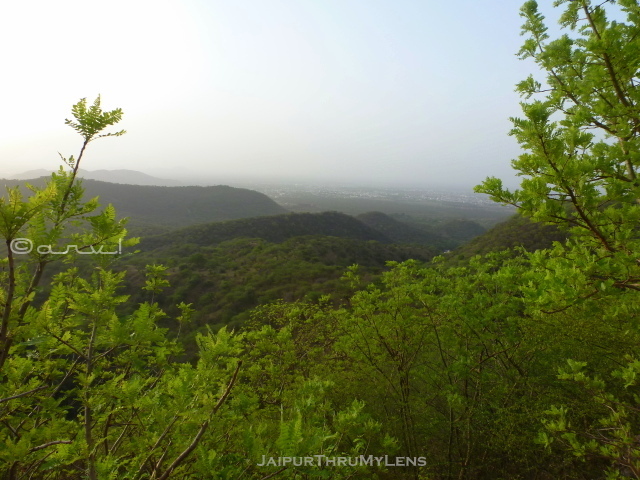
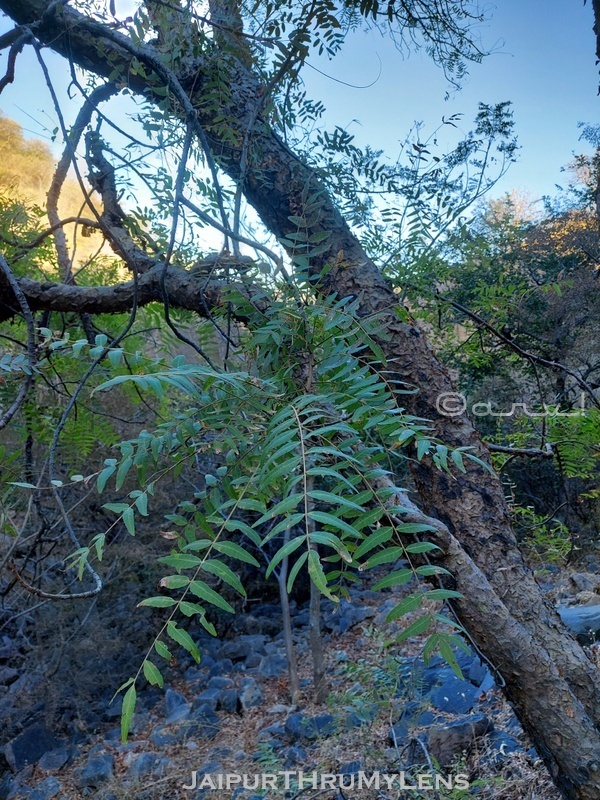
Based on my observations, the Salai tree can be easily observed on slopes & ridges of Aravalis in dry deciduous climate. Schist & quartzite stones form Aravali hills near Jaipur, adapts & grows considerably in such conditions. It can survive in most depleted & shallowest soil where most tree would find hard to survive. The other tree that survives in such conditions is Dhok or Anogeissus Pendula tree. The following is a picture of the Salai trees from the Aravali hill range near Jaipur.
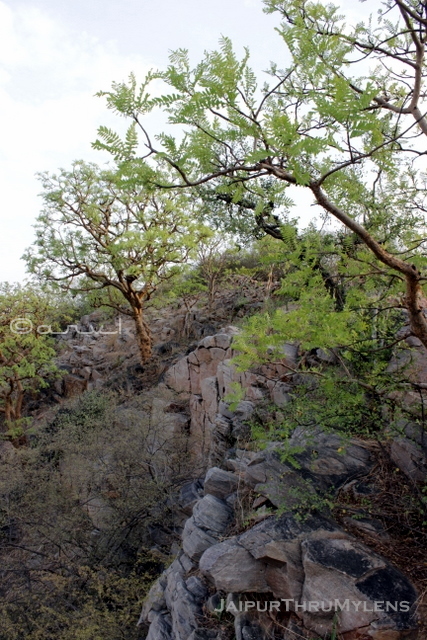
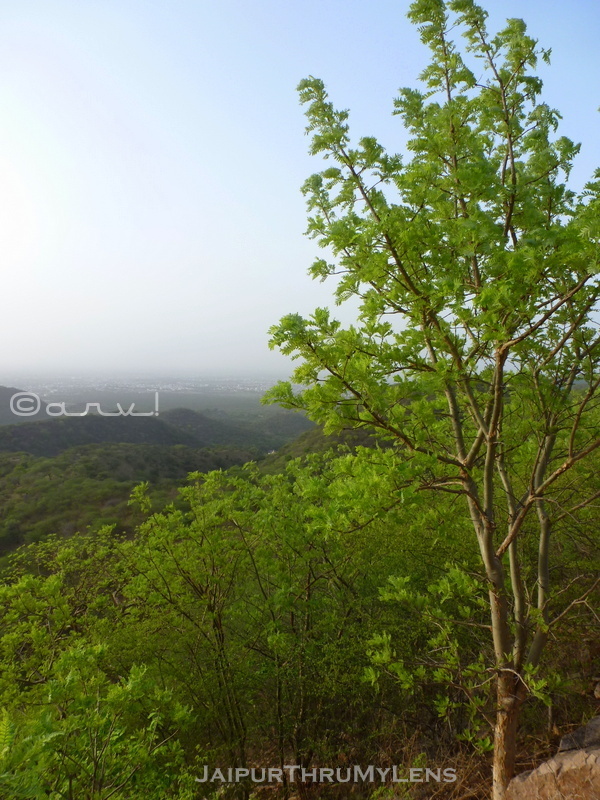
Salai remains a moderate to large size tree. The bark is usually thin. Being one of the hardiest trees, it can survive forest fires, and animals don’t present a threat. Tenacity is one of its features. It requires no special care or excess water to endure the harsh climate like the Aravali hill range. Here is a picture of the Salai Guggul tree during the hikes in Jaipur during the monsoon season.
Salai Gum or Resin
The tree yields a yellow-green gum from the bark called Salai Guggal which has a scent when burnt. A mature tree can yield 1-1.5 kg gum per annum and represents a good substitute for imported Canada balsam. This tree is recognized for yielding a type of frankincense called the Loban, a golden-yellow, transparent fragrant resin that oozes out of the tree.
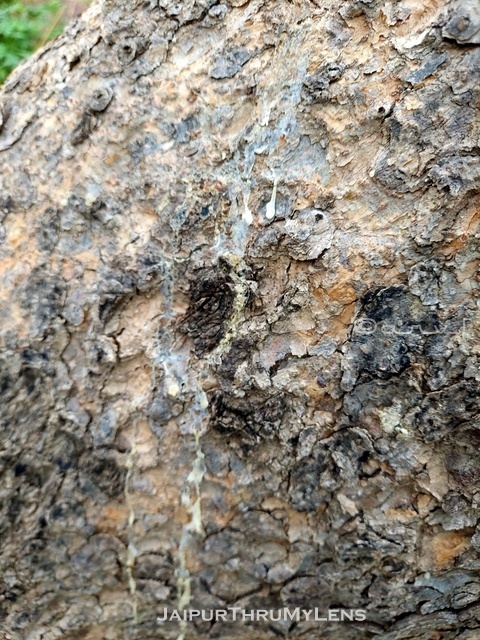
Indian Olibanum is another name for this gum. During ancient times, Boswellia resins were as valuable as gold, spices, and textiles as items for trade and barter. Resin typically contains 5–9% essential oil, 65–85% alcohol-soluble gum and the rest is water-soluble. The essential oil of frankincense is extracted by the steam distillation process.
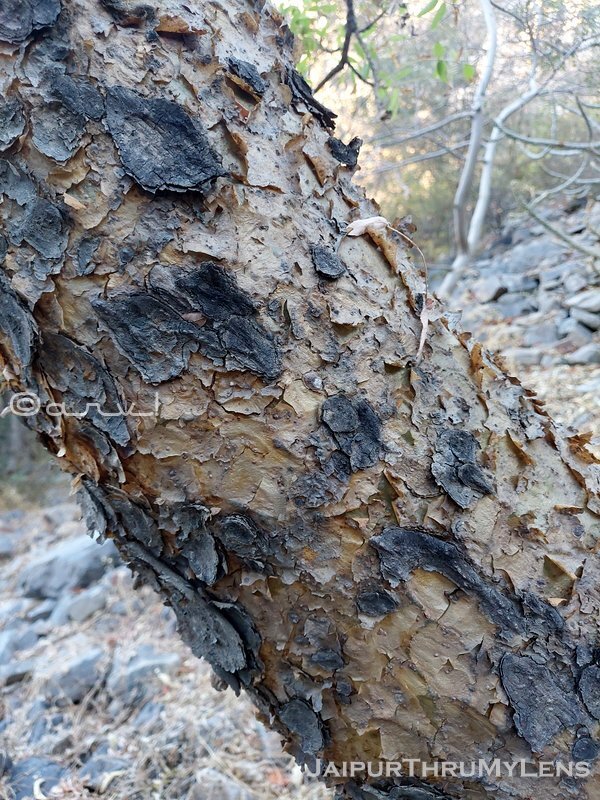
Bark
The bark is thin variable in colour & texteure. Often, it is greyish-green, ashy, or reddish peeling off in thin, papery flakes.
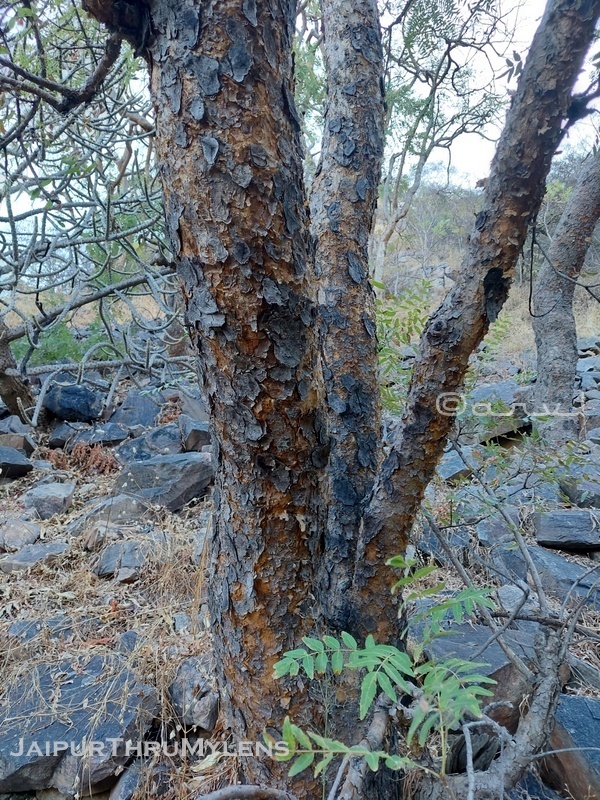
Salai Leaf
The leaves are like those of neem trees and are distinctive. It has 14 to 15 pairs of leaflets with a single leaflet at the end without a pair. As mentioned above, the border of Salai leaves has teeth or serrations similar to the Neem tree. The tree becomes leafless in December; new leaves appear in May-June.

Salai Flower
The flowers of Salai grow in a bunch usually white in color. Sometimes, it can be pale pink as well. The flower appear In February-March when the branches are leafless.
Salai Fruit
The fruits are in a shape of a bladder. The color of fruit undergoes a transition from green to pink and then pale brown. They ripen & fall in May-June.
Commercial Use
- Salai gum is used as incense because of its unique fragrance. The incense stick industry represents a notable user of incense in India as well as the rest of SE Asia.
- Salai tree is widely used in Ayurvedic formulations for treating asthma and arthritis. It proven to be as effective and, in many cases, better than drugs like Phenylbutazone and other anti-inflammatory drugs.
- It is consumed in indigenous medicine for rheumatism & nervous disease.
- It is additionally used in making ointments.
- The fiber is used in pulp & paper making and newsprint.
- The essential oil of frankincense is used in aromatherapy and Catholic Christian ceremonies have traditionally used this oil.
Traditional & Ayurvedic Treatments
- The gum resin when mixed with coconut oil is used for injuries.
- The bark is combined in treating dysentery, skin disease, and piles.
- The bark is mixed with turmeric and used for treating rheumatoid in tribal areas.
- The oil extracted from Salai is mixed with honey for treating eye disease.
- Salai powder is mixed with coconut as a pain killer.
- Salai gum is used for treating hair problems as well as bone-related conditions.
Salai tree is one of the valuable herbs in Ayurveda; it is called Gajabhakshya in Ayurveda. The Salai Guggul resin is consumed primarily for the treatment of arthritis and asthma. However, it is also used in treating blood disease, dysentery, mouth sores, sore throat, hair loss, jaundice, hemorrhoids, and bronchitis, to name a few. Modern medicine and pharmacology studies have concluded its use for antiarthritic, anti-inflammatory, antiatherosclerosis, and analgesic treatments.

Therefore, it is important we recognize the importance of this tree and undertake efforts to propagate & plant the Salai tree. It is one of the best-suited trees for the Aravali hill range. If you want to know more about this tree check out Pradip Krishen’s jungle trees of central India.
Follow Jaipurthrumylens Facebook Twitter Instagram
Discover more from JaipurThruMyLens
Subscribe to get the latest posts sent to your email.
 JaipurThruMyLens
Nature is beautiful and bountiful and it heals. Amazingly detailed post Arv !!
LikeLiked by 1 person
Well said. Thanks for sharing your thoughts.
LikeLike
Your Blogs are amazing! Salai is also found in Delhi as well but it is critically endangered here. It has many medicinal properties but still people ignore it and don’t plant it. You should write more on such Aravalli trees. Great Reasearch and well written!!
LikeLiked by 1 person
Thanks for sharing your thoughts. I’m aware that it is found in Delhi but since the hills have kind of “disappeared” in this region, so has Salai trees.
I appreciate the encouragement. I will definitely write more on trees found in Aravali hills.
LikeLike
I’ll have to go back through my pictures to see if we have any of this tree. It sounds very distinctive and I think I can remember seeing its unusual bark. Here in Canada trees lose their leaves every autumn, but I guess it’s not that common in India. Thanks for the interesting information. Maggie
LikeLiked by 1 person
Do let me know if you find any pictures. Just for your information, the native trees in Aravalis shed leaves just before the summer or before spring. The new leaves appears just before monsoon or during the first few showers. Hope this is something new for you, Maggie. Thanks for sharing your thoughts.
LikeLike
I think I found a picture at Monsoon Palace in Udaipur. We took the picture because there was a group of Grey Langurs on it, I think eating the fruit. I tried to attach or paste it here, but can’t seem to be able to. Anyway nice to have the personal context to your story.
LikeLiked by 1 person
Happy to hear that you could find the picture of Salai tree. Currently, Wp doesn’t support pasting pictures. I guess I will get to see this picture someday. True, personal connect is great. Thanks for taking efforts to find the picture, Maggie.
LikeLiked by 1 person
Thank you for bringing this beautiful tree to us.
It’s quite an amazing tree with all it’s extraordinary properties. That it can survive forest fires is quite a feat! And, now I know where the Loban we use in Puja comes from. The papery texture of the bark and trunk looks nice. And, that it has so many ayurvedic properties is quite astounding.
LikeLiked by 1 person
It’s a revelation for me too. It’s only recently that I found out about all the benefits despite coming across them over the last few years ever since I started hiking in Jaipur. We definitely need to look closer at trees. That’s what I tell people who love nature. We don’t even know the trees around our house. Don’t you think so?
Also it reminds me of the oak tree found in himlayas called Bhoj patra with peeling bark. In ancient days, the bark was used as paper. I’m sure you must have seen it in the Himalayas. It’s typically found around 3300-3400 meters.
LikeLiked by 1 person
Yes very much. There are trees around my house many of which I don’t even know the names. Been asking people but nobody could help so far. Probably many of those would have interesting properties too. The Bhoj Patra I have seen in the Himalayas, in Kashmir, even got a piece of it with myself for keeps 🙂
LikeLiked by 1 person
There are not many tree guides in India. I know of only one author who has published a field guide on identifying trees. It’s worth reading although it doesn’t cover South India. But it can surely provide you with methodology to identify a tree. I also carried Bhoj patra bark from high altitude trek but subsequently lost it.
LikeLike
Thank you Arv, for introducing this amazing tree to us, I truly enjoyed to learn about it. I am an absolut tree lover, put me under a tree and my inner happiness is turned on. I do find leafless trees very fascinating too, because they look like sculptures to me.
LikeLiked by 1 person
I always thought you loved flowers. Happy to know you love trees, as well. And I’m not surprised. Nature lover…after all! Trees in all shapes and sizes are fascinating. Isn’t it? Thanks for sharing your thoughts, Cornelia. 🙂
LikeLike
Indeed Arv, Nature is my sacred place
LikeLiked by 1 person
I’m not surprised, Cornelia. Hope you have got yourself vaccinated.
LikeLike
Thank you Arv, yes I got all two a few months ago. I hope you too.
LikeLiked by 1 person
Great. I got one, as of now. 🙂
LikeLiked by 1 person
Highly informative Arv!!
You must have spent hours on it!
LikeLiked by 1 person
I’m glad you liked this post, Well said, it does take a lot of efforts for a post like this.
LikeLike
I know it as Kundirikam. We use it as incense. This tree is a survivor indeed. Tenacity does seem to be it’s best feature. I’m gobsmacked by the fact that it can survive forest fires! I didn’t know that frankincense EO came from this. This was a really informative post. Thanks for sharing.
LikeLiked by 1 person
Thanks, Shweta for sharing this name. Does the incense contain this name? There are so many magical trees around us but we know so little about them. I’m glad you liked this post.
LikeLiked by 1 person
That’s what we call it. The brand name is different but it’s essentially the same. You’re right, there are a lot of species and we’ve only grazed the tip of the iceberg! Thanks for sharing
LikeLiked by 1 person
Thanks for sharing the name and details, Shweta. I hope we can understand trees around us in a better way. Appreciate your comment and details.
LikeLiked by 1 person
It was my pleasure ☺️
LikeLiked by 1 person
😊👍
LikeLiked by 1 person
We need to get back to nature. It heals not only our bodies, but our minds and souls as well. Great post, Arv!
LikeLiked by 1 person
Absolutely, Lisa. I hope more people are aware of the trees around us.
LikeLiked by 1 person
Interesting and informative! I like how the moods of the tree have been depicted through your pictures. 😊
LikeLiked by 1 person
I;m glad you liked this post. It is a unique tree and holds great importance even in Ayurveda.
LikeLiked by 1 person
Such a beautiful post and I enjoyed learning about all these trees. I love nature and trees especially. I often randomly send people I’m close to photos of trees I think are pretty 😁
LikeLiked by 1 person
Happy to know you love trees and enjoyed reading about this tree, Nikki. I’m happy there are so many people who love trees and click pictures. There are a couple of bloggers who post pictures of tree once in a fortnight, it is called Thursday Tree Post. May be this might interest you. You have a great blog out there,
LikeLiked by 1 person
Thank you for the suggestion will definitely look into the Thursday Tree Post might even start posting my own tree images on Thursdays. And thank you for calling my blog great it still needs alot of work but I appreciate it. Take care 😊
LikeLiked by 1 person
Nikki, even if you don’t post it on thursday, it is fine. You can link your post on the link page. Just google Parul +thursday tree love, you willl find the blog. You can also read tree posts of other bloggers.
Blogs always keep on evolving and it is work in progress. Keep blogging, Nikki. 🙂
LikeLike
A very interesting article on this valuable tree. Yes, India should be supporting its growth and distribution throughout the country.
LikeLiked by 1 person
Thanks, Christine, I agree we need to plant more such trees. Appreciate your comment.
LikeLike
What a rich post about the Salai tree, and its bark, fruits and leaf. That is quite a few Indian names that it has alongside its scientific name. Growing up to 1200m is very, very tall – and it must take a while and years to get to that height. It is interesting to read that its bark is relatively thin yet it can climb skywards to such heights. Just goes to show the power and beauty of nature at work. These are wonderful images all round, Arv. Looks like you went hiking and saw quite a few trees. Hope you are doing okay over there and my thoughts go out to you and India. Take care.
LikeLiked by 1 person
Mabel, 1200 meters is elevation where it is found. It does not refer to its height. It is not considered to be the tallest but is in line with the most trees one find in this topography. Yes, nature is beautiful. I did hike but I did not hunt this tree. The pictures you see here were clicked during the last 5 years. So I did not hunt down this tree rather I found it naturally and was curious to know the name os the tree. I’m glad you liked these pictures, Mabel.
Things in India are looking good with the infection cases coming down. The govt has relaxed the lockdown measures, starting this week. Everyone is hoping for the restrictions to come down even more starting the next week. I have heard of Australian Govt being very proactive with restrictions on finding one case in Melbourne.
LikeLike
Thanks for clarifying, Arv. Lovely you came across the tree by chance. May you come across many more trees on future hikes.
It is good to hear things are looking up in India. We are having an outbreak here in Australia and in my state our lockdown got extended another week. Things look to be stabilising and hope it stays that way.
LikeLiked by 1 person
Let’s hope so, Mabel. I hope things return back to normal in your city soon. Take care.
LikeLike
Yes, hopefully things will ease up. Who knows what’s going to happen next. Take care and have a good week.
LikeLiked by 1 person
True. Nobody really knows. But I’m positive about future. 🙂
LikeLike
Keep staying positive, Arv. Things will get better 🙂
LikeLike
Very nice blog Arv! I love the Ayurvedic uses for hair, it works really well ☺ Hope you’re doing well!
LikeLiked by 1 person
Happy to hear this, Jennifer. All is well. Thanks for asking. 🙂
LikeLike
Arv, I didn’t know the varied use of this tree. I only knew its use as incense. I think I have seen this tree but cannot remember the place, in fact, couldn’t even recognise the tree then.
LikeLike
Thanks for joining, Arvind. I always love the information you share about trees and how beautifully captured your shots are. Thank you so much! i hope to see you back tomorrow.
LikeLiked by 1 person
This is really a detailed informative post on a tree. I guess Ayurveda is everywhere if we just take a look at nature and its surroundings. I am wondering if these trees on Aravalli hills ever used for their medicinal properties?
LikeLiked by 1 person
Absolutely. Nature has given us so much. packed food on the other hand is not a healthy choice. Only if we can understand this that our health will improve drastically. I’m not sure about your last question. I doubt.
LikeLiked by 1 person
If only India could promote some advanced research on Ayurveda. We just keep singing the same old song about ancient medicines which was written decades back.
LikeLiked by 1 person
That’s the whole problem. Ayurevda is being “milked” by commercial enterprises. It is sad that we have not added anything new to the old science.
LikeLiked by 1 person
As always, informative. This post is divinely fragrant (loban, guggul), you know what I mean. I love the fragrance of loban purifying the home space. Frankly, I did not know about it’s other use like in ayurveda etc.
The world of flora is massive, intriguing and full of surprises. I am glad that you take an interest and share the knowledge too. I still remember your Thor Danda post & images. Recently I came across one ……. and immediately you came on my mind.
LikeLiked by 1 person
I agree we hardly pay attention to the flora around us and how its presence impacts us. It is only few years I have started noticing flora around me. It is sad to see that forest dept for all these years has done nothing to propagate the cause of native trees. They have only promoted imported and decorative trees. The least we can do is create awareness around us. I’m glad Thor Danda post created some impact.
Do you observe trees as keenly as birds?
LikeLiked by 1 person
Yes the fascination for phoren is destroying the flora & fauna of our native biosphere.
I notice flowering trees, shrubs, so partially yes I do take a note of some of them.
LikeLiked by 1 person
Let’s hope sanity prevails.
LikeLiked by 1 person
Trees give us so much and this tree’s medicinal properties are an example. I think I have heard of this tree from you or one of your posts. Thanks for linking up and sharing, Arvind. The information that you shared about the tree is brilliant.
LikeLiked by 1 person
Thanks, Parul. I’m glad you liked this information. I hope we can spread more information about trees and create a positive impact around us.
LikeLiked by 1 person
There can’t be anything more beautiful than being in the midst of nature and having all the senses dedicated to nature as we walk through the beauty and bounty of nature. You do it so wonderfully, this is such a detailed account of nature, particularly so when we want to spent real time with nature, one tree can take days and even weeks for us to observe and understand what it can do to us and how it can ameliorate our ways of living if we start to integrate those values into our nature.
There is so much to plant medicine and it has been our deep tradition, never late, now it is catching up in the west. As you have so nicely depicted the use of this tree’s bark to resin to leaves, every aspect of the tree can be used for medicinal purpose provided we preserve our traditional knowledge and not get swayed by the modern means of drug treatment.
Always loved the detail you bring to your post and you pick one narrow aspect of topic and provide a panoramic view, without missing the nuanced perspective.
LikeLiked by 1 person
Nihar, I’m glad you enjoyed this post. As for the details, well, it is important to notice what is around us. I think we should combine the ancient wisdom and knowledge with modern systems. A lot of modern medicine is being extracted from these trees. I hope we understand the nature around us. Thanks for sharing your thoughts and leaving this valuable comment. Appreciate it.
LikeLiked by 1 person
There was this big problem with plant medicines where it was getting misused as recreational drugs, hence the benefits of plant medicine never came to the fore, it is finding a new place and lot of research work has started in USA where it will soon get into therapeutic usage. India has big advantage when it comes to plant medicines…
LikeLiked by 1 person
True. It is unfortunate that all this research should have been done here with plenty of flora available along with scinetfic minds. Anyways, it is a long topic. I hope we can spread awareness and benefits to the people.
LikeLiked by 1 person
That’s the part we can do, yes by spreading awareness makes the beginning and once the doors are open, we can enter into a different world…lot can happen there.
LikeLiked by 1 person
Absolutely. I’m glad we are on the same page, Nihar. Thanks for sharing your views. Appreciate it 🙂
LikeLiked by 1 person
Always a pleasure…
LikeLiked by 1 person
Its a beautiful tree. I find its peeling bark most interesting! Seen commonly on the hills of Pune. The Moi tree (Lannea coromandelica) usually grows close it!
LikeLiked by 1 person
That’s interesting name. Good to know about this tree. Thanks for sharing it here.
LikeLike