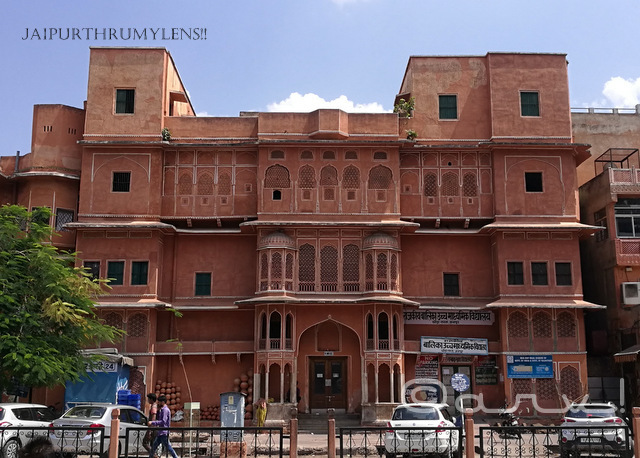
Jaipur continues to attract people ever since it was founded by Sawai Jai Singh II in 1727 AD as a planned city. Among many things, its architectural legacy is well-known and appreciated. Haveli in Jaipur is one of the most dominant aspects of its architecture and built heritage. What is a Haveli? Havelis are traditional courtyard mansions found across North India, with an enclosed chowk or courtyard, ornate facades, projecting balconies or Jharokhas, Jaalis or latticed screens, and in some cases frescoes. In Jaipur, Havelis belong to merchants, nobles, and artisans dating from the 17th century onwards. These are residential units where people have continued to live. Many of these Jaipur Haveli have historic significance like this one here on Chhoti Chaupar. A large number of old Haveli in Jaipur can be found in the Jaipur walled city area although a few are located outside the walled city. Jaipur Haveli is a reflection of yesteryear’s grandeur and provides an understanding of its rich history.
Updated – April 2026.
I grew up in Jaipur, but I never lived in the walled city area of Jaipur. At some point in time, I found the walled city area unkempt and shabby due to open drainage system, garbage being dumped in the open, and issues related to cleanliness and traffic. Mt family had office in the Haveli, like most gemstone and jewellers back in those days. Many of my close relatives live din Havelis. So, I have a good understanding of Havelis in Jaipur.
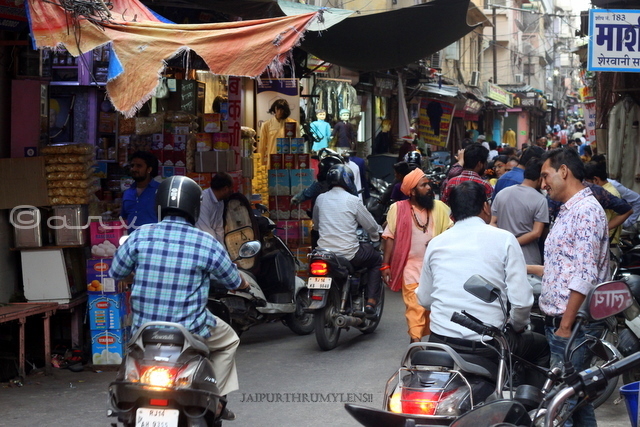
Little did I realize at that time that the walled city of Jaipur was designed for the 18th century. It was much before consumerism took birth which generates tons of waste. The issues have only aggravated over the last few decades. I started appreciating the local and unique architecture of Jaipur having stayed in other cities for a long duration and extensive travels. This write-up is an extension of my previous post Why Our Attitude Towards Heritage Needs A Big Change?
Quick Guide to Understanding Jaipur’s Heritage Havelis – Jaipur’s walled city is home to hundreds of Havelis, traditional urban mansions built by merchants, nobles, and common people. Unlike palaces, these dwelling units provide a sneak peek into the lives of people from the past. Key architectural feature include: courtyards, balconies, Araish, fesrcoes, and beautiful doors.
Jaipur Haveli | A Complete Guide to Jaipur’s Heritage
The by-lanes in bazaars of Jaipur have many beautiful mansions and built-in local vernacular architectural styles. Some call it Rajput architecture; a few Jaipur Haveli have elements usually found in Dhundhadi architecture; Jaipur is part of a region called Dhundhad. Mansions across Rajasthan carry some common design elements. These Haveli have many interesting features like lattices, Jharokas, Chowk, and Tibara, to name a few. One of the striking features of the Haveli in Jaipur is the Araiash work.
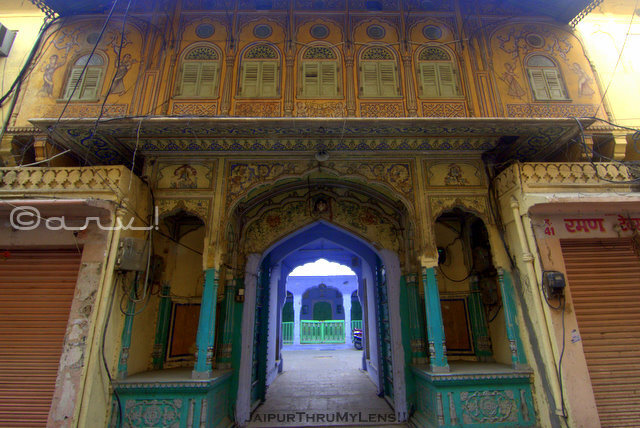
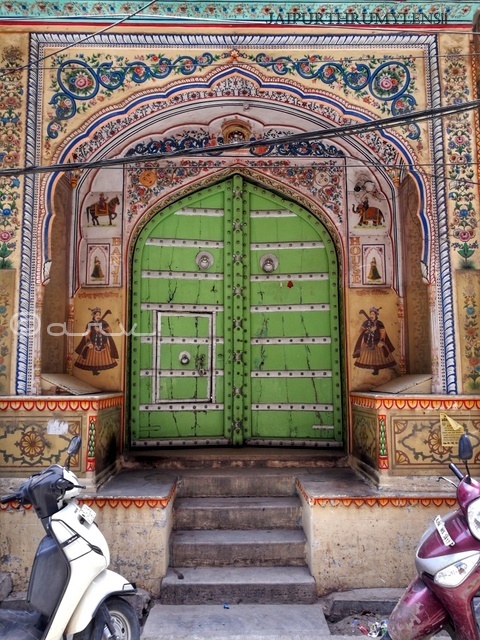
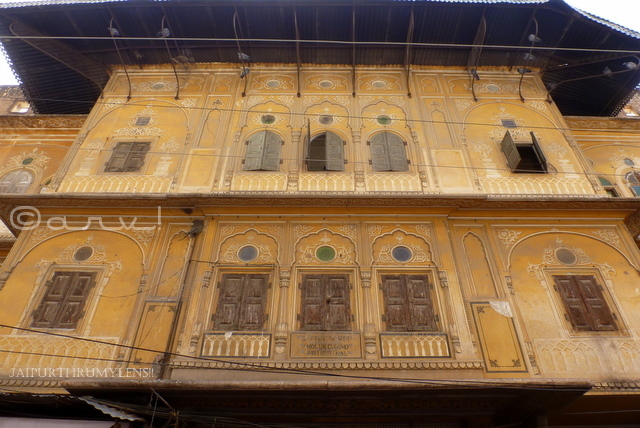
Here is a picture of a beautiful Haveli in Jaipur with painted frescoes.
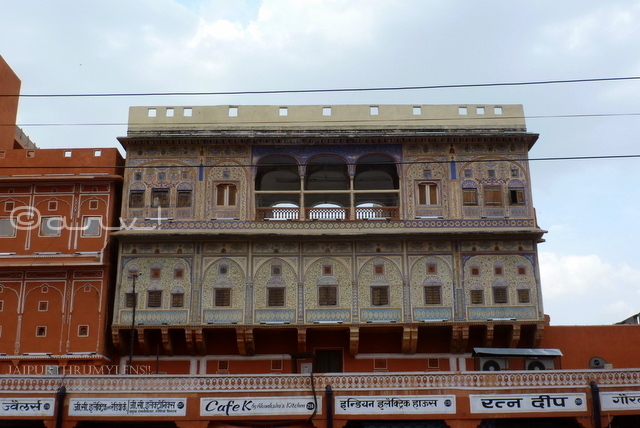
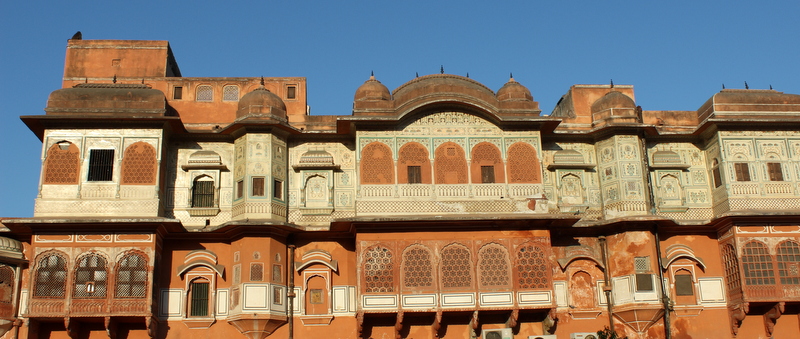
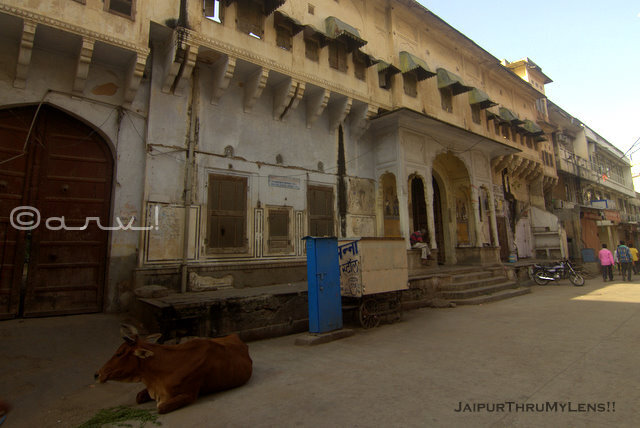
As per the planned layout of Jaipur, the city was divided into various zones. People were allocated land for building a Haveli. Here is one such Jaipur Haveli or mansion of a noble in Jaipur court.
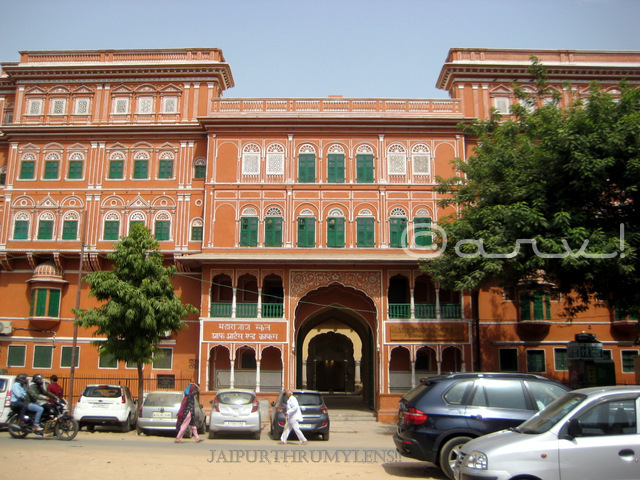
This is one of the better restored Haveli in Jaipur and has been turned into a museum called the Museum of Legacies.
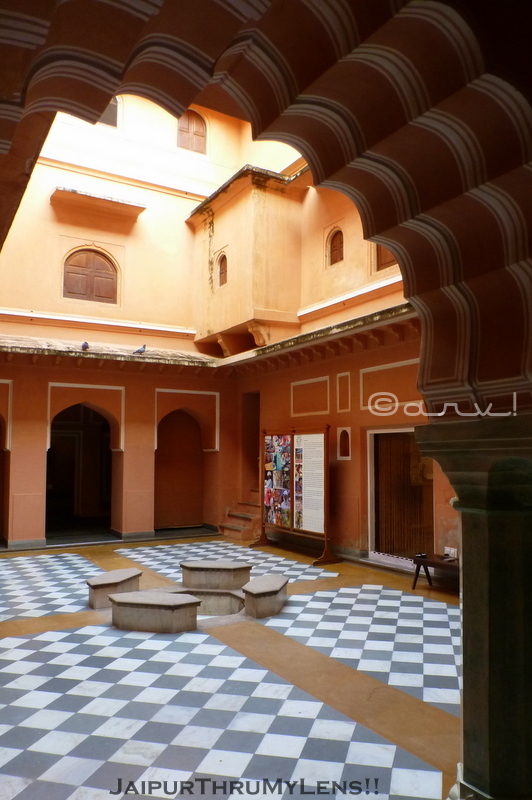
Yet another Jaipur Haveli in the historic town of Amer has been converted into a textile museum, called Anokhi Museum
What is a Haveli?
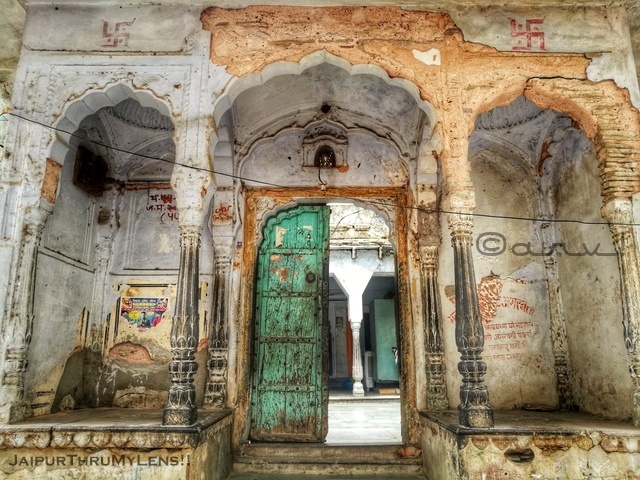
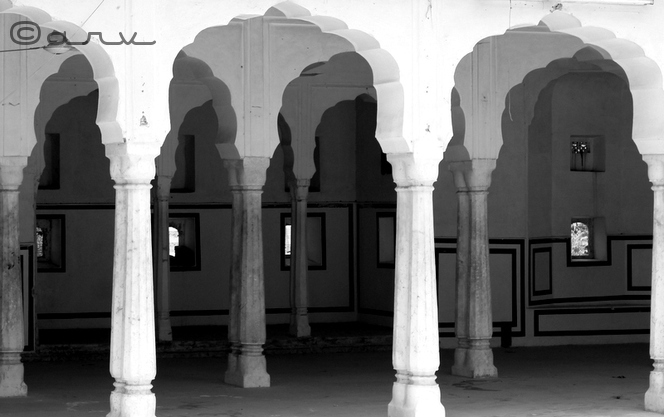
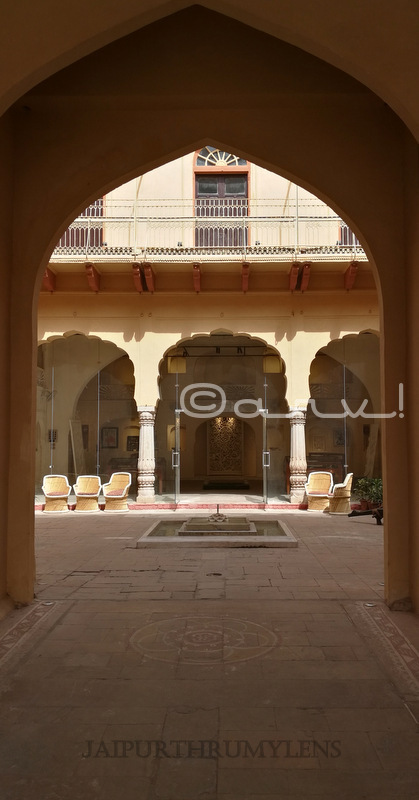
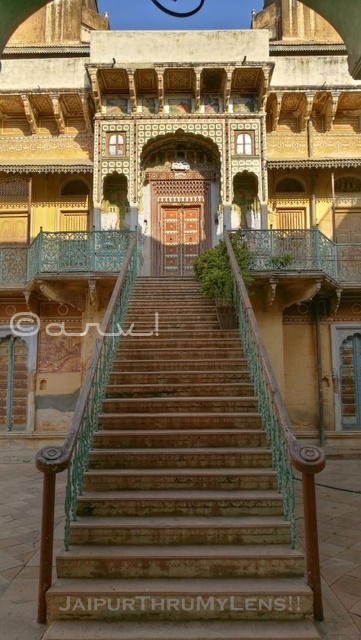
Haveli is a traditional residential mansion found in certain parts of India. Some experts think the word Haveli has an Arabic origin. It is difficult to arrive at a firm conclusion. The courtyard or Chowk of a Haveli defines its architectural feature. Here are pictures showing the entrance of Haveli opening into a courtyard. The courtyard is an enclosed space from all four sides.
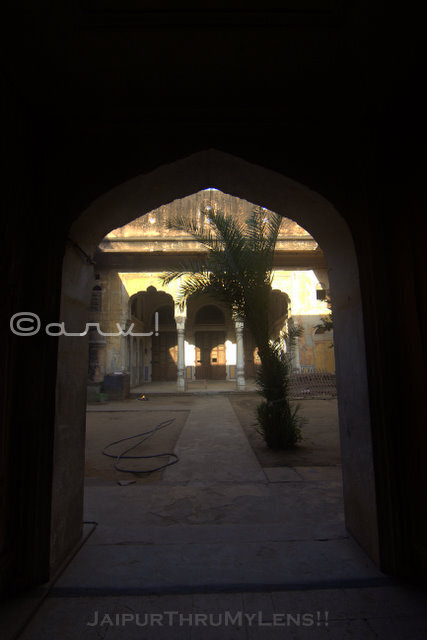
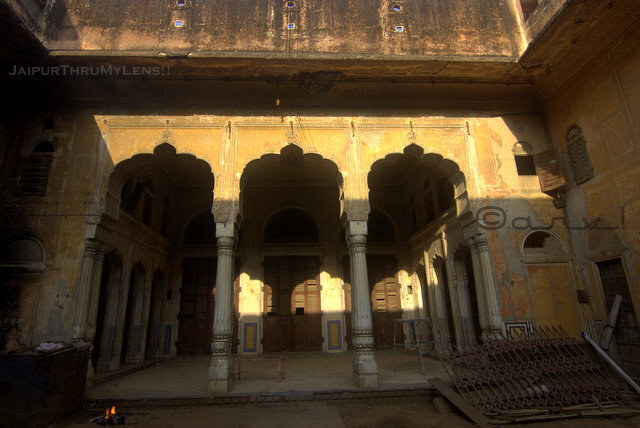
Many historians assume this kind of residential unit developed during the Mughal rule.
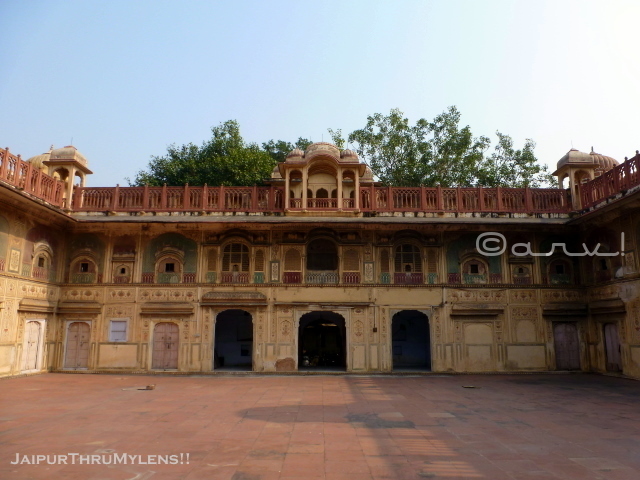
Where are Haveli found in India?
Haveli can be found across North India. Many Havelis can be found across Rajasthan, Delhi, and Punjab region. The traditional Chettinad mansions in South India also have open-to-sky courtyards, but there are many other differences. The local architectural styles are substantially influenced by climate, social structures, customs, and traditions. It is prudent to say that Haveli architecture derives its design elements on this basis.
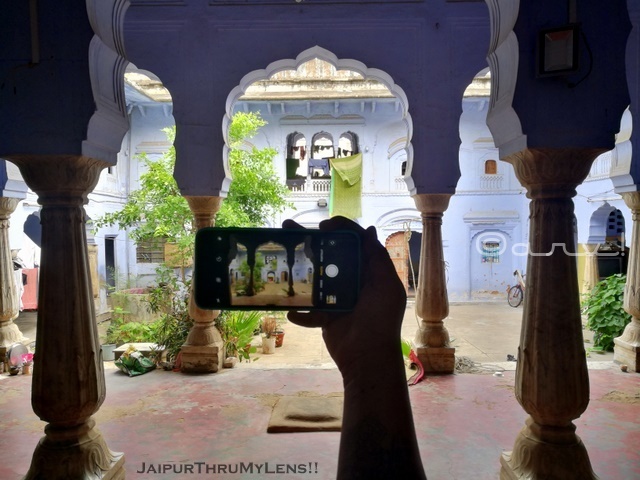
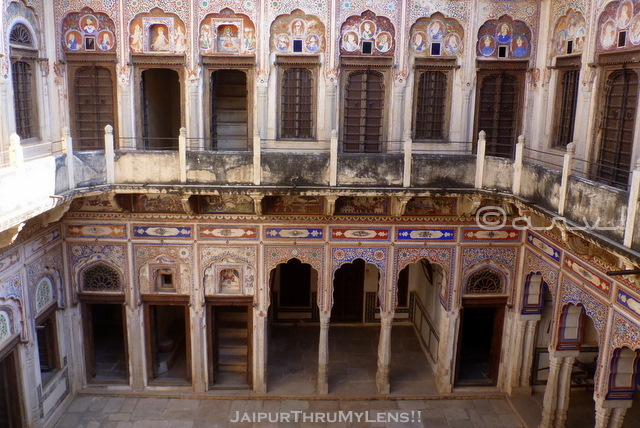
Rajasthani Haveli is famous the world over. The Haveli of the Shekhawati region is well-known for beautiful Shekhawati frescoes adorning their walls. Many such buildings have now been converted into hotels granting them a renewed lease of life. For the uninitiated, the owners of these Havelis migrated to cities like Kolkatta and Mumbai many decades ago for lusher pastures. All such mansions are dying due to neglect with owners deciding not to return. Here is a picture of a magnificent Haveli in and around the Shekhawati region in Rajasthan.
What are features of Rajasthani Haveli Architecture?
Another fascinating thing to note is that Rajasthani Haveli’s architecture varied depending on caste and social structure along with the location. The Haveli of nobles, Thikanedaar, and aristocrats varied drastically from the ones belonging to merchants/Banias, Brahmins/Rajpurohits, and commoners. The Haveli in Jaisalmer varied drastically from the ones in Jaipur, Bikaner, or Udaipur. These buildings were built depending on social customs and practices, the availability of building materials, and local climatic conditions. Usually, the Haveli were built on a raised plinth level.
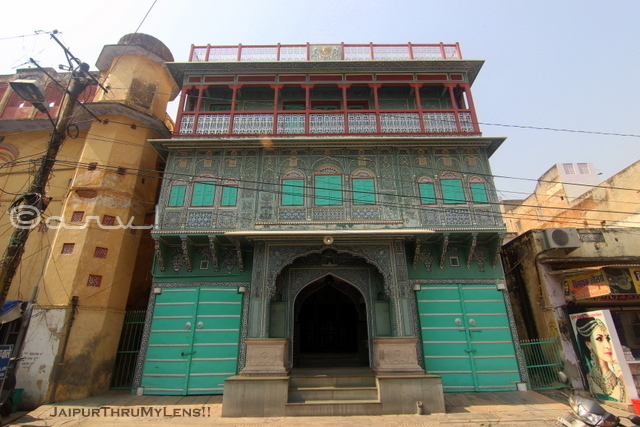
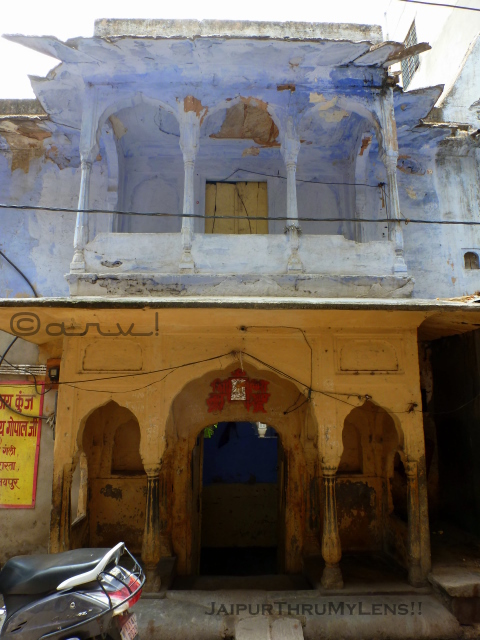
Some of the architectural features of a Haveli are:
- courtyard
- gates
- frescoes
- Jaali
- windows
- beautful facades – painted faacde like Shekhawati or carved sandstone facade in Jailselmer.
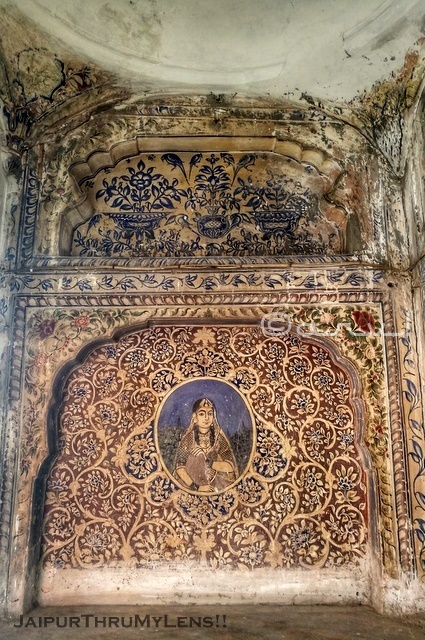
Here is another picture showing a beautiful wall fresco in Haveli in Jaipur supposedly 200 hundred years old.
What are the issues facing Haveli in Jaipur?
The Jaipur Haveli do not suffer from the problems experienced by the ones in the Shekhawati region. Only a handful of such buildings have been renovated. Listed here are a few of the reasons for the loss of Haveli Jaipur, an integral element of the Pink City’s heritage.
Losing the Haveli facade
Unfortunately, the facade of the Haveli in Jaipur is being tempered. This is happening at an extremely rapid pace. LMB Hotel in Johari Bazaar now stands tall in place of an old Jaipur Haveli. LMB Sweets is popular for its Ghevar. The building featured in below two pictures below replaced an old Haveli structure.
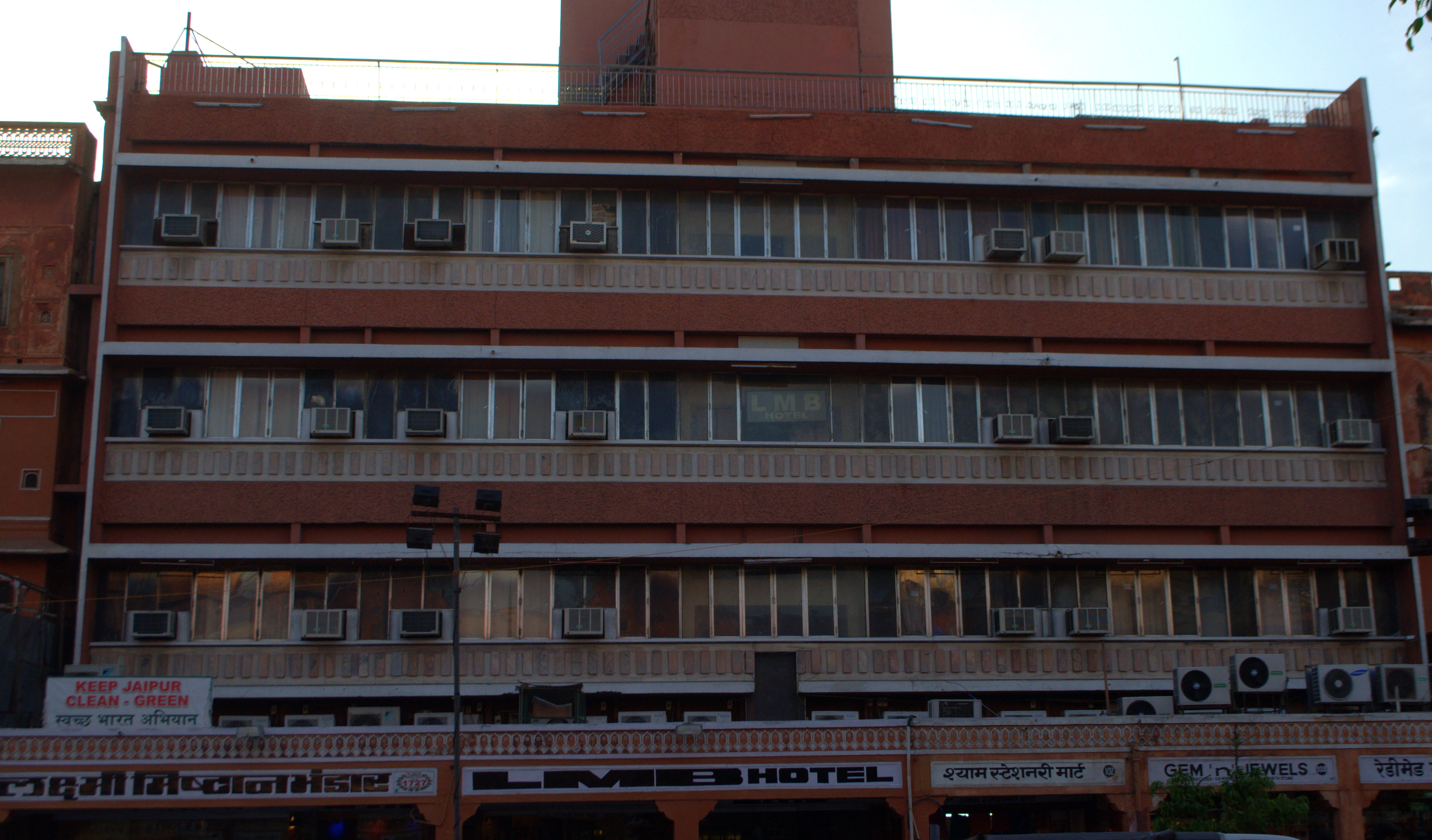
LMB Hotel underwent a restoration last year but it is still not in line with the local architectural style. The pink color is distinctly different from the terracotta pink used in the walled city area.
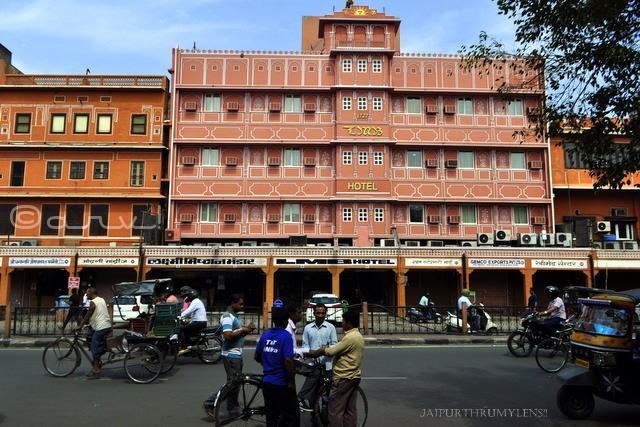
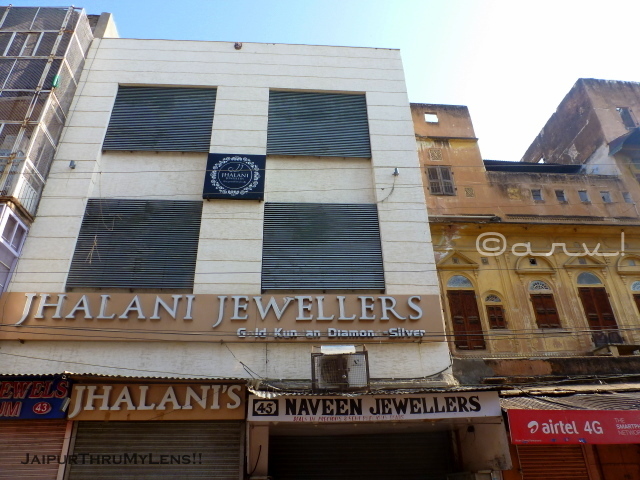
In recent times, the owners of Jaipur Haveli have redone the façade to align it with local architecture; ironically, influential people manage permission from the authorities to manipulate rules & regulations. If one were to walk past Johari Bazaar and notice the façade, it is easy to spot the changes. The old façade has given way to modern-looking buildings. It is not challenging to comprehend the reasons; money is a strong motivation! Can you spot the “black sheep” in the below picture?
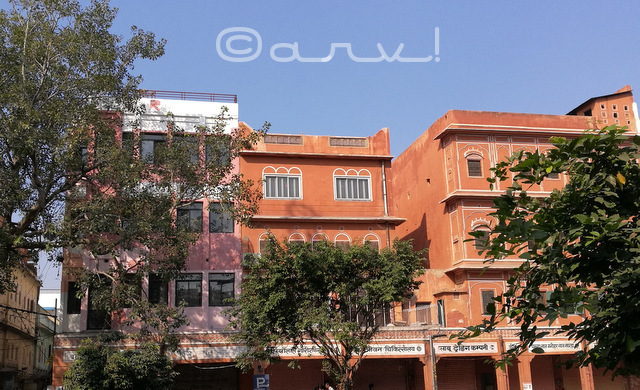
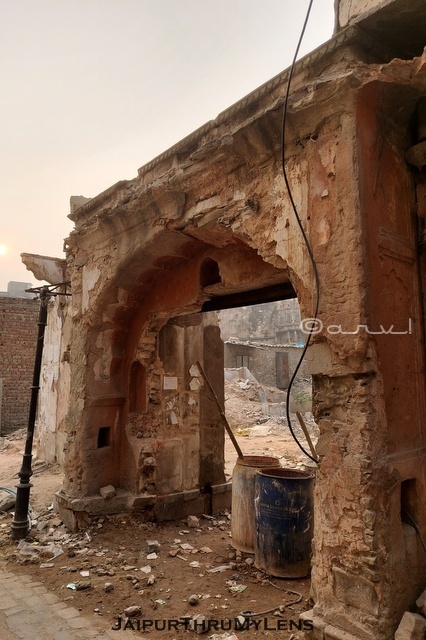
Here is a picture of one of the many Havelis that are in a bad state and need urgent attention.

Destruction of Havelis | Haveli for sale in Jaipur
Many old Jaipur Havelis are being razed down to be replaced by a modern building – commercial in nature. Despite stringent laws that do not permit the destruction of historic Haveli architecture, people discover new ways and methodolgy. Haveli in Jaipur is being sold off and the new buyers are replacing the old buildings with new buildings to be used for commercial purpose- offices and stores.
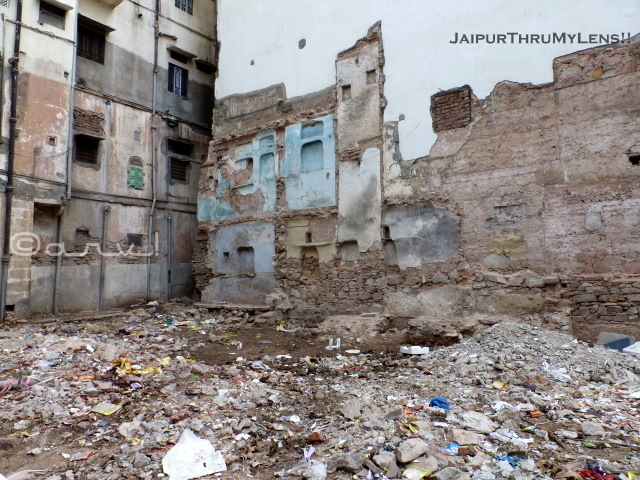
How are Havelis in Jaipur destroyed? The insiders suggest loopholes in the law to accomplish the desired output – destroy old Havelis. Many times, the façade of Haveli is left untouched while the entire structure behind it is pulled down and replaced by new construction. Here is a set of three pictures of a Jaipur Haveli showing how a charming Haveli in Jaipur was pulled down to construct a building for offices.
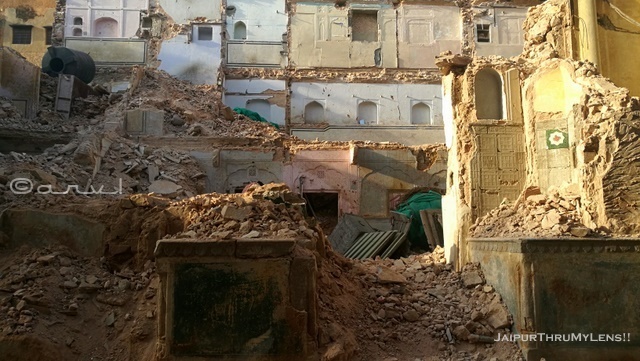
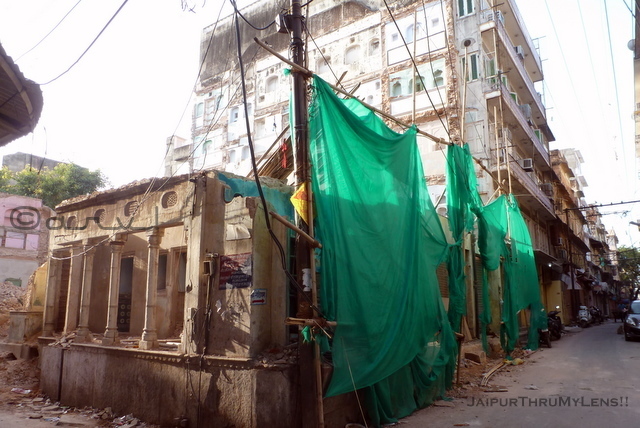
Compare the above picture with the one just below. The second picture was taken a few months later.
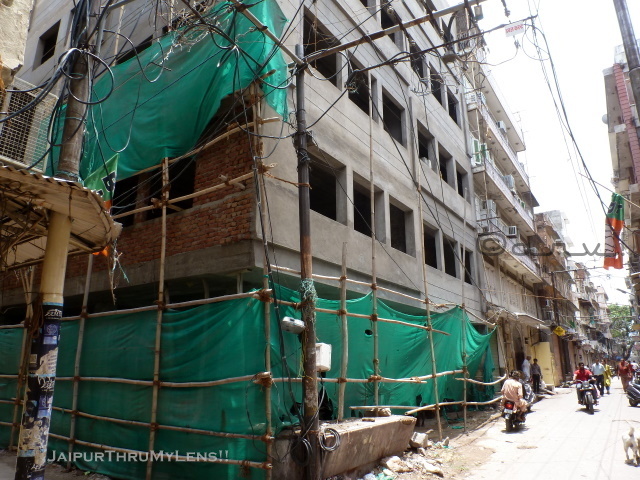
This continued even when Jaipur was awarded a UNESCO World Heritage Site. Here is one such Haveli which was destroyed even when the authorities pledged to save the remaining heritage. “Jaipur Haveli for sale” is being actively scouted by many investors because of the demand for commercial space in the walled city.
The commercial buildings replacing Haveli in Jaipur
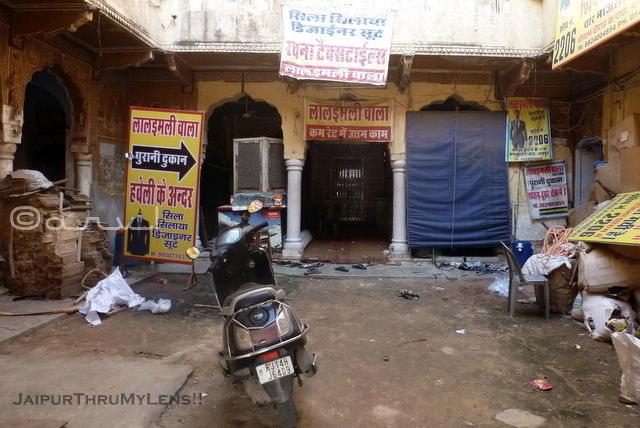
Jaipur Havelis are being replaced with a commercial complex which only compounds the problem that the walled city is facing, increased commercial activity and traffic congestion. Each additional commercial complex puts a burden on existing infrastructure. Unfortunately, none of the governments – past or present have put into thought and worked on a plan to mitigate the problem. The picture below is an eye-opener as to how the walled city area in Jaipur is witnessing a big rush toward commercial spaces.
The Pink Colour of Havelis in Jaipur
The government rule mandates a uniform color code to be used on all building facades of Jaipur Haveli on the main road. This is the approved pink color to be painted on all buildings – Terracotta pink!
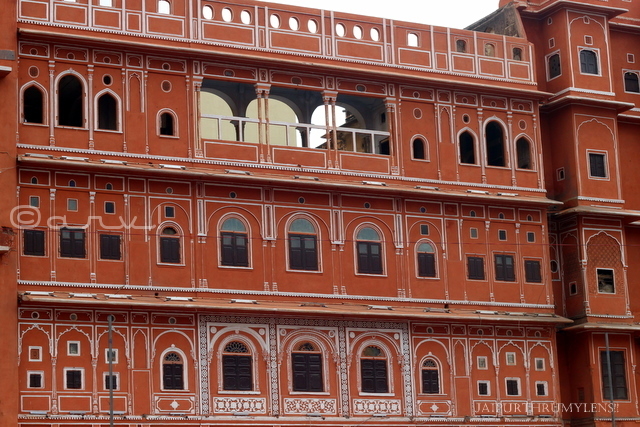
This also means the paintwork is carried out by the local authorities to ensure uniformity. Unfortunately, some people find ways to circumvent this rule. The result is an eyesore like this.
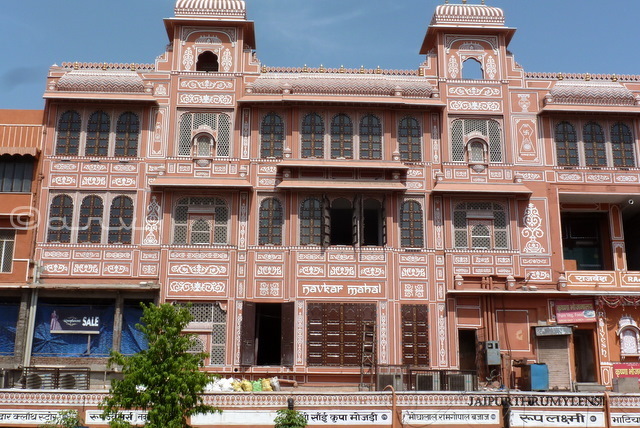
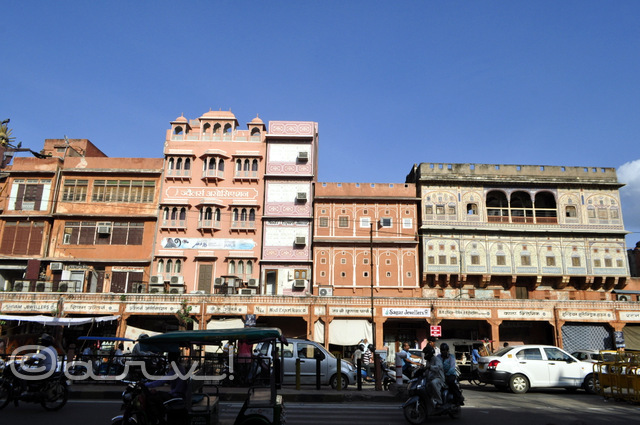
Do read Why is Jaipur pink?
Lack of Government support in maintaining & renovating Jaipur Haveli
Unlike many countries where the authorities mandate rules about renovation and then enforce them by providing assistance, we possess no such structure in Jaipur. Repairing and renovating old architecture remains an expensive affair and it does require financial and technical assistance because many building owners cannot afford the same.
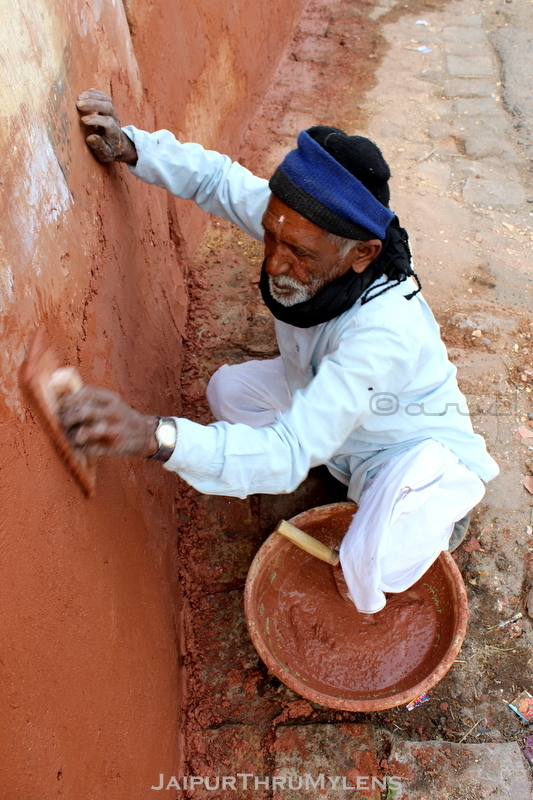
The façade of the main Bazaars receives support from the local body for repair, maintenance, and paint. Below are the pictures of the heritage conservation of the façade in the walled city area undertaken by the local authorities.
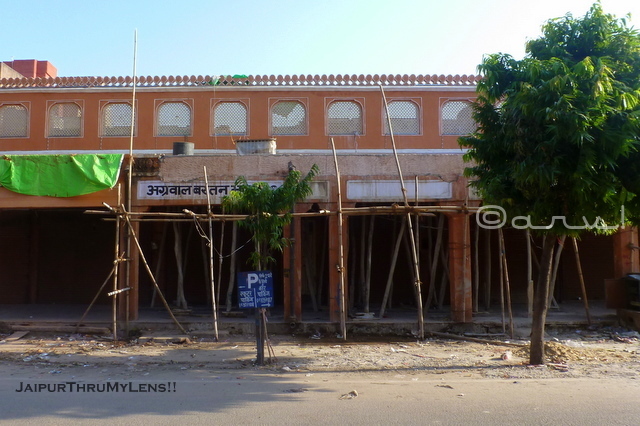
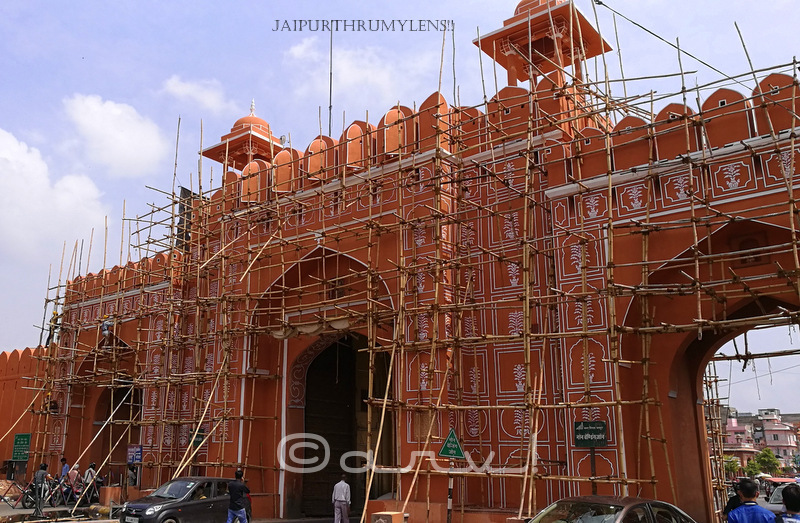
Unfortunately, the ones in the by-lane are left on their own. Most old buildings were constructed using ancient techniques – lime plaster and local stones. These days it is hard to find skilled people proficient in this technique. Thanks to globalization brick, cement, and RCC structures are ubiquitous. Using these materials in heritage buildings is often ineffective. Sadly, no one is thinking along these lines.
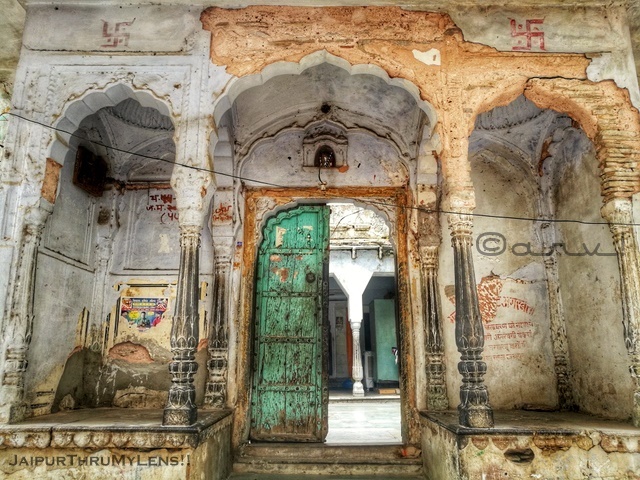
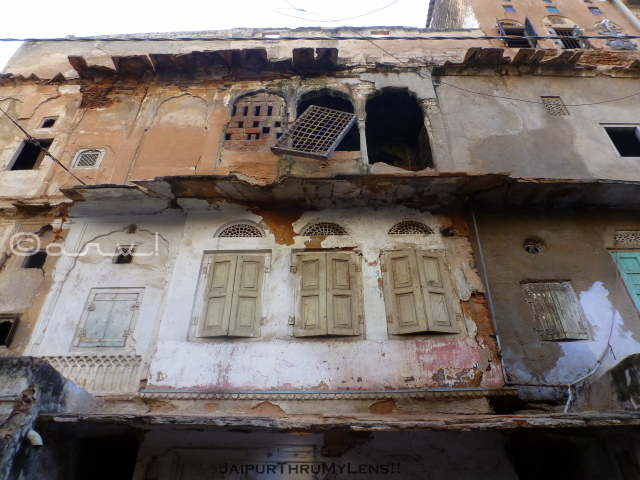
Unfortunately, the built heritage of Jaipur especially Haveli in Jaipur is being destroyed by its citizens. This loss is irreplaceable. It is this priceless architectural legacy that influences thousands of travelers to the pink city. I’m apprehensive there will be very few Havelis a few years down the line for travelers to witness and experience. We need to conserve our built heritage.
It would be pertinent to mention here the family disputes concerning ownership & division of Havelis in Jaipur & Rajasthan. The same has been discussed in detail in this post The old heritage Haveli in Jaipur.
Read the Old Heritage Haveli in Jaipur.
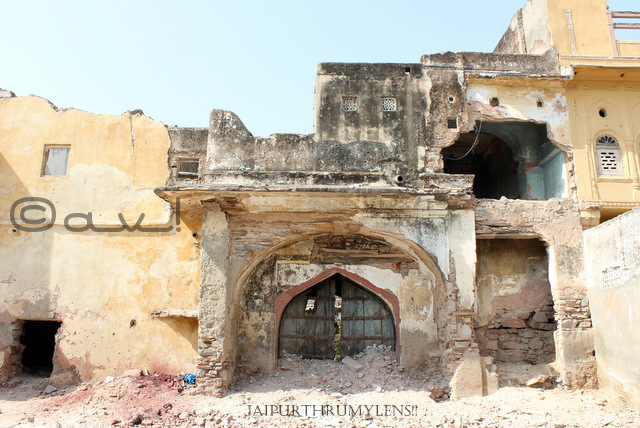
Frequently Asked Questions about Havelis in Jaipur
The following are commonly asked questions about Havelis in Jaipur.
Can you stay in a Haveli in Jaipur?
Yes, there are many Havelis in Jaipur where one stay. Some of these are Samode Haveli, The Johri, Padmaa, among the list of heritage Havelis in Jaipur.
Why does “Haveli Type Of Hotel in Jaipur” Attract Travellers?
Haveli-type hotels in Jaipur are becoming popular among travelers. Staying in an old Haveli is considered to be a travel experience.
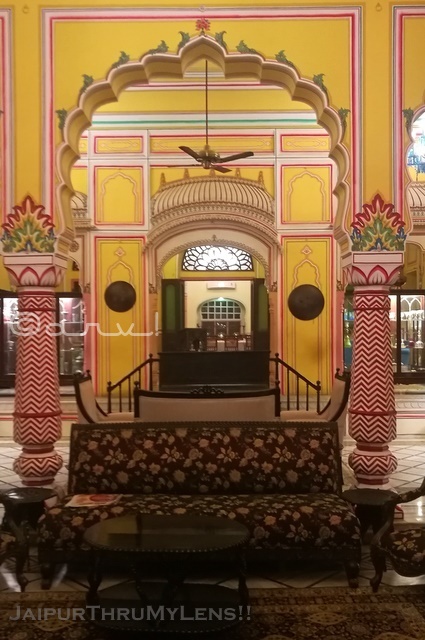
Here is an authentic Jaipur Haveli in Johari Bazar which is worth staying in. It is tucked in a small lane of the busy Johari Bazar.
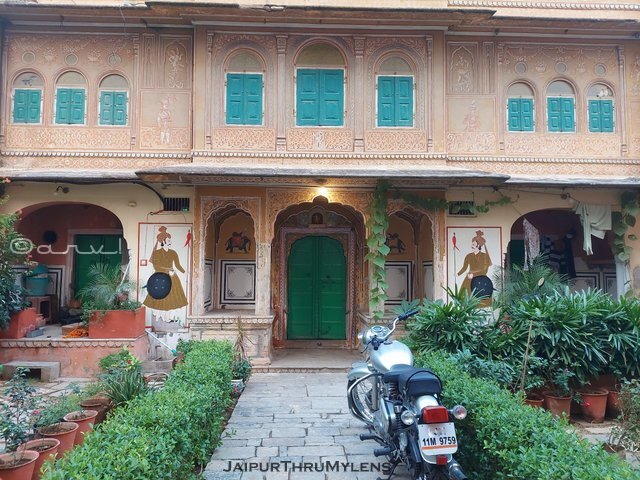
A Haveli was recently converted into a heritage hotel called The Johari in Johari Bazaar. The history of the Johri Haveli is that it was popular by the name of Lal Haveli and owned by the Kasliwal family. I wish it was more authentic; the pastel colors in the renovated or restored areas seem to have been inspired by the Spanish mansions on the Mediterranean coast.
I hope many more traditional mansions in the walled city are converted into either BNB or hotels so that travelers can have an authentic experience. Unfortunately, owing to market dynamics these are turning into office or retail spaces.
How to experience and witness a Haveli in Jaipur?
There are two ways to experience Havelis in Jaipur.
- stay in Jaipur Haveli Hotel.
- with a heritage walking tour.
Stay in Jaipur Haveli
A stay in a traditional Haveli-type hotel in Jaipur represents a remarkable cultural experience allowing travellers an immersive encounter. Unfortunately, there are very few authentic Haveli hotels to stay in Jaipur open for travelers like Samode Haveli and Alsisar Haveli. Many modern hotels replicate traditional Heritage Haveli in Jaipur and fool travelers. You can find these outside the walled city area, especially in Bani Park.
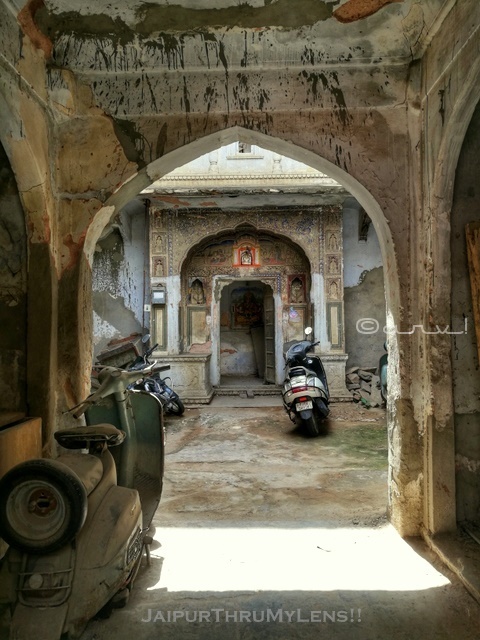
Experience a Haveli with a heritage walking tour in Jaipur
One of the best way to experience a Haveli in Jaipur is with a heritage walk in Jaipur. I have written about one such experience in this write-up Heritage Walking Tour In Jaipur. Also read Self-Guided Walking Tour In Jaipur.
Which are Top Havelis to visit in Jaipur?
The following are some of the Havelis you can visit in Jaipur.
- Anokhi Museum
- Museum of Legacies
- Samode Haveli
- The Johri
- Padmaa
Some of these are easily accessible to public.
Are there frescoes in Jaipur Havelis? Where can one find frescoes in Haveli?
There are just a few Havelis with beautiful frescoe work, most of these are privately owned residences. There are a few Havelis where one can experience them.
What is the difference between a Haveli and a palace?
The differene between a Haveli and a palace is of ownership and scale. Palace is generally owned by aristocrats or rulers, Havelis is a unit owned by a commoner, noble, merchants, etc. The size of a palace is much bigger than a Haveli. For example, the City Palace is much bigger than any Haveli in Jaipur. There are many common architectural features of a Haveli and a palace – courtyard, gates, Jharokhas etc.
Which is the oldest Haveli in Jaipur?
The answer to the question, which is the oldest Haveli in Jaipur is difficult to answer. In one of the social media posts, a very influential authority mentioned a Haveli in Purani Basti to be the oldest Haveli in Jaipur. A big debate followed in the comment section. A few historian opine a Haveli in Tripolia Bazaar to be the oldest. To truly understand which is the oldest haveli in Jaipur, probably, we need access to land records or letters giving permission by Jaipur court soon after the founding of the city.
How many Havelis are in Jaipur’s walled city?
The answer to this question also is very difficult to answer. There is no authentic source that can list number of Havelis in Jaipur that were present at the time of independence or in the 1940s. The reason being the definition of what constitute a Haveli is open for interpretation. If I assume that every house that has a courtyard, the number of Havelis in Jaipur will be in thousands. If Haveli includes only a certain size, it can be a few hundreds. Some estimate claim the number of Havelis in Jaipur were close to 1200, others sources claim it to be around 1900-2000. In my opnion, these figures are unreliable. Some of the organisations that have done a lot of work for mapping of havelis in Jaipur include INTACH and Dronah.
Based on the fact that a large number of Havelis have been destroyed, people who are working in heritage conservation and preservation as well as other experts believe the number of Havelis in Jaipur will be around 600 on the lower side and 800 on the higher side.
When was Jaipur given UNESCO World Heritage Site status?
Jaipur was accorded UNESCO World Heritage Site status in 2019 because it fulfilled 3 out of 6 conditions for cultural sites; there are four more criterion but for natural site, making it a total of ten. It fulfilled criteion number II, IV, and VI.
To qualify to be included in the UNESCO World Heritage, the site has to have any or some of these parameters. (The tick mark indicates the ones Jaipur fulfilled.)
- To represent a masterpiece of human creative genius;
- ✓ To exhibit an important interchange of human values, over a span of time or within a cultural area of the world, on developments in architecture or technology, monumental arts, town-planning or landscape design;
- To bear a unique or at least exceptional testimony to a cultural tradition or to a civilization which is living or which has disappeared;
- ✓ To be an outstanding example of a type of building, architectural or technological ensemble or landscape which illustrates (a) significant stage(s) in human history;
- To be an outstanding example of a traditional human settlement, land-use, or sea-use which is representative of a culture (or cultures), or human interaction with the environment especially when it has become vulnerable under the impact of irreversible change;
- ✓ To be directly or tangibly associated with events or living traditions, with ideas, or with beliefs, with artistic and literary works of outstanding universal significance. (The Committee considers that this criterion should preferably be used in conjunction with other criteria);
- To contain superlative natural phenomena or areas of exceptional natural beauty and aesthetic importance;
- To be outstanding examples representing major stages of earth’s history, including the record of life, significant on-going geological processes in the development of landforms, or significant geomorphic or physiographic features;
- To be outstanding examples representing significant on-going ecological and biological processes in the evolution and development of terrestrial, fresh water, coastal and marine ecosystems and communities of plants and animals;
- To contain the most important and significant natural habitats for in-situ conservation of biological diversity, including those containing threatened species of outstanding universal value from the point of view of science or conservation.
If you want to understand more about Jaipur’s eligibility criterion, read Jaipur City by UNESCO. My Jaipur walking tour includes a more thorough examination of these elements, you can read more about it in Jaipur heritage walk
Is Jaipur’s UNESCO Status At Risk? Why Jaipur Walled City Faces Scrutiny by UNESCO team?
When UNESCO accorded Jaipur world heritage site status, it also mentioned in its submission the following:
Issues include unauthorised new constructions and additions, some affecting parts of the city wall, new construction affecting the upper facades of some bazaars, communication towers, and the development of open spaces for carparks.
The government has not implemented a plan to ensure conservation of its heritage buildings and to maintain and preserve the old city. These are major reasons why Jaipur walled city is at risk of losing its heritage site status:
- · Encroachment and illegal construction in the old city
- · Loss of historic buildings or havelis
- · Unregulated development projects by the authorities
- · Absence of governance and no plan in place for conservation
UNESCO will review this status in December 2026, if it finds serious gaps and lack of action by the authorities, Jaipur Walled City might lose its heritage status.
Havelis are a very big part of this scrutiny. Therefore, government not being able to stop destruction of Havelis might lead to loss of this status.
Follow Jaipurthrumylens on Facebook Twitter Instagram
Have you ever stayed in a traditional Haveli in Jaipur or elsewhere in Rajasthan? Do you think these Havelis in Rajasthan are an important part of our built and cultural heritage? I would love to hear your thoughts on the same.
Discover more from JaipurThruMyLens
Subscribe to get the latest posts sent to your email.

 JaipurThruMyLens
Its really sad to see old legacies tampered with, renovated or razed to the ground to suit modern demands!!
Rajasthan is full of such examples I’m sure.
LikeLiked by 3 people
Radhika, there are two sides of a coin. I do feel that heritage should not be destroyed. There are better ways to accomodate the need for commercial spaces. Isn’t it so?
LikeLike
Of course! But in India we are not proud of our heritage unfortunately. So the priorities are what they are right now!
LikeLiked by 1 person
True.
LikeLike
Oh my gosh, how can anyone tear down something so beautiful. The architecture of these buildings is stunning!! As always, your pictures are amazing, Arv!!
LikeLiked by 2 people
Thanks, Lisa. While we may find these building beautiful, the owners consider them out of sync with the current times. Let’s be honest, money is too tempting! I’m sure you will love staying in one of these mansions converted hotel.
LikeLike
I’m sure I will, too! 🙂
LikeLiked by 1 person
😊
LikeLiked by 1 person
Hey ARV! Nice clicks as always. Visited your blog after long. Good to see you mesmerizing others through your clicks 🙂
LikeLiked by 2 people
Thanks, Abhay. I’m glad you enjoyed this post. How have you been?
LikeLiked by 1 person
It was hectic for me 🙂
LikeLike
Great post Arv. We love the old Havellis in Rajasthan. We stayed in 3 although the one in Jaipur looked more like a traditional mansion than an ornate havelli, it was a beautiful building with elegant details in the ceiling, mouldings, floors etc. Our favourite havelli/hotel was in Udaipur.
LikeLiked by 2 people
The Havelis in Jaipur are less ornate than the ones in say Shekhawati or Jaisalmer region but they have their own charm. Happy to know you have stayed in Havles during your trip to Rajasthan.
LikeLike
My hope is that with a renewed interest in the havelis as a cultural heritage many of these magnificent buildings will be spared from destruction. Thank you, Arv!, for another outstanding and interesting article on Jaipur!
LikeLiked by 2 people
Appreciate your good hope and wish. I’m glad you found this interesting. 🙂
LikeLiked by 1 person
This is so sad.
LikeLiked by 1 person
True. Have you ever explored or witnessed any Haveli?
LikeLike
I have. When I went to Bhuj and also Varanasi. I love the mysterious albeit glamorous vibes they exude.
LikeLiked by 1 person
Happy to hear that you have witnessed the beauty of our built heritage, Asha.
LikeLike
That’s quite a collection out there. And very elaborately detailed too. In my mind, I have always associated Havelis with some kind of an enigma. A certain amount of mysteriousness seems to be always associated with them. But sad to know that so many of them are not cared for, some completely changed, some even razed mercilessly. I do hope the ones that are taken care of do stand the test of time and havelis don’t just become a word in text books.
LikeLiked by 1 person
Neel I’m curious as to why you find Havelis mysterious? I suppose you must have seen a few in Gujarat too. I guess heritage in our country is never a priority. Have you ever stayed in any Haveli? Thanks for sharing your thoughts, Neelanjana.
LikeLiked by 1 person
The mysterious part might be associated with folklores and also thanks to movies and yesteryear TV serials. Yes, I have seen a couple in Gujarat and they were lovely. In fact we had literally gone chasing a few havelis. I have never stayed in one, but it’s in my wishlist for sure 🙂
LikeLiked by 1 person
I guess one of the most prominent thriller movies from Bollywood featuring a Haveli from Rajasthan was Bhulbhulaiya. I’m yet to see a Haveli in Gujrat but I suppose it will be similar to the one in Rajasthan because both states share many similarities in climate and culture. I hope you get to stay in Haveli someday. Thanks for sharing, Neelanjana.
LikeLike
What a fabulous post! I love the havelis and hopefully, one day soon, the government and developers realise these buildings are assets not eyesores! Thanks, Mel
LikeLiked by 1 person
Thanks Mel for offering your viewpoint on this issue. My only fear is that it might be too late by then. It is sad that people in this country feel anything old is all about past and need to be done away with. Probably, a lot needs to change when it comes to the mindset.
LikeLiked by 1 person
That is sad and also bad for tourism because that is what we love – you history and culture represented by the beautiful old buildings. Fingers crossed they come to their senses quick!
LikeLiked by 1 person
Absolutely. I hope so too. 😊
LikeLike
I so enjoy your posts as it allows me to continue my fascination with all that India has to offer.
LikeLiked by 1 person
I am happy to hear that you enjoy my posts. Is there anything specific that you would love to read more about?
LikeLike
Arv, thank you for your length post about Havelis in Jaipur, it indeed breaks my heart that the restoration work is not going the right direction and I wonder why locals are not so much into preserving those old buildings, they present the history and culture of a certain area, when architecture was most beautiful and artistic. Well I see it comes down that money rules, yet Harvelis are part of the charm of Jaipur as of the entire Rajasthan and the investment of restoring them to keep their historic look would be profiting for tourisms. I have stayed in one Haveli in Rajasthan, but would have to look my travel journal what place that was, the other one I had stayed was in Ahemadabad, I know it’s Rajasthan. Thank you again for your share.
LikeLiked by 1 person
Thanks Cornelia for sharing your thoughts. Money is certainly one big factor for razing down Havelis. A lot has to do with mindset as well. The sensitivity towards our heritage is missing. People are not aware that preserving our heritage can lead to revenues through tourism. Unfortunately, the efforts from the government are missing. Without support and guidelines from authorities, it is an uphill task. We need to learn from other countries as to how heritage buildings can be preserved and utilize them for promotion of tourism. I would love to hear more about your stay in Haveli in Rajasthan, Cornelia.
LikeLike
Thank you Arv, for responding to my long comment, I can’t agree more with you. I just can’t fathom that some of the treasures of Havelis might not be restored in their historic means or totally demolished.. Have a great weekend Arv.
LikeLiked by 1 person
Thanks for adding and clarifying, Cornelia. It is a sad scenario.
LikeLiked by 1 person
Great coverage of the havelis and the sorry plight of many of them. It’s sad to see them neglected and worse demolished. But i guess maintaining them would be quite tough physically and financially.
LikeLiked by 1 person
It is. That is a reason why I mentioned that involvement of state is important. But wouldn’t it be sad to see them vanish?
I’m sure you must have seen many of these during your stay in Jodhpur.
LikeLike
Yes, I have. And I truly believe they should be protected and maintained. Architecture is a mirror of past civilizations, their culture and traditions.
LikeLike
Arv, this is such a sad plight of this once so beautiful old city rich and renowned for its Havelis and heritage buildings. For commoners like us, it is just like helplessly watching this mad rush for consumerism leaving behind the ancient culture and heritage, it is like leaving behind money but not the riches of the heritage for the future generation.
LikeLiked by 1 person
Sarmistha, you are right. It reminds me of a saying I heard during my growing up years of a man sitting on a coal mine not realizing the presence of diamonds. He would curse over his poverty. This is a similar situation. If these Havelis are restored and converted into hotels or museums, they can create a very good revenue stream. This is an unfortunate scenario. I guess you must have seen a couple of Havelis in Rajasthan or elsewhere.
LikeLiked by 1 person
Yes Arv, I have seen A few in Rajasthan and also other places and they are a true treasure.
LikeLiked by 1 person
You are lucky, Sarmistha
LikeLike
I understand and admire your concern about heritage arv but who cares about it these days! Most of the people who are in charge ( the authorities and the officials) don’t understand the glory or seem to be insensitive to old structures, some of which are dilapidated. Probably their restoration would require more effort than reconstruction and make the land more useful. I have seen many abandoned and locked havelis in Shekawat area, crying for help. Slowly they would meet their end and the land would be acquired by the authorities.
In Jaisalmer, I have seen havelis, which are spooky, dark and dirty from inside yet open to tourists! What is the use of such places?
Having said that, I admire the efforts of private hotel industry, which has taken up old Neemrana forts and many such places that could be maintained through tourism. Heritage would never die in their hands. Even the ruins are majestic!
LikeLiked by 1 person
Thanks for sharing your thoughts and experiences. I agree no one cares for these old structures. And that’s exactly my point. Many European countries have been very successful in converting these old structures in to museums and inns. Just look at small towns like Bruges and Vernazza. These are so many such towns. While I agree that an enormous amount is required but then the authorities do get whooping amounts as a grant from either center or institution like ADB. The govt machinery wastes this money on insignificant things and it’s siphoned off. There is lack of understanding and direction. While funds is a limitation but not in entirety when it comes to government.
I too have seen some of the Havelis in Jaisalmer. On the positive side at least we have such structures to see. If all the Havelis of Shekhawati were to vanish in entirety how would we know about their existence? There are many Havelis which have been converted into a museum or hotels. While Indians may not be gungho about it, it does excite travellers from other parts of the world. Thanks for sharing your thoughts on this issue. 😊
LikeLiked by 1 person
Great post Arv, had never heard of these amazingly beautiful structures. Sad they are disappearing. You B&W image was quite moving – appreciate your sharing these
LikeLiked by 2 people
Tina, I hope you get to travel and visit Jaipur someday. I’m sure this will be a great subject for an ace photographer like you. I’m happy you liked this post.
LikeLike
Your blog definitely impressed me! The ancient architecture is amazing! Everything is so bright and beautiful. Thanks for sharing!
LikeLike
Thanks. I’m glad it impressed you, Tori
LikeLike
Your posts are always so beautiful, thank you for sharing x x
LikeLiked by 1 person
Thanks, Claire. I’m glad you loved them all. 🙂
LikeLike
Arv, I guess money is the biggest challenge to keep havelis in their original form for a few owners. I believe if government could help in restoration,then it would be an encouraging effort for all owners.Though selling the place and constructing a new commercial building gets a lot of money.
LikeLiked by 1 person
It certainly is. Without an agency to help, it is going to be impossible. Have you lived in an old mansion during your years in Jaipur?
LikeLiked by 1 person
Not in Jaipur but in Chomu while teaching in Pareek College. It was a kind of something between haveli and mansion. Divided between 7 siblings and only one family was staying there. So to avoid daily hectic transportation I was staying there in a room which was not a room but a huge hall. One neighbouring family was very nice, so managed three years there!!!
LikeLiked by 1 person
Thanks for sharing your experience. It are experiences like these that we never forget. Even towns like Chomu have changed completely over the last few years.
LikeLiked by 1 person
Is it !! I hope change has brought some better roads for this town.
LikeLiked by 1 person
Not much to complain here. 🙂
LikeLiked by 1 person
That’s good.
LikeLike
They have done the same thing in London. Here in Boulder, they want to save an awful and cheap 1950’s ranch house neighborhood. If you saw them, you would laugh!
Love the photos, but the ads, not so much!
LikeLiked by 1 person
Thanks for sharing experience from your part of the world. Have many old buildings in London been razed?
Ads? I guess that’s the perks of using WP. I have’t installed any at my end.
LikeLike
Yes, centuries old buildings stand next modern monstrosities.
You don’t see the ads? Check out your blog after searching for it in Google.
LikeLiked by 1 person
Thanks. Those ads are because of wordpress. Thanks for pointing it out, Susie.
LikeLiked by 1 person
Very nice pictures! Thanks for sharing!
LikeLiked by 2 people
I’m glad you liked it.
LikeLike
This is a fabulous read Arvind. Truly gives us an overview of not just havelis but the root of the problem. Commercialisation and urbanisation are making the most impact and we can still preserve as much as we can, by converting them into hotels for better upkeep.
Didnt know about the Dhundhadi architecture! Thanks for sharing 🙂
LikeLiked by 1 person
I’m glad you found this useful, Divsi. The pressures of commercialisation are quite strong and this is creating an adverse situation for the built-heritage. There many Havelis elsewhere in Rajasthan which have been converted into hotels and are generating a good revenue stream. Not many people have heard this term and it is not used much which explains why you have’t heard about it. 🙂
Thanks for sharing your thoughts.
LikeLike