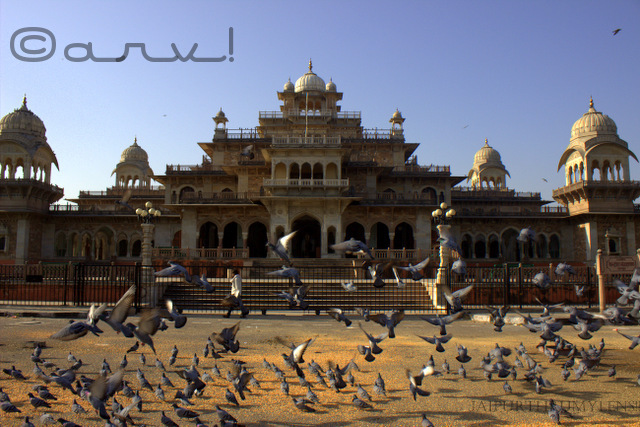
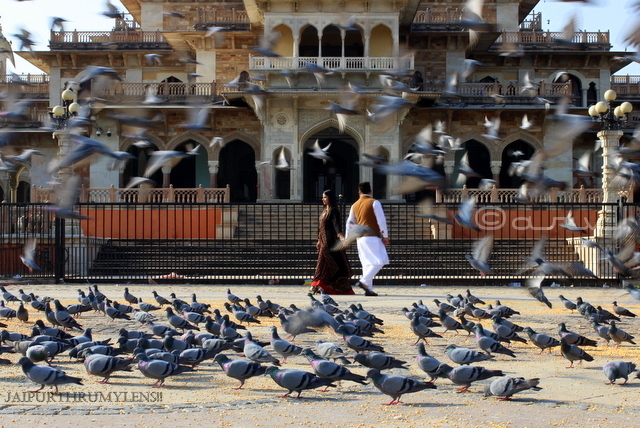
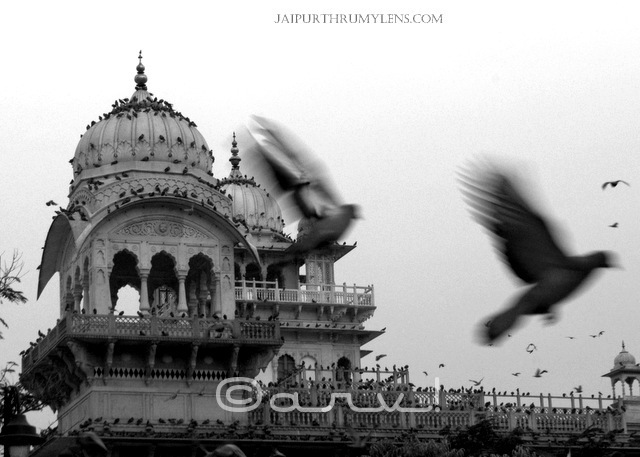
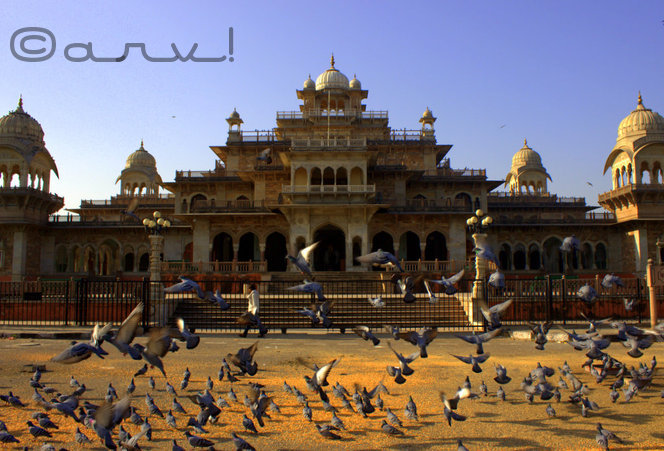
I am a big advocate for travelers to visit the Albert Hall Museum in Jaipur for many reasons. It is not only one of the most popular tourist attractions in Jaipur but also a sought after pre-wedding photoshoot places in Jaipur. Probably, this is the only Jaipur monument of which I have many photos. No matter what time of the day, the building looks impressive. Albert Hall is a state museum in Jaipur. But most visitors and couples who choose Albert Hall Museum as their backdrop for pictures have little information about its unique architecture and history. It is one of the most important buildings of Indo-Saracenic architecture in India which was popular in the 19th and early 20th century. Architectural styles one finds in the Albert Hall Museum are Mughal, Rajput, and Gothic. A few other examples of Indo-Saracenic architecture are Chhatrapati Shivaji Terminus Mumbai, Laxmi Niwas Palace Baroda, Lalgarh and Laxmi Niwas Palace Bikaner, to name a few. The construction of the Albert Hall Museum started under the supervision of Samuel Swinton Jacob, head of Jaipur Public Works Department. In this Albert Hall Museum blog I have shared pictures of how the buildings look inside and what its interiors exhibit.
History of Albert Hall Museum
Prince Edward Albert laid the foundation stone of the Albert Hall Museum during a visit to Jaipur in 1876. He later became King of the United Kingdom and British Dominions in 1901; by this, he also became Emperor of India. Initially, the building was not intended for a museum. There are conflicting opinions about its purpose. Some believe it was meant to be a town hall. The foundation of the building was laid during the reign of Maharaja Sawai Ram Singh; however, the building was completed under the reign of Maharaja Sawai Madho Singh II. It was during the rule of the latter that the building was put to use as a museum. Albert Hall Museum was formally opened as a museum on 21st February 1887. Thomas H. Hendley was the curator of the Albert Hall Museum. Interestingly, Thomas H. Hendley was a surgeon. Get to know more about Sawai Ram Singh II in this blog– Photography by Sawai Ram Singh II
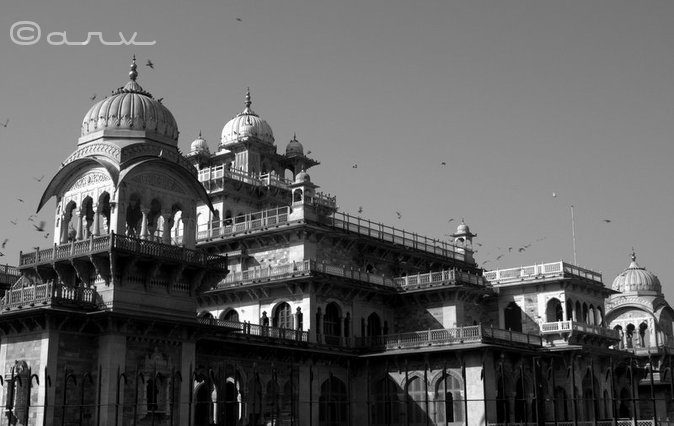
Why is the Albert Hall Museum a unique museum in India?
Exhibits & Detailing
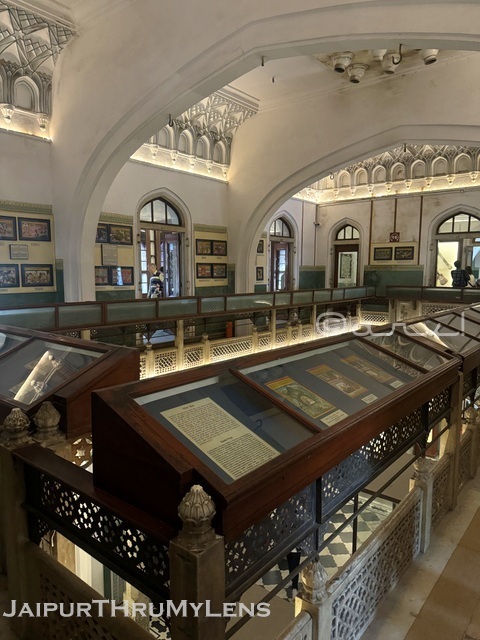
There are many interesting exhibits in the museum & things in the Albert Hall Museum. But one of the most interesting things about the museum is the architecture and detailing of the museum building. Some are listed here on this blog itself, but this is not a complete list. I have listed a few galleries of this state museum. Here is a picture of one of the galleries from the Albert Hall Museum.
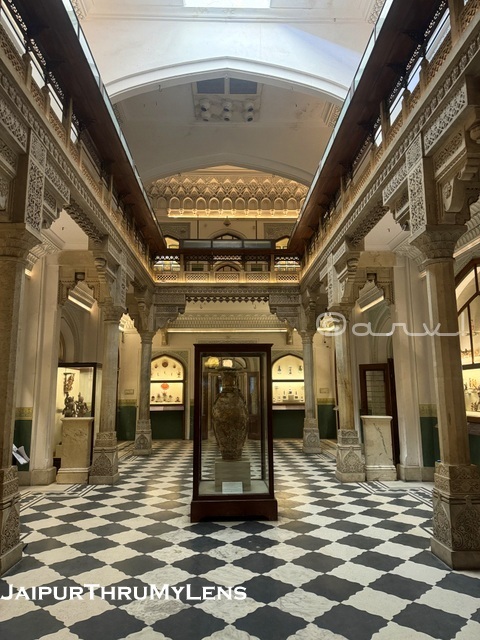
Interested in Jaipur Museums? Read about these museums in Jaipur – Museum of Legacies, Jaipur City Palace Museum, Anokhi Museum of Hand Block Printing, and Choti Chaupar Museum.
Indo-Saracenic Architecture
Indo-Saracenic architecture is a distinctive revivalist style that emerged in colonial British India during the late 19th and early 20th centuries. Sometimes termed Indo-Gothic or Neo-Mughal, it represents a remarkable fusion of indigenous Indian and Islamic architectural elements with European styles, primarily British Gothic and Neo-Classical.
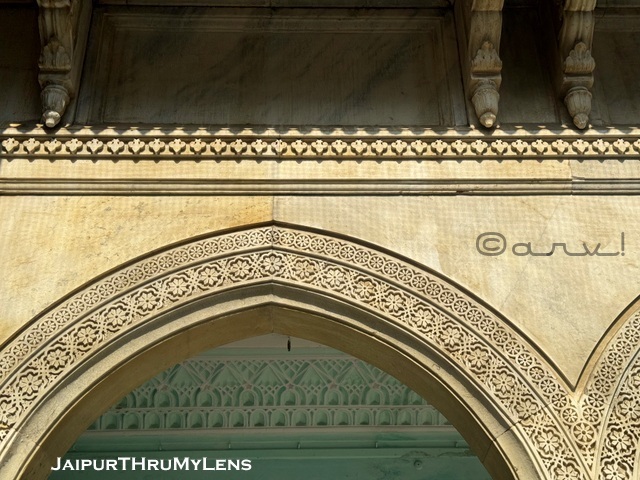
The style quickly spread across the Indian subcontinent in grand public works, such as the UNESCO World Heritage-listed Chhatrapati Shivaji Maharaj Terminus in Mumbai and the imposing Madras High Court. It was adopted by various Princely rulers in states like Jaipur, Bikaner, and Baroda; they commissioned this style for their palaces and large official buildings. Check out this post with a picture of Gajner Palace, built in Rajput style with influences from Indo-Sarascenic architecture- Best weekend getaways from Jaipur
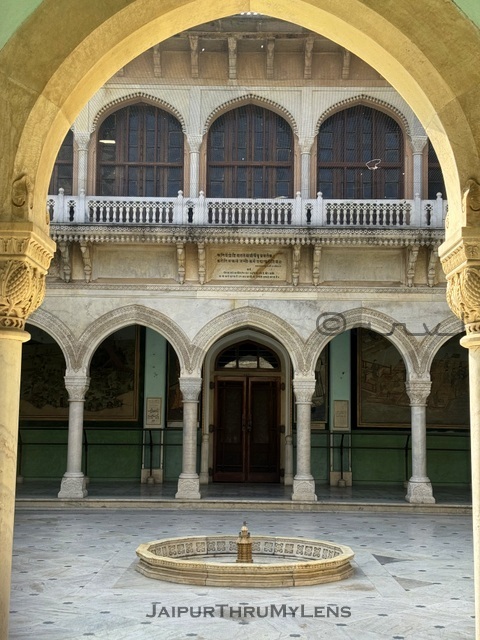
Key features of Indo-Saracenic buildings include:
- Domes
- Overhanging chhajjas – eaves or overhang supported by ornate brackets
- Pointed or cusped arches
- Domed kiosks known as Chhatris crown the towers and minarets. Read detailed post on Chhatri: Chhatris | Jaipur vernacular architecture
- Intricate stone latticework, or Jaali used for shading and decorative effect
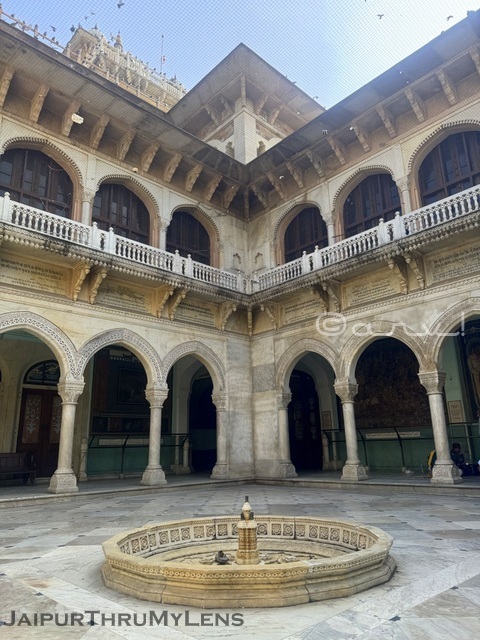
Though its widespread popularity faded by the 1920s, Indo-Saracenic architecture remains a powerful visual testament to the era’s complex cultural and political exchange. Sir Samuel Swinton Jacob was one of the major proponents of Indo-Saracenic architecture in India.
Key Place for hosting shows, music concerts & events
Albert Hall Museum has hosted many events, exhibitions, and music shows. I have attended a few and have shared them on my blog; here are three such events hosted at this state museum. Read more about this here in these blogs:
- Elephant Parade Jaipur Festival Read more about this in this detailed blog Elephant Parade Jaipur Festival at Albert Hall Museum
- Travel Photo Jaipur Read more about this in this detailed blog Travel Photo Jaipur Part III
- Cartist Jaipur Read more about this in this detailed blog Cartist Jaipur
I had an opportunity to visit sections of the Albert Hall Museum not open to the public, few years ago with a special permission. Here is a picture of the top floor of the Albert Hall from 2015. You can notice a variety of unique architectural features in this photo.
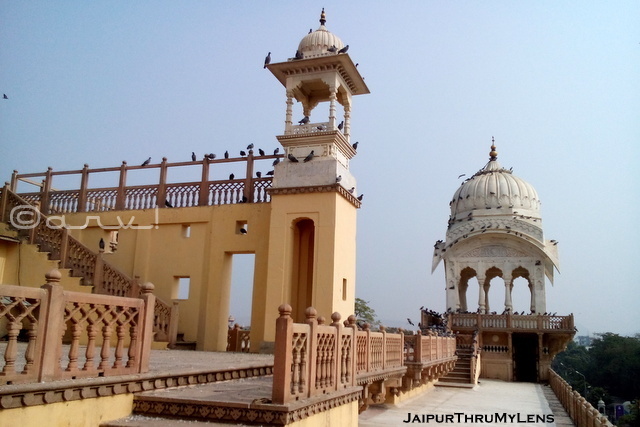
Albert Hall Museum | Guide to exhibits & galleries
The foyer
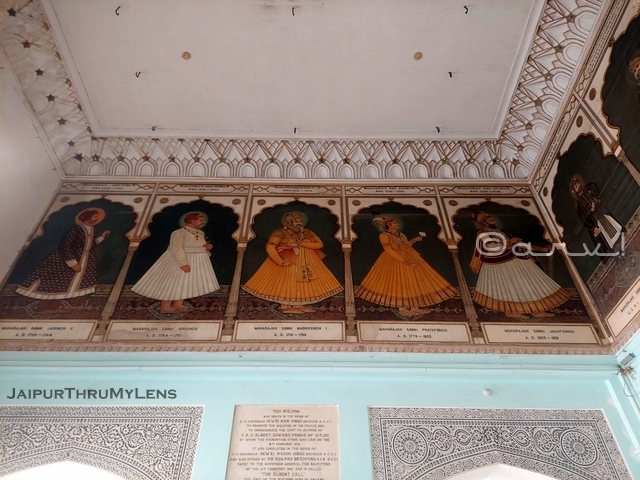
As soon as one enters the museum, on the ground floor in the foyer area one can witness the paintings of all the rulers of the Kachhawha dynasty of Jaipur. This is a good primer for anyone wanting to understand the chronological order of the rulers of Jaipur, an important element of the pink city’s history.
The murals
On the ground floor itself, one can find murals with scene depiction from Mahabharata, Ramayana, and also Razmnama, a Persian Mahabharat.
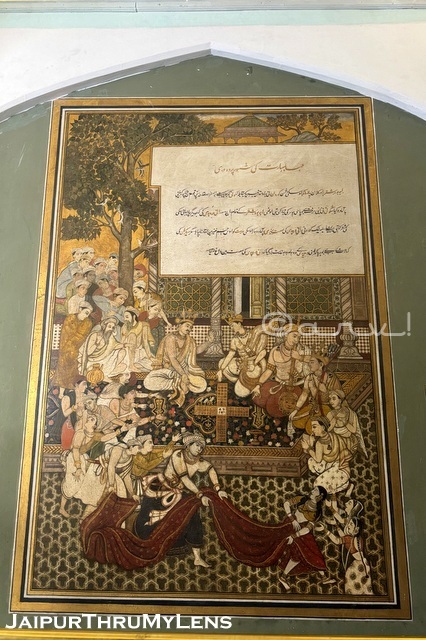
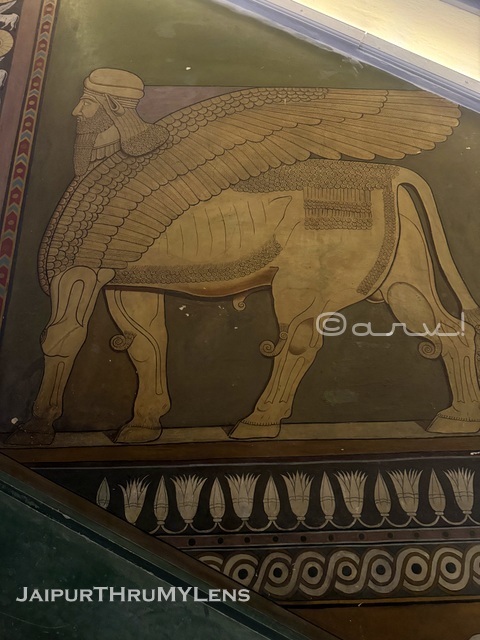
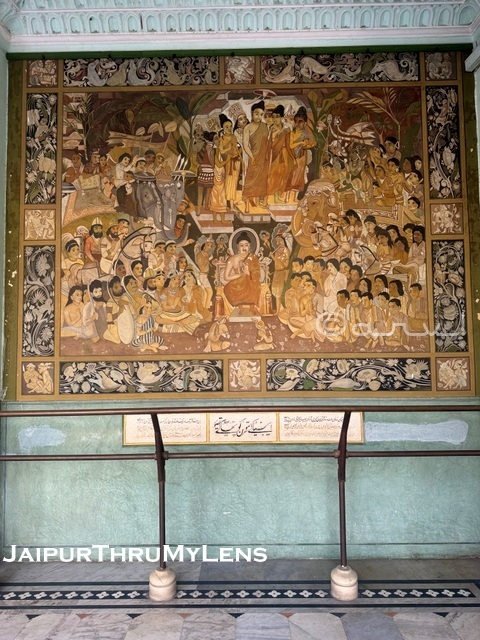
Murals from the Greek and Egyptian civilizations are also part of the museum. The murals show important parts of mythology or have historical significance.
Persian carpet
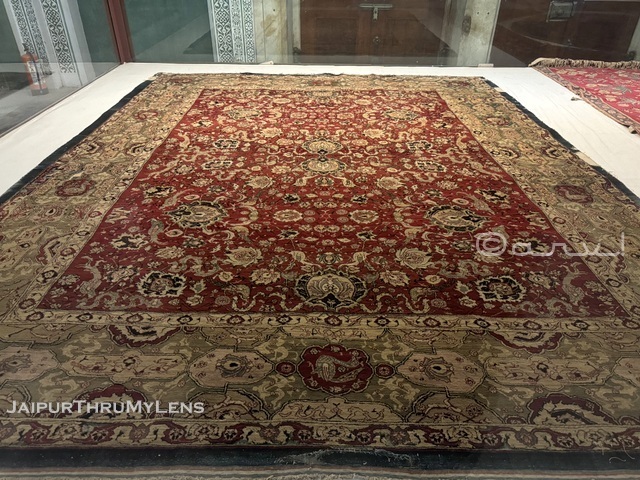
The museum’s Carpet Gallery is home to one of the world’s most significant textile art pieces: the Persian Garden Carpet. This I feel is one of the most unique exhibits in this museum along with the Egyptian mummy.
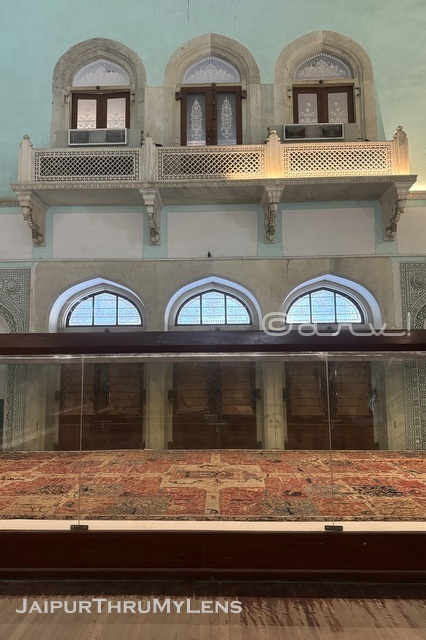
This Safavid-era masterpiece is not just an artifact; it is a profound philosophical statement woven in wool and silk.
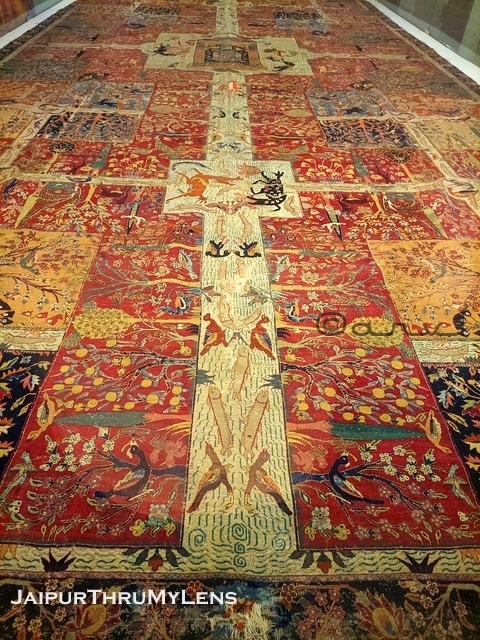
- History of the Albert Hall Persian Carpet: Acquired in 1632 A.D. by Mirza Raja Jai Singh I, this carpet is considered the earliest and most refined example of a complete Persian Garden Carpet existing globally. Discovered in 1937 in a locked storage room at the abandoned palace in Amer Fort, it is knotted in the distinctive style associated with Safavid Kerman in modern-day Iran. In fact, carpets and rugs were an important export item from Kerman during the Safavid period. It is believed to date from the late 16th or early 17th century.
- Design and Concept of Char Bagh: The carpet is a literal depiction of the Char-Bagh or Chahar Bagh, a quadrilateral garden layout divided into four sections by water channels. This formal four-part division symbolizes the rivers of Paradise described in the Qur’an, making the carpet itself a portable representation of a heavenly or Islamic Garden.
- History & concept of Char Bagh: The Char Bagh concept has deep historical roots, evolving from the walled hunting parks of ancient Mesopotamia like the one built by Cyrus the Great in Pasargadae. As Islam spread, the tradition became intertwined with the descriptions of Paradise, later being introduced to India by the Mughal Emperor Babur. The Albert Hall Museum’s carpet showcases this rich cultural legacy through textile art.
Egyptian Mummy
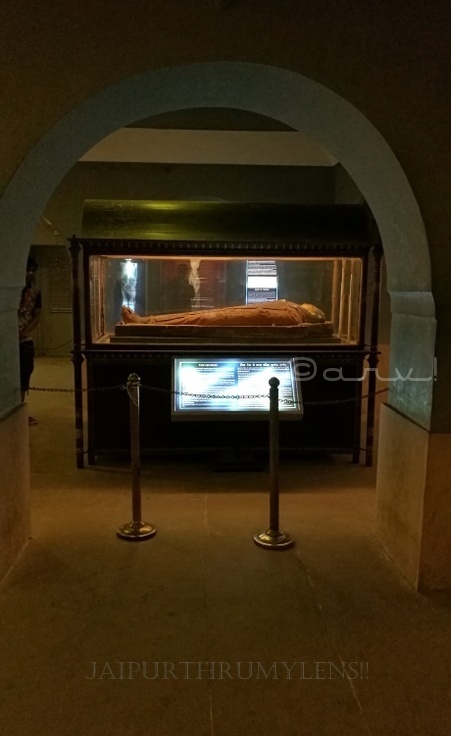
Egyptian Mummy in the Albert Hall museum is one of only six mummies in India. The others are in Kolkata, Lucknow, Mumbai and Hyderabad. The mummy was first brought to India in 1883 during an exhibition in Jaipur. It was a gift from Brughsch Bey, curator at the Cairo Museum. The name of the Egyptian mummy is Tutu, a teenaged girl belonging to the Ptolemaic dynasty. This was the last dynasty of ancient Egypt, lasting from the early 300 BC to 30 BC. Tutu was from a family of priests who were devotees of Kehm in Egypt’s Penopolis. This mummy is 2300 years old. Previously, the mummy was displayed in the basement but now it has been shifted to the first floor after an incident of flooding in Albert all Museum.
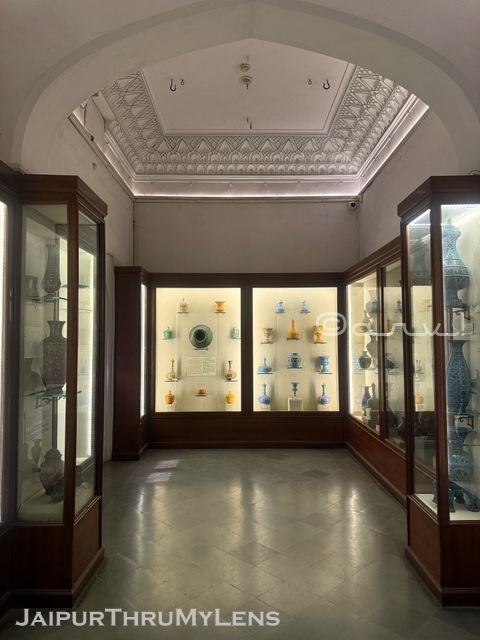
Pottery
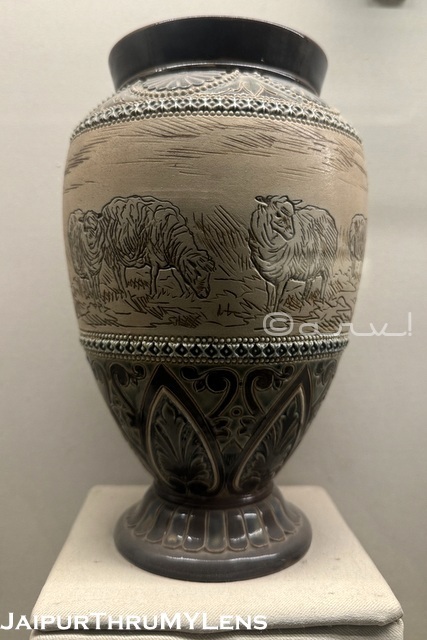
In my opinion, the pottery section in the Albert Hall museum is one of the finest you can find in any museum in India; some are rare. Here is what you will find in this section.
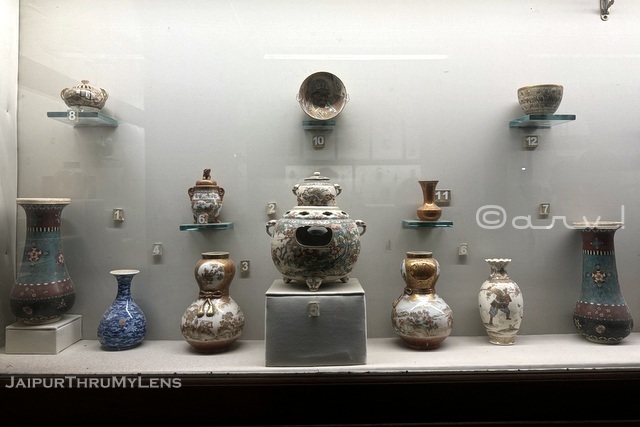
- Unglazed pottery
- Jaipur Blue Pottery
- Kagazi style pottery from Bhawalpur
- Bidri style pottery
- Pottery from various locations in the UK, Japan, Turkey, Indonesia, Hungary, and Persia to name a few.
It is hard to find similar exhibits in other museums, and therefore, these are interesting exhibits.
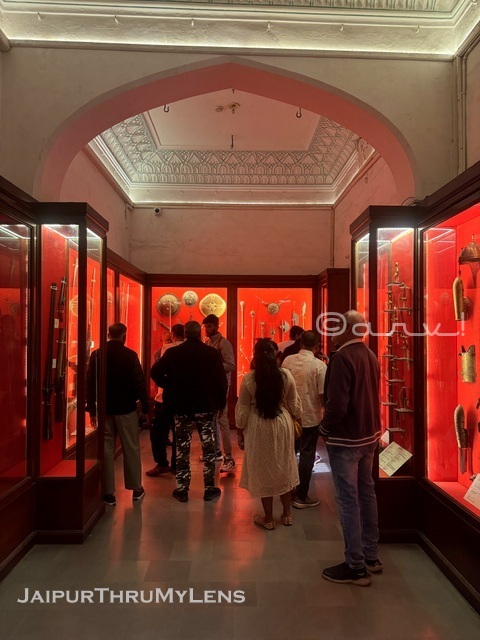
Arms and Armoury
The gallery of arms and armoury houses an impressive and diverse collection of arms, protective gear and related objects, many of which are beautifully ornamented, showcasing the blend of function and artistry at its best. The collection includes:
- Swords and Talwars- many feature intricate work like Koftkari craft, a speciality of craftsmen of Jaipur making arms which were also pieces of art.
- Daggers – The collection includes various regional styles like the Nepali Khukri, Khanjar, and Kataar with decorative hilts.
- Shields – A variety of materials were used for making shields like iron, steel, brass and animal hides.
- Helmets
- Firearms like guns and pistols
- Bow, spears, and arrows
Coin Gallery
Albert Hall Museum has an interesting collection of coins dating from the Gupta and Kushan period, the Mughal period, and during the colonial British rule. One can also see coins minted in Jaipur. The Coin Gallery of Albert Hall Museum is an essential stop for anyone interested in the economic and political history of Rajasthan and India. Some of the coins displayed in the museum are not easy to find in other museums.
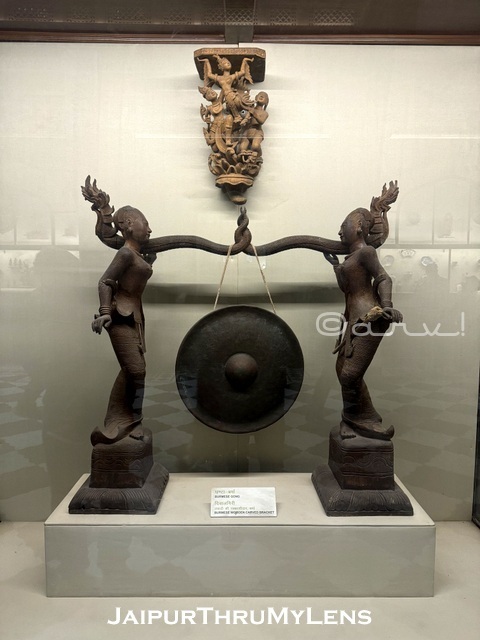
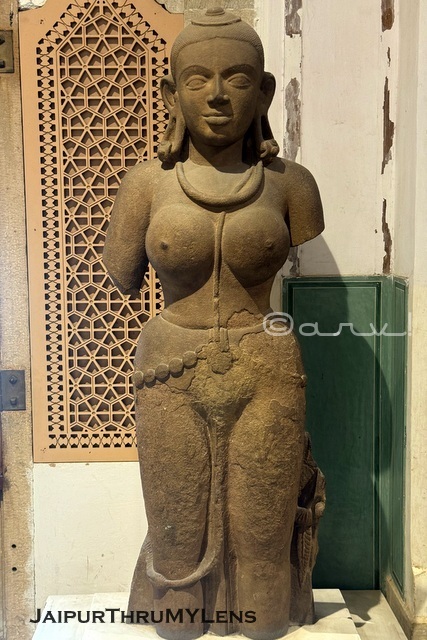
Sculpture Gallery
The sculpture gallery contains sculptures from across the state. The period which this gallery covers is from the 10th century to the 18th century. There are a large number of Hindu idols and a few Jain idols. Many of these idols are in damaged conditions and have been excavated from a variety of places. I will recommend reading the information about these idols. It is a treasure trove. Some idols are quite detailed and intricate. We don’t witness such detailed work on the stones anymore except soft stones like marble and sand stone. Creating such intricate designs on hard stone required a lot of effort and time; a rarity these days. Read about a museum in Jaipur with many old idols, Choti Chaupar Sculptural Museum
Textile Gallery
The Textile Gallery at Albert Hall Museum showcases the rich textile heritage of Rajasthan, showcasing the traditional fabrics, weaving techniques, and decorative elements & arts that have been a part of the region’s culture. Things one can experience in this gallery are as follows:
- Traditional fabrics and weaves
- Hand embroidery and needle work on fabrics & textiles
- Block printed fabrics of the region
- Design and patterns of textiles of the region
The gallery offers a fascinating look at the evolution of textile & clothing and the skill of local artisans. If you want to know more about textiles in Jaipur, you should read this interesting Bagru printing blog – Bagru Village Walking Tour and Anokhi Museum in Amer.
Clay Art Gallery
The Clay Art Gallery is a good medium to witness facets of local life, spirituality, and craftsmanship from the 19th century. Among the things one can witness are models depicting daily life and societal structures and yogic postures.
Miniature Paintings
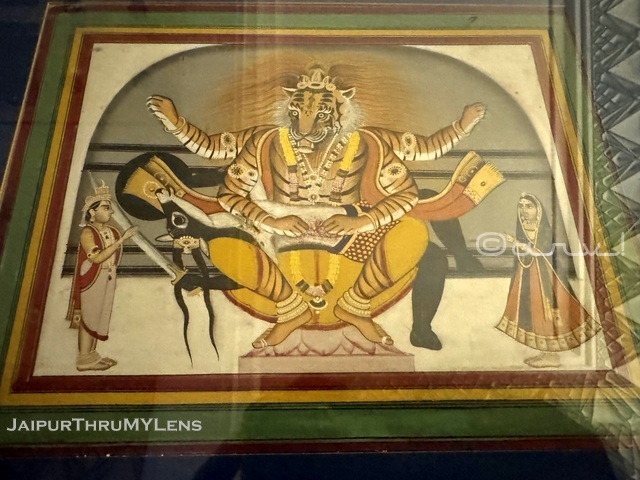
An entire section in the Albert Hall Museum exists with miniature paintings with Rajput and Mughal art traditions, with scenes depicting Indian mythology, among other things. One also finds many exhibits with religious themes like Hindu and Jainism.
Information | Everything you want to know about Albert Hall Museum
Following is the information you need to for a visit to Albert Hall Museum in Jaipur.
Timing
You can visit Albert Hall Museum from 9 AM to 5 PM
Entry Fee
Indian Visitors – Rs 40
Overseas Visitors – Rs 100
Albert Hall Museum is part of the composite ticket and you can buy a composite ticket to visit Amer Fort, Nahargarh Fort, Issarlaat, etc. Composite tickets cost Rs 300 for Indian visitors and Rs 1000 for overseas visitors.
Frequently Asked Questions
Is the Albert Hall Museum open on all days?
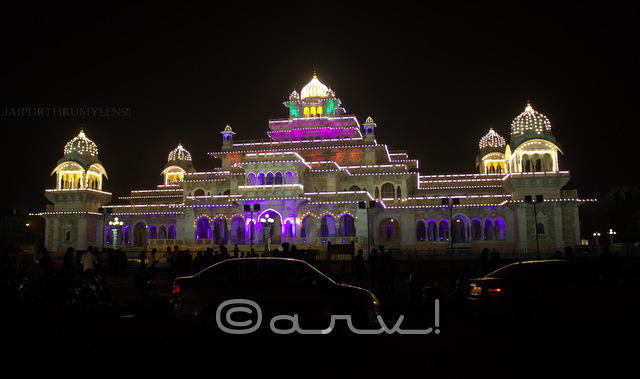
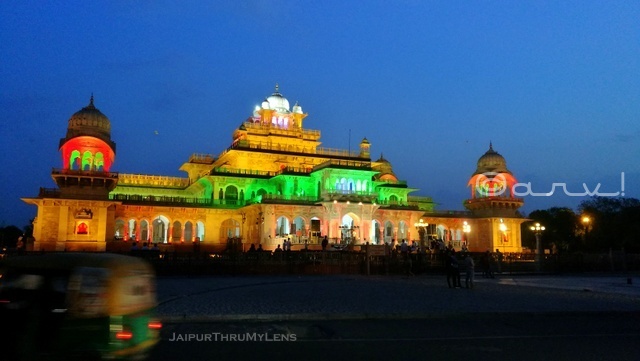
Yes, the Albert Hall Museum is open on all seven days of the week. One can also enjoy this beautiful building during the night when it is illuminated.
Is the Albert Hall Museum a popular tourist attraction in Jaipur?
Albert Hall Museum is popular among tourists, especially Indian tourists. To elaborate on this, here are the number of visitors for the last two years:
- 2024- 8.66 Lakh visitors
- 2025- 10.65 Lakh visitors
1 Lakh = 100,000
There are many unique exhibits which makes it popular among travelers. Albert Hall Museum is also popular among school trips and group travelers.
What other places and activities can be clubbed with Albert Hall Museum?
You can visit Masala Chowk to enjoy an open air food court. Read this blog on Masala Chowk, Jaipur – Masala Chowk | The best open air food court in Jaipur? Shopping in Jaipur markets can also be clubbed with the visit to museum. Read this complete guide on shopping in Jaipur –Jaipur shopping market guide. Some people also choose to club a Jaipur Heritage Walk with a visit to the museum. Get to know more about the heritage walking tour in Jaipur–Best Heritage Walk in Jaipur
Summary
Albert Hall Museum is one of the most visited tourist attractions in Jaipur. One of the reasons is its location. While most visitors have little interest in details and history, I recommend visiting this state museum for anyone who loves museums, history, art, architecture, and anthropolgy. It has many unique exhibits. Because of its location, it is very easy to club it with a visit to other attractions, a heritage walk, or shopping in Jaipur Bazaar. Albert Hall Museum is one of the finest examples of Indo-Saracenic architecture and I believe it is also one of the best architectural pieces created by Sir Samuel Swinton Jacob.
Discover more from JaipurThruMyLens
Subscribe to get the latest posts sent to your email.
 JaipurThruMyLens
This looks a fascinating place. How come I missed it when I was there?
And Mr Jacobs…that rings a few bells!
LikeLiked by 1 person
I have to say, Mick, you surely have missed this.
You are right, that’s the same Mr Jacob! 🙂
Hope you are doing well!
LikeLiked by 1 person
Not too bad, Arv. Hope things are all going well for you.
LikeLiked by 1 person
All is well, Mick. I suppose the weather has changed and it must be getting quite cold there.
LikeLiked by 1 person
Quite cold, Arv, but mainly wet and miserable. I think I would rather have your winters!
LikeLiked by 1 person
I’m not surprised. Even during the colonial period, the British would often refer to the weather back home as unpredictable and not so great based on their diaries or writings. Sunless days is one of the reasons, i suppose.
LikeLiked by 1 person
And today it’s cold, very dark and dreary, and although it’s not raining, it’s damp and miserable. I couldn’t honestly recommend it to anyone.
LikeLike